L5 News ·
Top 10 Coins of L5 Auction 4
The L5 team heartily welcomes you to another Top 10 Coin List! From the Apocalypse of Pseudo Methodius to the tyrants of Gela, the following write ups are sure to contain enticing reads for an audience of wide tastes! Before we plunge into a world of apocryphal literature, great Athenian turncoats, and ancient pleasure barges of such a scale as to rival aircraft carriers, first let us provide a brief recap of how L5 is doing.
As L5 Auction 4 draws nigh, our user registration counts, hammer totals, and global outreach rise high! L5 has seen exponential growth throughout our first three auctions in every metric and area! With over 6,000 registered users, L5 can boast of accounts in every continent save frigid Antarctica. With current trends, perhaps even that might be fulfilled before long! Most importantly to our users, both the number and value of coins listed on L5 has increased with each sale:
- Auction 1: $154,367 hammer total
- Auction 2: $281,397 hammer total
- Auction 3: $436,000 hammer total
Accompanying our growing sales figures are ground breaking statistics relating to online engagement. Over the last 90 days, coins posted by L5 sellers have generated more than 5 million views across Facebook, Instagram, and TikTok. Beyond millions of views and international outreach across social media platforms, syndication with platforms like NumisBids allow for L5 to directly advertise lots to tens of thousands of dedicated and serious collectors. No numismatic platform on the market enables sellers this much advertising, let alone for free. L5 is the place to buy and sell your ancient coins! Your low fee ancient coin revolution is here!
Echoing the sentiments of our very first top 10 list: crescite et multiplicamini!
The Top 10 Coins of L5 Auction 3
1. Sicily, Gela. AR Didrachm, 490–480 BC
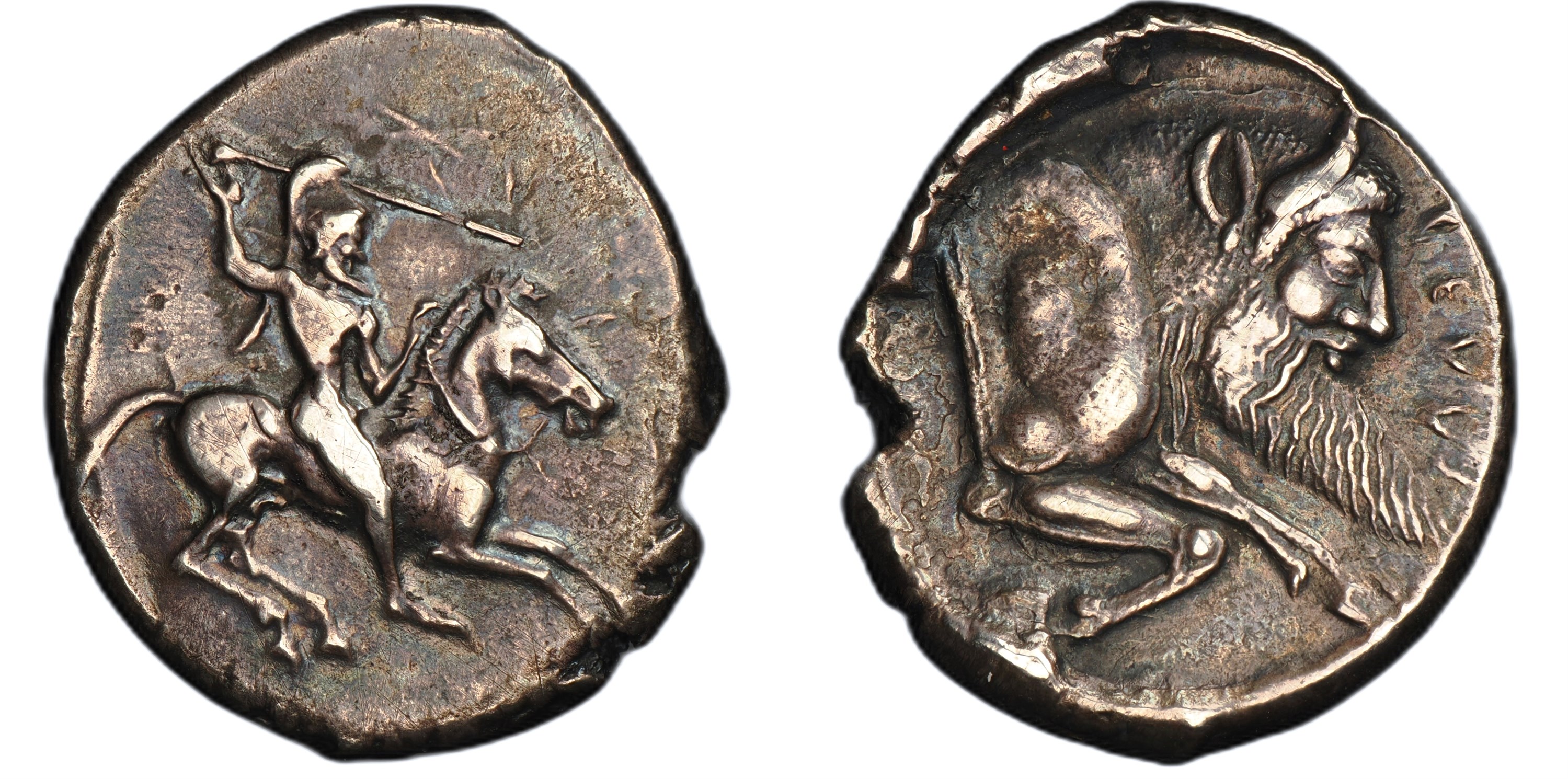
Jenkins plate coin (47.4 – O14/R19)
Sicily has in every age stood as a volatile epicenter of cultural and geopolitical might. From the proud sons of Rollo to the staunch soldiers of the crescent, perhaps no land has seen such a variety of masters. Before the Angevins and before the Hautevilles, before the Byzantines and before the Romans, the Greeks lay contested claims to portions of the island. Gela was not least among these settlements, but by a measured account nor was she but for a short exception first. If not often the most powerful city on the island, Gela can comfort herself as a contender for having minted the most beautiful coinage in all of Sicily.
The above didrachm represents not only the charming vestiges of archaic styles giving away to the flowering of the classical period, but also an example recognized as such by a supreme expert in the field. Plated in Jenkins as the example for die combination O14/R19, this didrachm represents the pinnacle of coinage under the apogee of Gela’s might and influence. The tyrant Hippocrates ruled the city state during the period in which the coin was minted, namely one of bold enterprise and expansion. Other cities of numismatic portent like Naxos and Leontini fell before her sway, and by the end of the 490s BC Gela stood supreme.
Temporal success was not Gela’s to have. Decline began slowly but accelerated quickly, with the city facing numerous sackings before a final abandonment in the third century BC. Gela’s fate was destruction, negligence, and quaint retirement in the Sicilian shade until the stupor mundi turned his ever roving attentions towards the ancient ruins. Like so many endeavors across the ages, only when a Swabian turned his mind to the matter did the situation resolve. With Gela rechristened Terranova, the medieval world resuscitated what the ancient had forged. It would be many centuries before her old name was restored, but without the efforts of Frederick II all would be naught for the modern city.
250 centuries before you are able to behold this didrachm, before the appreciation of and plating by Jenkins, before the reunification of the Italian states, before the Swabian peregrinations of the so called antichrist, before the Romans, before the Athenian expedition of Nicias, Gela had the limelight of Sicily all to herself. In this brief window of but a decade, the above coin had the fortune to be minted, circulating in the heyday of its progenitor before finding a resting place in the hallowed loam of Sicily’s volcanic deposits. Recovered long ago, acknowledged as most excellent by a numismatic master, this didrachm has likewise the good fortune to find itself auctioned by a platform that can appreciate it!
2. Sicily, Syracuse (Euainetos). AR Decadrachm, 400 BC.
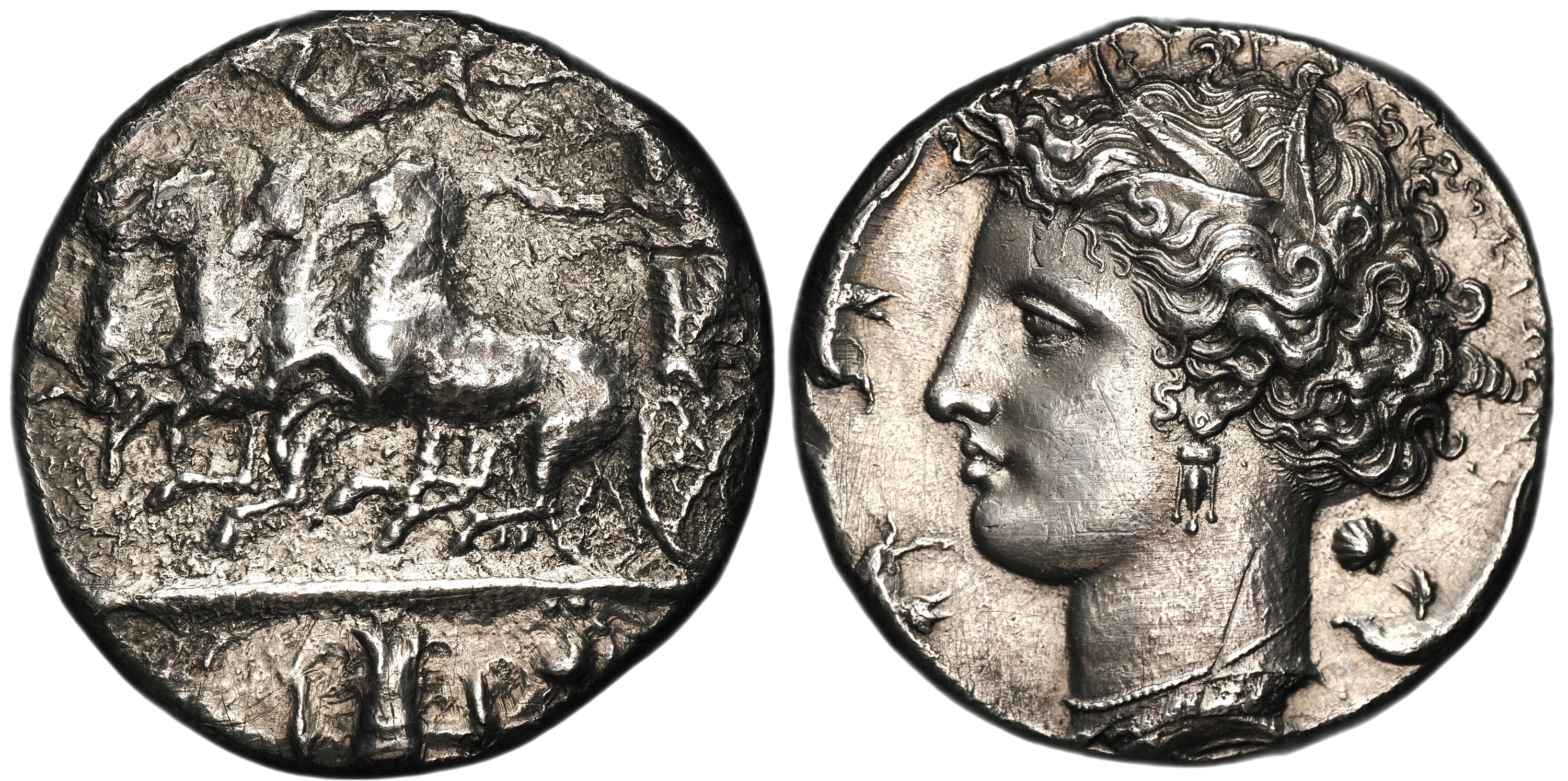
The dekadrachma of Euainetos form perhaps the finest series of coinage in all antiquity. L5 has had the pleasure to present wonderful examples of Euainetos’ artistry before, and the above coin offered in auction 4 is perhaps the most beautiful that we have auctioned to date. The obverse, if suffering from slightly marred surfaces, presents the splendid and vivid quadriga with a life-like dynamism. The charioteer boldly reigns his wild stallions in as his vehicle is presented in 3/4th turn. Nike lauds his efforts and crowns the victor from above. The reverse portrait of Arethusa rivals the great sculptures, busts, and intaglios for supreme simplicity and mesmerising depth of soul. Fair and fine, Arethusa is presented with ornate hair and bejeweled décor only elevating her countenance.
It is for good reason that the dekadrachma of Euainetos have long been recognized as supreme examples of the dazzling heights that antiquity achieved. Rather less known is the fact that this series even made its way into medieval reliquaries as objects of devotion. The below article hosted on the L5 new site presents a compelling history of the appreciation of Euainetos, from gothic mounts and shrines to modern institutions.
3. Alexander III, Amphipolis. AV Distater, 330-320 BC.
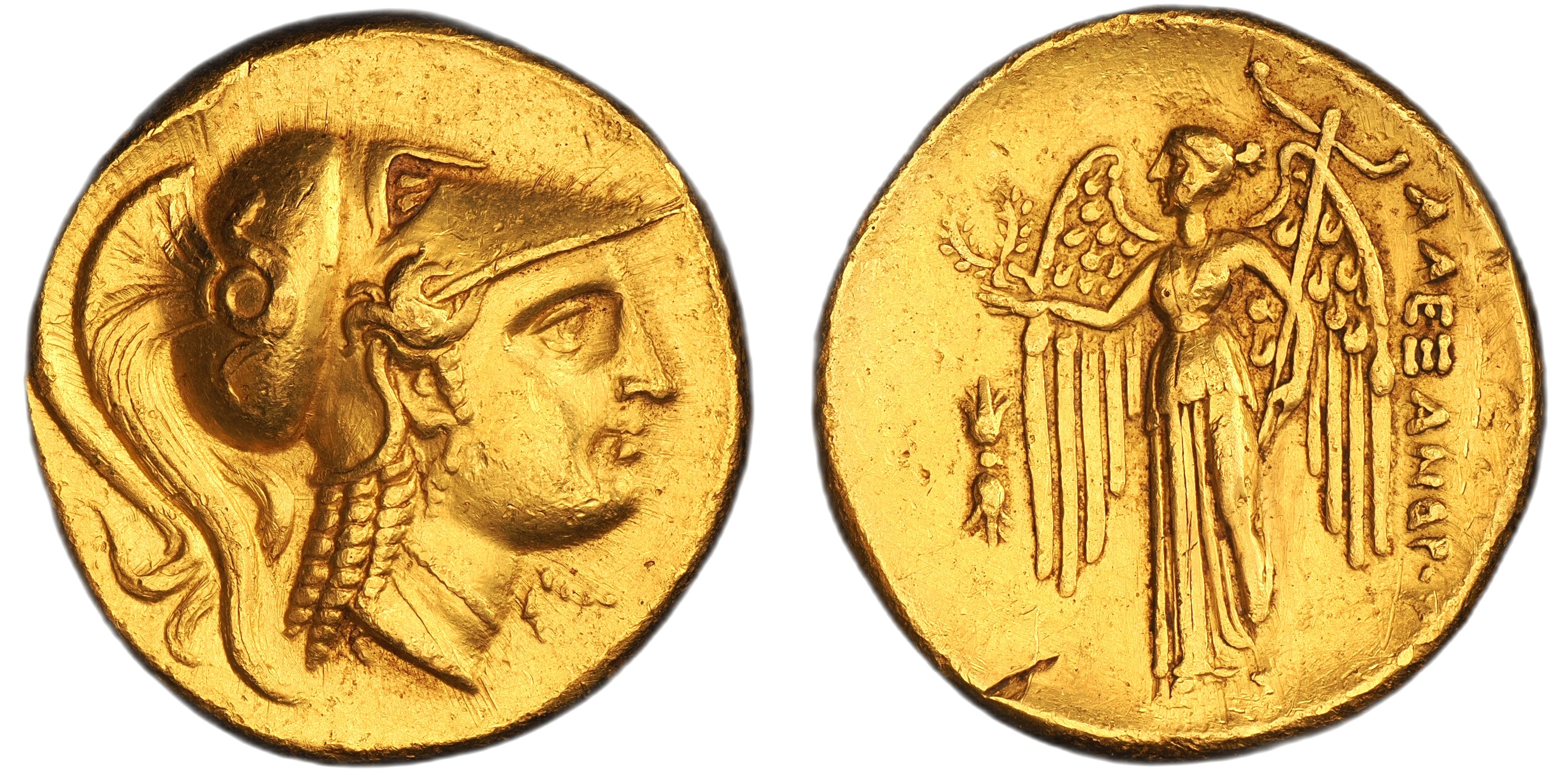
The fabulous wealth of Alexander enabled him to mint the largest gold coin antiquity had seen to date: the distater. From Alexander’s conquests of Susa, Persepolis, and beyond, Frank L. Holt estimates that the low end of potential wealth accrued by Alexander was valued at 180,000 talents or 1,080,000,000 drachmai. For comparison, according to David M. Pritchard, the annual income of Athens at the height of her powers in 432 BC was 1,200 talents. In a single fell swoop, Alexander acquired 150 years worth of tribute owed to Athens at the start of the Peloponnesian war.
The famous wooden walls of Athens were her triremes built at the suggestion of Themistocles. Estimates for the cost to build one trireme vary, but one and half talents are the general consensus (with the cost of monthly maintenance around the same). While the contingent Athens brought to Salamis was around 200 triremes in total, Alexander could have theoretically built 120,000 triremes with his warchest, a logistical impossibility highlighting the unbelievable wealth found in the orient by Alexander. Such economic influx was unparalleled in the history of the world, and allowed for Alexander to not only encourage a more standardized economy based on monetization but to also introduce numismatic innovations.
The above distater represents the attempt to coin untold numbers of ingots and bullion into usable specie. Introduced to pay the vast bonus sums promised to the soldiers by Alexander, the new distater was worth forty drachmai. This facilitated easy payment of a talent to the soldiery with 150 disasters as opposed to 1,500 tetradrachma. Representing the influx of treasures into Greece, Macedonian troops who fought from the old homeland to the outskirts of India were richly rewarded for their efforts by distaters such as the above example.
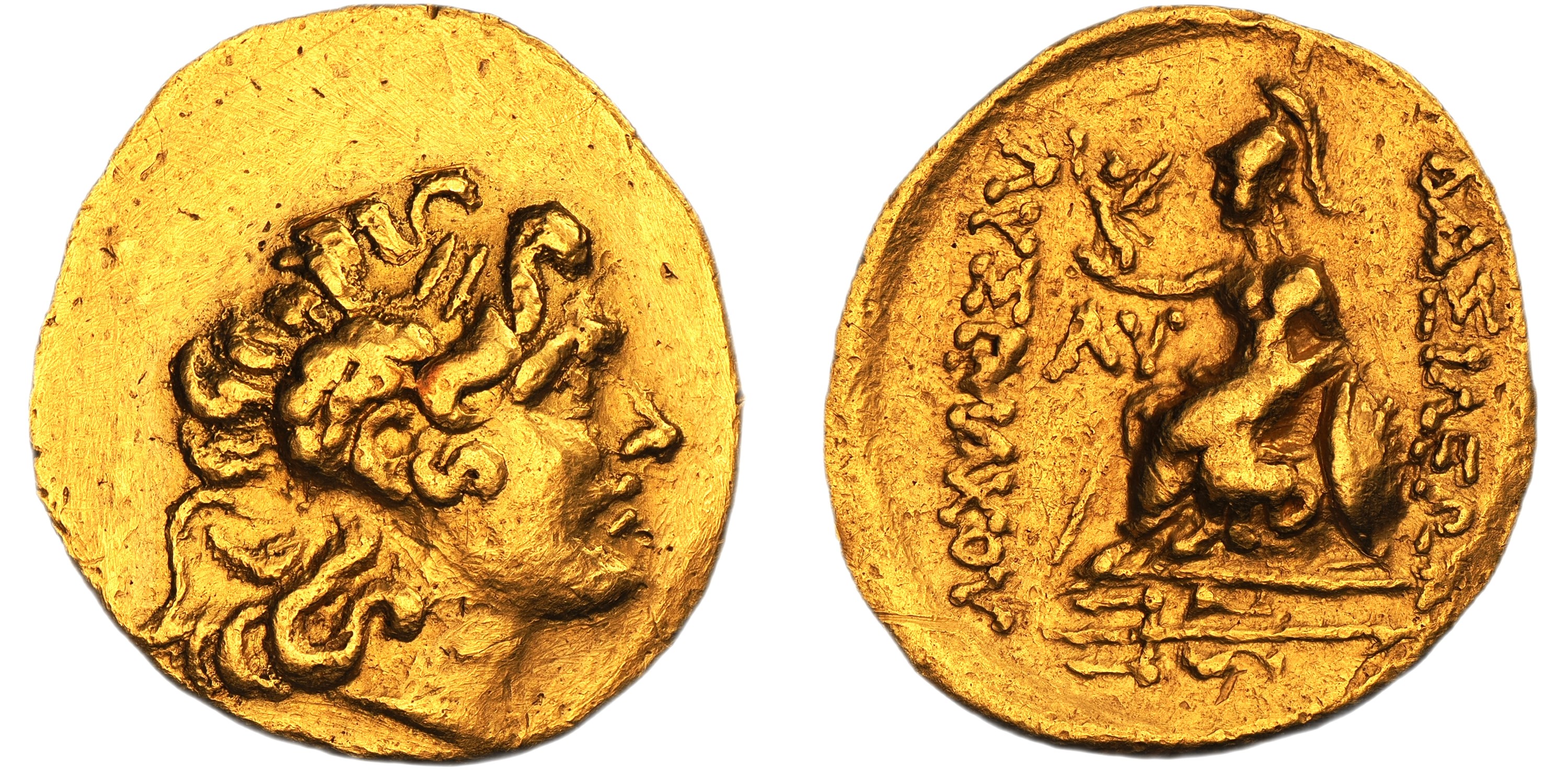
4. Mithradates VI Eupator, Kingdom of Pontus. AV Stater, 88-86 BC.
The line between a freedom fighter and terrorist is often fine: where does a man place who in an attempt to liberate his people slayed 80,000 to 150,000 civilians in a single day? The Asiatic Vespers of Mithradates VI Eupator form the most infamous exploit in a lengthy and audacious reign of a man who stymied the most powerful empire in the world for generations.
The above stater was minted within the direct context of the Asiatic Vespers, either within the same year or shortly after the ghastly deeds. Mithridates, flush after a series of victories against the Romans, declared an annulment of taxes across his dominions for five years. With economic growth and a happy populace, Mithridates decided to push the issue of allegiance to the brink. Cities were made to face a choice. Either slay their Roman population and side with Mithridates or face the consequences of his wrath. With the massacre done, the guilty parties were irrevocably tied to their cruel master. In the name of Greek liberation, widescale genocide was perpetrated upon Innumerable innocent civilians.
On the obverse of the stater, Mithridates presents the profile of Alexander the Great as Zeus Ammon, a figure from whom he claimed descent. On the reverse king Lysimachus is named, again heralding the supposed pedigree of the Pontic king. The veracity of such claims is doubtful, but the propaganda of a ruler with Greek blood promoting Hellenistic ideals suited Mithridates quite well. In the end, the slaughter of the Roman civilians was for naught. The likes of Sulla hampered the aspirations of the king, but for half a century the specter of Mithridates haunted the Roman world. Only the great Pompey finally defeated Mithridates. If only the king had been born but earlier, his grand project of Hellenistic restoration may have at the cost of significantly less bloodshed succeed in restoring a second golden age to Greece. Instead, the Greeks succumbed to Roman might and languished under the barbarian yoke.
5. Mysia, Lampsakos. EL Stater, 500-450 BC.
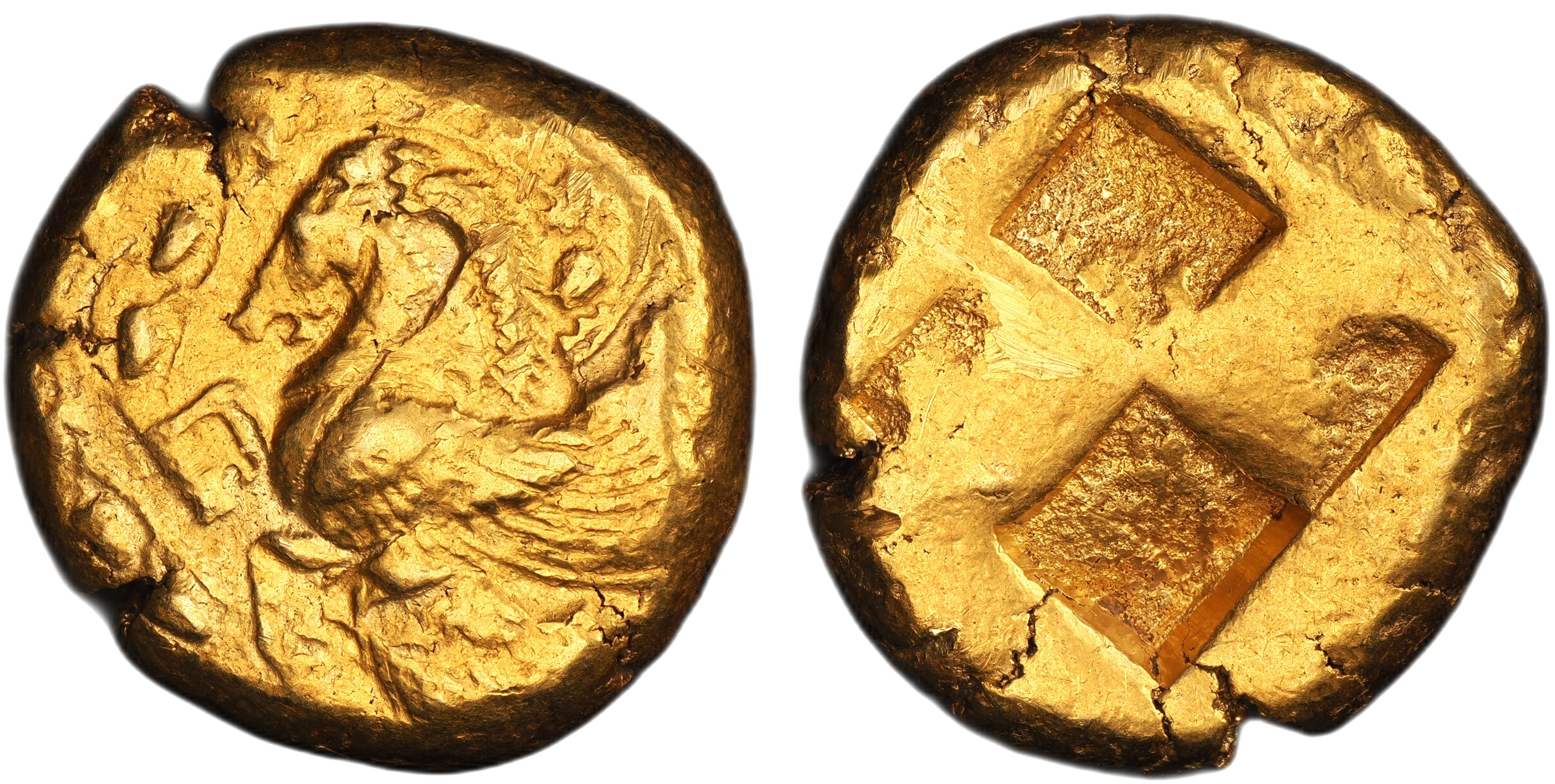
The great king Artaxerxes I ruled over a vast and sprawling dominion, of which Lampsakos sat conveniently located near the Hellespont and the fertile regions of the Scamander valley and its alluvial plain. Renowned for horticulture and viniculture, it was Lampsakos among Magnesia and Myus that Artaxerxes granted to the exiled Themistocles, providing the fugitive with the important necessities of life as fitting for an aristocrat. Inveterate foe of the Achaemenids, savior of Athens, warrior at Marathon, hero of Artemisium and Salamis, Themistocles is perhaps the figure one would least expect a great Persian monarch to grant refuge to. Yet the vicissitudes of life can be cruel and simultaneously kind, and so the savior of his country found himself in a comfortable but bitter exile among his erstwhile enemies as a wealthy governor of numerous cities.
Given the time frames in question, there is a chance that this stater was minted during the gubernatorial oversight of Themistocles. The obverse of the coin depicts the forepart of the winged Pegasus, framed by grapevines. Alluding to the most famous export of Lampsakos, the fine wines of the region were renowned throughout antiquity. Scorned by his countrymen and in exile with his foes, it was on these rolling vineyards of the upper Troad where Themistocles spent his final days. In a draught of salubrious wine could the aged pater patriae reminisce on his previous glories and current contempt. Like the Pegasus, Themistocles stretched his wings to fly. Rather than seeking Mount Olympus, Themistocles was destined for a truth painfully arrived at by many people throughout history: ‘vanity of vanities, all is vanity’. Ingrata Patria, ne ossa quidem habebis.
6. Ptolemy IV Philopator, Alexandria. AV Octodrachm, 219-217 BC.
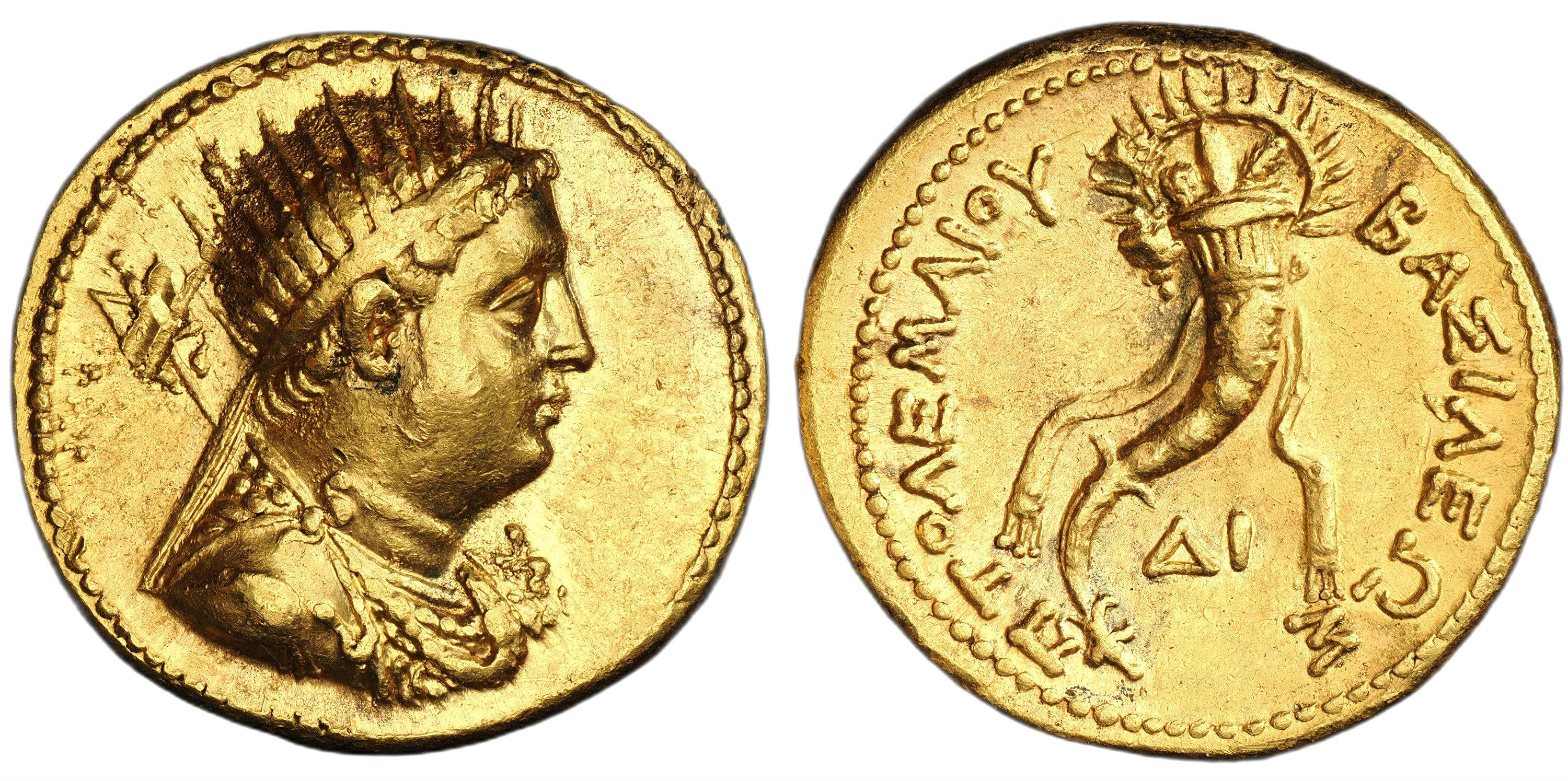
If Alexander the great introduced the hitherto largest gold coin of antiquity, his Ptolemaic successors were certainly not ones to be outdone. Fitting for such a famously luxurious king, the above Octodrachm of Ptolemy IV Philopator represents the emission of an affluent kingdom at its zenith. If plagued with domestic unrest and attempted usurpation, in many ways Ptolemy IV was the last great Ptolemaic pharaoh, more thanks to the momentum of statecraft than innate capabilities. Inheriting a mighty state from his father, Ptolemy IV with rather paltry governance managed affairs.
With all the castigation that the ancient moralists lambasted inordinate uses of wealth, Ptolemy IV proved an easy target for the likes of Polybius. With elaborate bureaucracies, if Ptolemy IV was not a wise steward of his money, he certainly ensured efficient taxation. His prodigious spending most famously resulted in the τεσσαρακοντήρης. This 40 rowed behemoth was the largest ship of antiquity, housing an estimated 3,000 to 4,000 rowers. Only iron-hulled steamships of the 19th century were able to outclass if not outman this pleasure barge of Ptolemy. The riches of Jeffery Bezos have not been able to procure a yacht larger than that of a two millenia old pharaoh. By the size of the service crew, only world war two and the creation of the aircraft carrier have finally matched Ptolemaic indulgence. The largest ships known to mankind and the superiority of twentieth century technology can at last claim to equal in size the staff of the τεσσαρακοντήρης. Too large for practicality, the very fact of ostentation lent the project greater speciality. One must wonder how many of the above Oktodrachma were paid out by Ptolemy IV in the construction and service of such a vessel.
7. Antoninus Pius, Rome. AV Aureus, AD 143-144.

Genteel prince of a refined age, Antoninus Pius has stood as a figure of relative calm and dignified demeanor among the many eccentricities of the imperial pantheon. The elegant obverse bust instantly conveys the mild grandeur of a ruler at ease with the reigns of power and familiar to his subjects. While not as titillating as a Nero or deranged as a Caracalla, the rather meagre existence of the majority of the Roman populace certainly fared better in the stability of Pius than the civil discord, persecution, or barbarian incursions under other emperors.
The prosperity of the Antonine dynasty poses as many happy reflections of pacifism as questions of negligence. With the crisis of the third century only a few decades away, it is natural to draw the origin of its snares and tendrils back into the supposed age of unheralded peace. The civil wars of the late republic turned the inviolability of sacred custom into a dangerous reminder best left forgotten. The seismic shockwaves of treason trials and assassinations smoothed over into relaxed governance with the ascent of Trajan, but under the surface from the Julio-Claudian period to the third century lay the same problem of enforcing legitimacy.
That all important, unquantifiable trait has defined the fates of many regimes. Only in the chance of relaxed domestic squabbles and eased foreign pressures could the Romans enjoy prolonged peace. The transient peace of the high imperium betrayed wider sentiments into a false appreciation of Rome’s true situation. How could the tranquil citizenry of Aquilia under the reign of Marcus Aurelius imagine the horrors of civil war to come under the tyranny of Maximinus Thrax! Certainly, many a Roman who spent their youth in years of sublime indolence and relative affluence grew into their old age watching their empire descend into madness. After the likes of Macrinus or Elagabalus rose to the throne, there truly was no limit to the aspirations of any man to one day hope to ascend to the top. Forever a bitter civil conflict and Persian campaign away from collapse, the tenuous bonds and illusions of security in the Antonine dynasty nevertheless define a few precious decades in the middle of the second century AD. If not deserved, then at least the Antonine age was enjoyed.
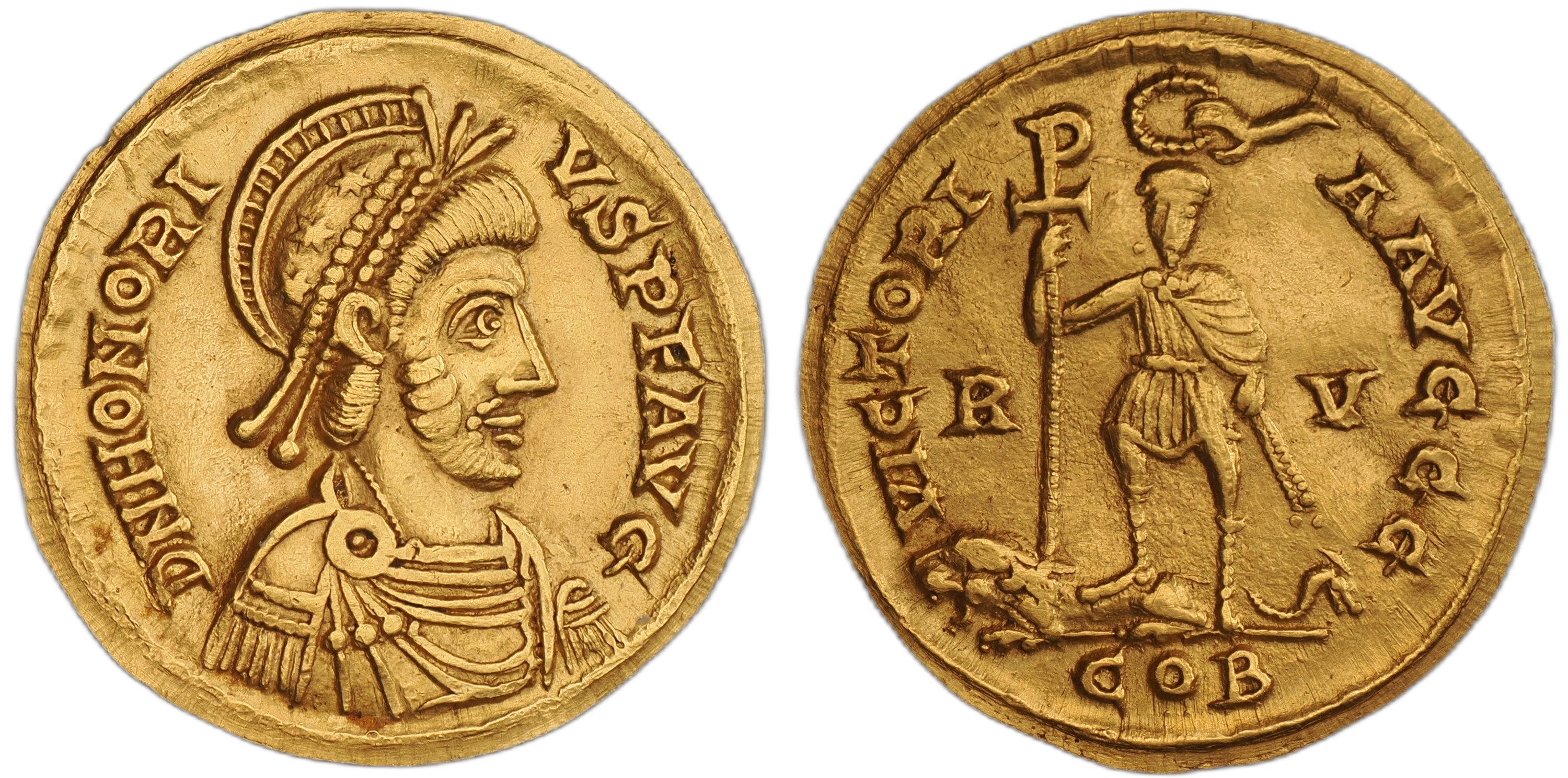
8.Honorius, Ravenna. AV Soldius, AD 408-423.
And when the son of perdition shows himself, the king of the Romans will go up to Golgotha, where the wood of the holy cross was fixed at the place in which the Lord underwent death for our sakes.
And the king will take the crown from his head and place it on the cross and spread out his hands to the heaven and deliver the kingdom of the Christians to God, even the Father. And the cross will be taken up into heaven along with the king’s crown, because the cross on which Our Lord Jesus Christ was hanged for the sake of the common salvation of all, the cross itself will commence to appear before him at his coming as a refutation of the treachery of unbelievers.
And the prophecy of David will be fulfilled which says in the last days “Ethiopia shall stretch out her hands unto God” because from the seed of the sons of Chuseth, the daughter of Phol king of Ethiopia, these last will stretch out their hands unto God.
And as soon as the cross will be raised up into heaven, the king of the Romans will also immediately surrender his spirit. Then all rule and authority will be demolished, so that the son of perdition may show himself openly.
…
For this son of perdition will enter Jerusalem and sit in the temple of God as God, although he is a man of flesh from the seed of a man and from the womb of a woman, a descendant of the tribe of Dan. For Judas Iscariot also, the betrayer of the Lord, was himself from the tribe of Dan.
And when the tribulation of those days is increased by the son of perdition, the Divinity will not endure to look on the perdition of the race of men, whom he redeemed with the blood of his own household, and he will at once send forth his most honest and well-beloved servants, Enoch and Elijah, to denounce the enemy. Therefore in the presence of all the nations they will attack his deceit and show him to be a liar before every man and to be nothing, and that he will issue forth for the ruin and perdition of many.
And so when the nations see him put to shame and his deceit to be refuted by the servants of God, they will abandon him and flee from him and cling to those just men. Then when the seducer sees that he has been rebuked to scorn and is despised by all, boiling over with wrath and anger he will kill those holy ones.
Then will appear the sign of the Coming of the Son of Man, and he will come on the clouds of heaven with heavenly glory and “the Lord shall consume him with the spirit of his mouth,” according to the apostolic revelation.
“Then shall the righteous shine” “as stars in the world, holding forth in themselves the word of life,” but the impious will be cast forth into hell, out of which let us be delivered through the grace and kindness of our Lord God and Saviour Jesus Christ, with Whom to the Father along with the Holy Spirit is all honour and glory, power, greatness and dominion, now and always and unto the ages of ages. Amen.
-’Apocalypse of Pseudo Methodius’
Celestial portents swirl as astrologers make sense of hidden meanings written in the stars. Empires fall and tradition is abandoned as the great Pax Romana crumbles before the onslaught of Teutonic and Scythian hoards. Transcontinental bureaucracies collapse as provinces are abandoned by the imperium for the first time since conquest many centuries ago. Jurisprudence and philosophy retreat from the flames of invaders to distant cities and monasteries. What took millennia to build has all but collapsed in a century. To those with eyes, it is quite evident that the final days of this age are at hand. The emperor will march his forces to holy Zion and mount Calvary. There the emperor will die, the law will break down, and the son of perdition shall rule the earth for a thousand years of woe. Only then will the Son of Man come again, and the day of judgement be upon the nations.
Such omens of destruction and divination of ominous portents need not be of alarm for an emperor, however. King of the world, protector of christians, overlord of the ecclesiarchy, the man helpless before the slow destruction of his millenia old patrimony could rest assured that all events resulted from the indomitable Manus Dei. If the ‘Apocalypse of Pseudo Methodius’ likely postdates the above solidus by two centuries, it perfectly captures the zeitgeist of the Late Antique Roman world. Beset on all sides by defeat and peril, the emperor still projects a false image of virtue and strength. Honorius, perhaps the most ignominious emperor of all, on the reverse of the solidus boldly declares the Roman victory over evil thanks to heavenly intercession. Ignoring the reality of the 408 sack of Rome and utter humiliation of the empire at the hands of the Vandals, on the obverse Honorius serenely poses in a stellar helm and is draped in the traditional attire of the emperor. Honorius and his successors were largely diffident as the west was collapsing and the was East barely functional. Whether Pseudo Methodius would be proven right only time could tell.
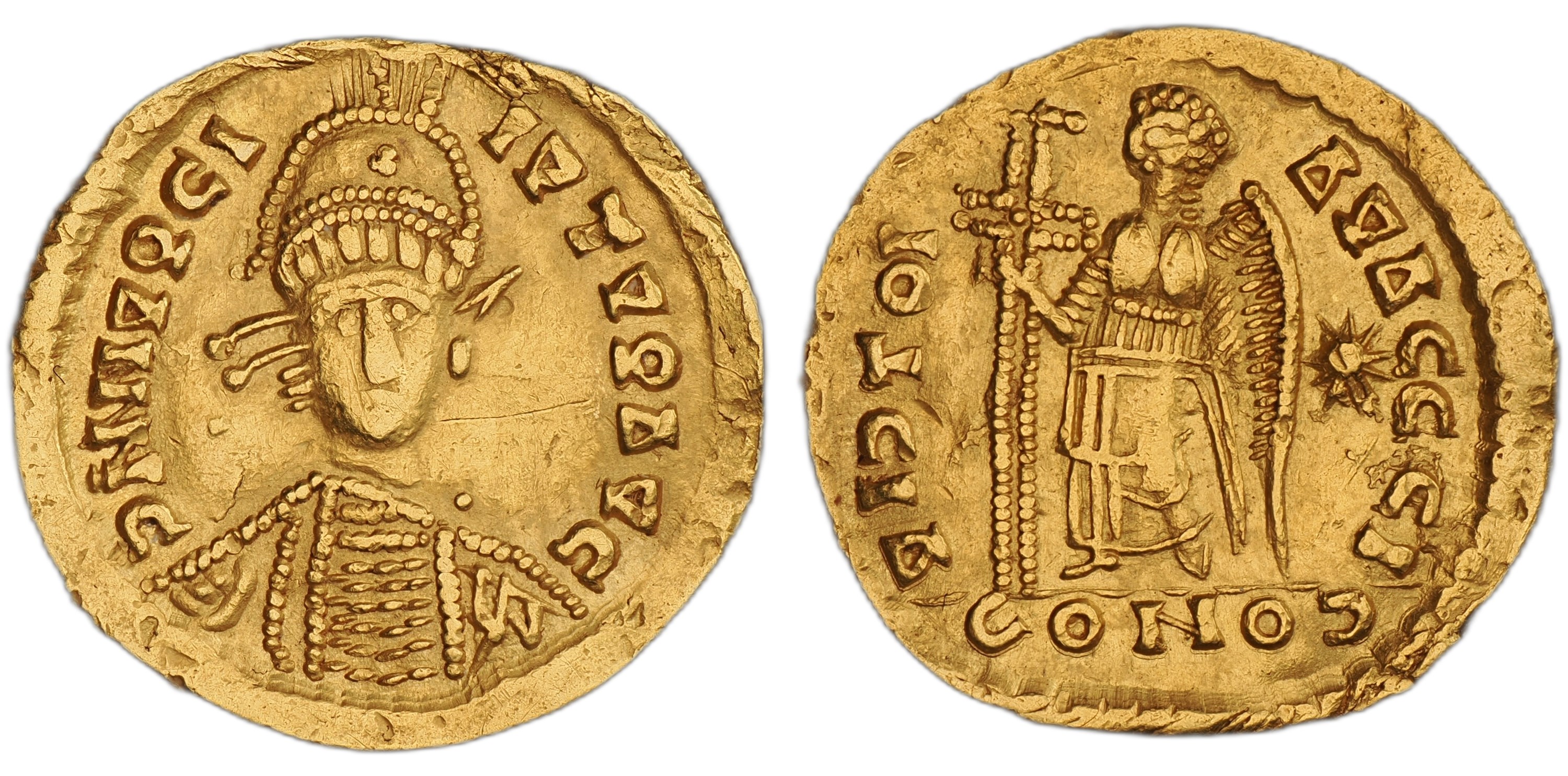
The great migration of the Germanic tribes brought untold desolation and hardships upon the Roman empire. The conquered peoples of Rome had been converted from warlike nations into peaceable and productive citizenry. With the advent of the Teutons, the prosperity of the few and subsistence of the many was reduced to servility for all before new masters of a different stock and religion.
The fall of Roman Britannia entails the most shocking events of all. Specialized industry upon which the roman britons relied for livelihood quickly collapsed as trade networks shrunk and the island was severed from the continent. Large scale tin mining or enormous factories producing earthen ware for Africa had little use for the Roman Britons when harvests failed and pirates began to invade and settle on their shores. The network of raw material exportation and luxury importation quickly collapsed, and along with it roman civilization itself. In what is perhaps the single most apocalyptic fate to ever befall a society in any age anywhere, within two generations the island of Britannia went from an intercontinentally connected and (albeit moderately) respected nexus for large scale industry who proudly sent off her sons to Greece for an education to becoming a completely illiterate wasteland of fighting warlords so primitive as to no longer have the ability to build in stone. For but a small snippet of the age, we turn to contemporary account of Gildas on the fall of Roman Britain,
“Then there breaks forth a brood of whelps from the lair of the savage lioness, in three keels, as it is expressed in their language, but in ours, in ships of war under full sail, with omens and divinations. In these it was foretold, there being a prophecy firmly relied upon among them, that they should occupy the country to which the bows of their ships were turned, for three hundred years; for one hundred and fifty—-that is for half the time—-they should make frequent devastations. They sailed out, and at the directions of the unlucky tyrant Vortigern, first fixed their dreadful talons in the eastern part of the island, as men intending to fight for the country, but more truly to assail it. To these the mother of the brood, finding that success had attended the first contingent, sends out also a larger raft-full of accomplices and curs, which sails over and joins itself to their bastard comrades. From that source, the seed of iniquity, the root of bitterness, grows as a poisonous plant, worthy of our deserts, in our own soil, furnished with rugged branches and leaves. Thus the barbarians, admitted into the island, succeed in having provisions supplied them, as if they were soldiers and about to encounter, as they falsely averred, great hardships for their kind entertainers. These provisions, acquired for a length of time, closed, as the saying is, the dog’s maw. They complain, again, that their monthly supplies were not copiously contributed to them, intentionally colouring their opportunities, and declare that, if larger munificence were not piled upon them, they would break the treaty and lay waste the whole of the island. They made no delay to follow up their threats with deeds.
For the fire of righteous vengeance, caused by former crimes, blazed from sea to sea, heaped up by the eastern band of impious men; and as it devastated all the neighbouring cities and lands, did not cease after it had been kindled, until it burnt nearly the whole surface of the island, and licked the western ocean with its red and savage tongue. In this assault, which might be compared to the Assyrian attack upon Iudaea of old, there is fulfilled in us also, according to the account, that which the prophet in his lament says:
They have burnt with fire thy sanctuary in the land,
They have defiled the tabernacle of thy name;
And again,
O God, the gentiles have come into thine inheritance,
They have defiled thy holy temple;
And so forth. In this way were all the settlements brought low with the frequent shocks of the battering rams; the inhabitants, along with the bishops of the church, both priests and people, whilst swords gleamed on every side and flames crackled, were together mown down to the ground, and, sad sight! there were seen in the midst of streets, the bottom stones of towers with tall beam cast down, and of high walls, sacred altars, fragments of bodies covered with clots, as if coagulated, of red blood, in confusion as in a kind of horrible wine press: there was no sepulture of any kind save the ruins of houses, or the entrails of wild beasts and birds in the open, I say it with reverence to their holy souls (if in fact there were many to be found holy), that would be carried by holy angels to the heights of heaven. For the vineyard, at one time good, had then so far degenerated to bitter fruit, that rarely could be seen, according to the prophet, any cluster of grapes or ear of corn, as it were, behind the back of the vintagers or reapers.
Some of the wretched remnant were consequently captured on the mountains and killed in heaps. Others, overcome by hunger, came and yielded themselves to the enemies, to be their slaves for ever, if they were not instantly slain, which was equivalent to the highest service. Others repaired to parts beyond the sea, with strong lamentation, as if, instead of the oarsman’s call, singing thus beneath the swelling sails:
Thou hast given us like sheep appointed for eating,
And among the gentiles hast thou scattered us.
Others, trusting their lives, always with apprehension of mind, to high hills, overhanging, precipitous, and fortified, and to dense forests and rocks of the sea, remained in their native land, though with fear.”
Thus many generations were subjected to the pillaging and ravaging of invaders, and an age of gold and silver descended into one of rust and iron. Germanic imitations of solidi are difficult to attribute, and the above example is no exception. Of charming style and attractive illiteracy, this solidus represents the relinquishing of imperial control and collapse of civilization into despotic barbarism. With the fall of the central state came the rise of petty fiefs and anarchy determining who might be the greatest despoiler.
–
For a case study on the fall of the Roman empire and the advent of the Migration period, watch the Drachma and Denarii episode ‘Roman Britain, Vortigern, Hengest, and Beowulf: the Synod of Whitby and Anglo Saxon Coinage’. https://youtu.be/qnVxbiHhhlw
10. Heraclius, Heraclius Constantine, and Heraclonas, Constantinople. AV Solidus, AD 639.
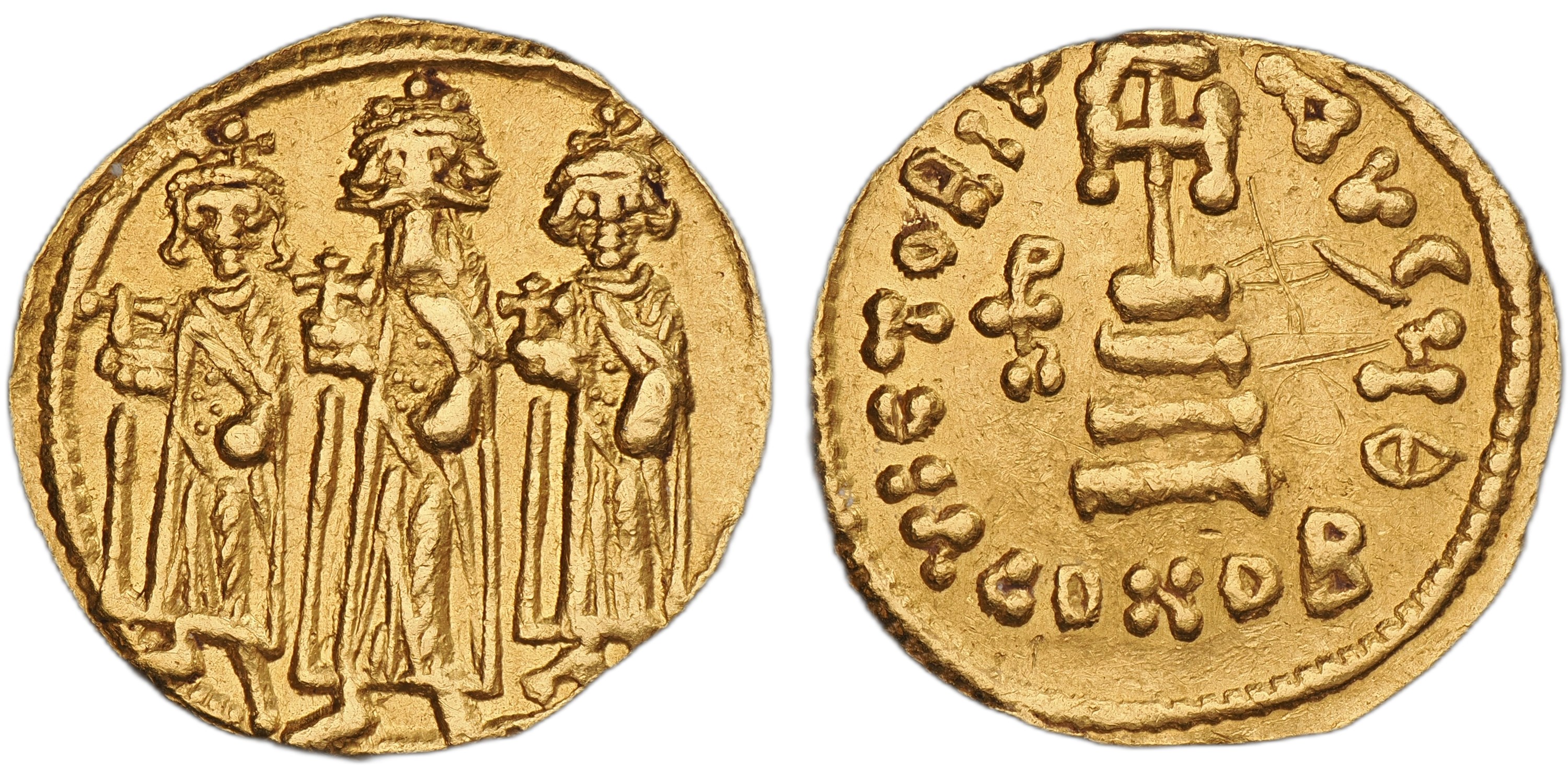
L5 Auction 4 presents a delightful series of 7th century Byzantine solidi with noteworthy and intriguing graffito markings. Graffiti on ancient coins generally and solidi specifically have been comparatively understudied. The 7th century in particular sees a sharp rise and decline in the usage of graffiti when compared to the century before and after. This phenomenon and the reasons behind it are the goal of a recent article published to the L5 news website. The above solidus is especially interesting because of the defacing of its officina mark.
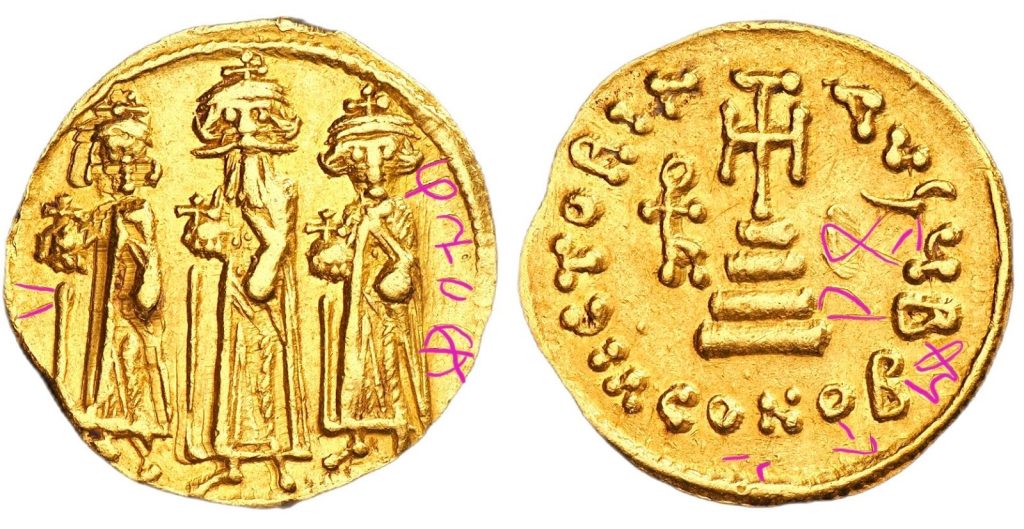
Obverse Graffiti: Λ ΦKVΘ
Reverse Graffiti: ȣ [Uncertain] MΦ [Uncertain]
–
For further information on 7th century solidi with graffiti in L5 Auction 4, visit the L5 news site and read ‘Graffiti on 7th Century Solidi: Provincial Economic Practices at the Imperial Periphery’ https://l5.com/news/graffiti-on-7th-century-solidi-provincial-economic-practices-at-the-imperial-periphery/
For an overview of the end of Heraclian age and the numismatic innovations of the late 7th century, watch the Drachma and Denarii episode ‘Justinian II: Exile, Vengeance, and the Tumultuous Realpolitik of the Byzantine Twenty Years Anarchy’ https://youtu.be/9yDrkSTKmtY
–
The context in which this solidus circulated is also that in which texts such as the ‘Apocalypse of Pseudo Methodius’ first began to gain prominence. Dating to a few centuries after the real St. Methodius, the ‘Apocalypse of Pseudo Methodius’ reflects contemporary awareness of the Arab invasions and the dwindling power of the Roman state throughout the later 7th century. Undoubtedly, the legendary Byzantine-Sassanian war formed the nucleus of the prophecy of Pseudo Methodius. That a Roman Emperor should enter Jerusalem, present the relic of the True Cross, and offer his empire up to the sovereignty of Christ echo the events of Heraclius’ reign.
The Sassanian conquest of Roman provinces held for centuries shocked the consciousness of the Roman people and challenged assumptions about inherent Roman supremacy. With the benefit of hindsight, the catastrophically short sighted policies of Maurice imploded the empire into civil war and weakened central authority when it could be ill afforded. The loss of Egypt, long the breadbasket of the empire, and the loss of Jerusalem, the oldest See and holiest site in Christianity, struck twin blows at the organizational capabilities and religious sensibilities of the Romans. Heraclius was faced with a Sisyphean task and somehow succeeded. Throughout a two decade long campaign filled with immense hardships, Heraclius led the Romans to triumph over the Sassanians and restored lost provinces to the empire. Recapturing both Jerusalem and the True Cross, Heraclius strengthened the fortitude of his people and restored to them notions of pride, religious triumphalism, and political balance.
When losses more devastating than the previous war came at the hands of the Arabs, the Romans could not help but look back on the earlier years of Heraclius’ reign and wish for the same outcome to prevail. As the decades progressed, not only did reconquest seem ever further away, but the possibility of total collapse and conquest at the hands of the Arabs seemed ever more likely. The author of Pseudo Methodius contextualizes his prophecy in this period, facing a dire threat to the empire while looking nostalgically back to an age where the Romans could feasibly win back lost power and territories. The most sacred lands of empire and religion had been taken by an existential foe, and only in the context of apocalyptic fulfillment did the Romans triumphantly reenter the gates of a subjugated Jerusalem. In this, Pseudo Methodius was more correct than he could have anticipated. No Roman emperor would ever again see the walls of Herod, Tower of David, or Church of the Holy Sepulchre.
Conclusion
If Pseudo Methodius correctly envisioned the destruction of the Roman Empire resulting in an age of perdition and strife, was he incorrect in his prophecy about the end times? Perhaps Calvary still awaits visitation. Emperor Constantine XI Palaeologus still lies asleep frozen in marble deep beneath the city founded by his greatest namesake. Having died in communion with both the Catholic and Orthodox Church, Constantine XI represents the final unity of East and West in the visage of the Roman Emperor dating back some 1,500 years to Augustus himself. Greek folk legends of the Μαρμαρωμένος Βασιλιάς sprung up as the emperor himself was struck down. Might it still be that the king of the Hellenes will rise to vindicate an apocryphal apocalypse, and Pseudo Methodius is redeemed with an entry of the marmoreal emperor into holy Zion? Guarded by angels and slumbering deep beneath his rightful city, for how much longer will the last emperor remain in his stupor? Or might it be that Pseudo Methodius is misinterpreted entirely? There were numerous claims to the title of Roman Emperor across the middle ages, with but one exception all are relinquished. Only the office descended from a peasant fisherman still wears the imperial red slippers today.
So ends the top 10 list for L5 Auction 4. If any of these coins should have intrigued you, O’ reader, rest assured that many more treasures are to be found in the full sale. What was shared here is but a small preview. I hope that I have played my part well and to your satisfaction.
Acta est fabula, plaudite!