L5 News ·
The Top 10 Coins of L5 Auction 7
L5 welcomes the reader to another edition of our top 10 coin lists! Auction 7 presents a number of exciting and specialist pieces, including a Jewish revolt shekel, Koson stater, and Visigothic tremissis among many others! From ancient Greece to medieval Spain, this auction has coins for every taste and interest. Head to L5.com to view the full catalogue today!
We also thank the Stannard family for their consignment of wonderful English hammered coins, to be found in the ‘Early Medieval’ section of the sale. Such legendary figures in English history as Henry VIII or Charles I are presented in numerous denominations, all of the finest strike and quality. For the enthusiast of hammered English pieces, this is not a collection you will wish to miss!
Furthermore, we approach a very significant marker in the coming weeks. Auction 8, tentatively planned for the early fall, will officially mark one year of L5! Stay tuned for the celebrations, including a very special offering of ancient coins. L5 is proud to auction a series of pedigreed coins from the 19th century, with renowned numismatists as recorded donors. These exceptional pieces were gifted to a Dutch museum by leading scholars over many decades in the middle to late 1800s. Many of the coins have both the original donor and date recorded, allowing for a unique opportunity to own some of the earliest verifiable provenances for ancient coins in existence – and tied to important, 19th century academics nonetheless! These coins, since deaccessioned by the Dutch museum, are for the first time in two centuries available at auction! We promise that the one year anniversary celebration of L5 will be as exciting as our journey with you has been to date! Stay tuned for further details about this forthcoming auction!
With these announcements out of the way, let us return to the auction at hand. For auction 7 remains as one of the best yet presented by L5, and the following top 10 coins of auction 7 prove just this! Without further ado:
The Top 10 Coins of L5 Auction 7
1. Alyattes or Kroisos, Lydia. EL Trite, 610-546 BC.
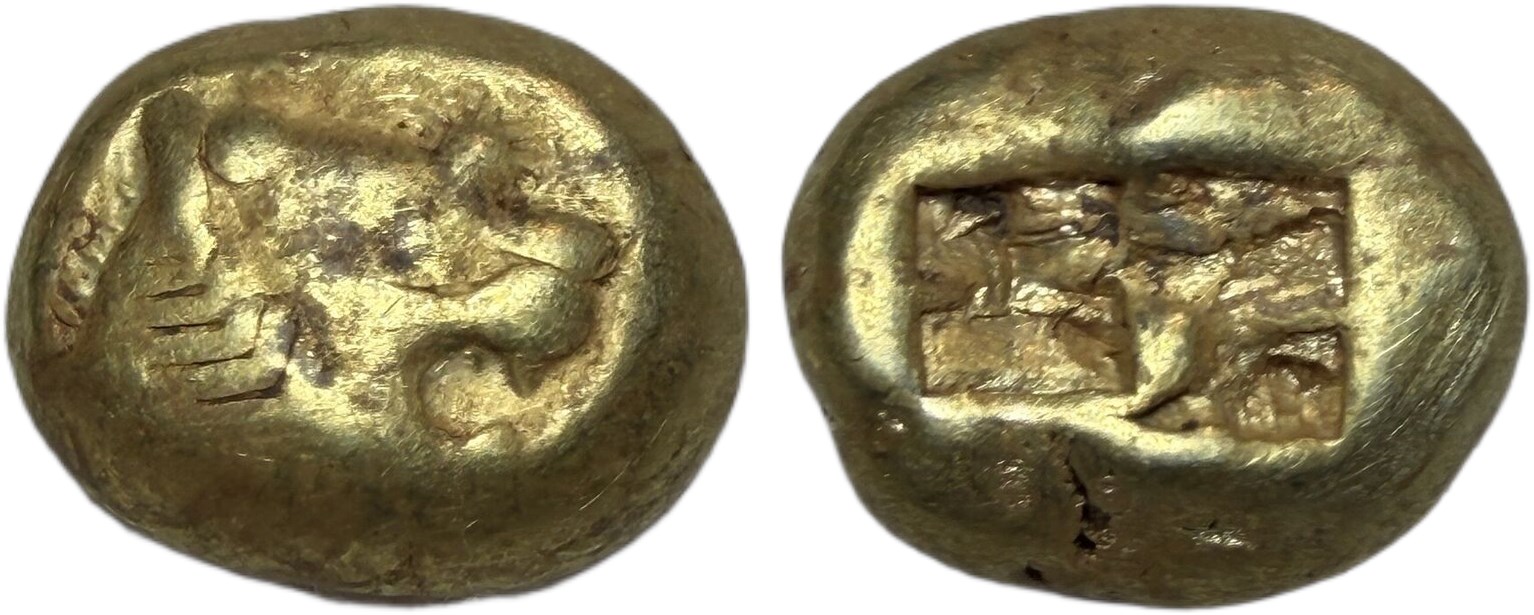
The idiom ‘as rich as Kroisos’ betrays the unhappier truth flowing over the rushing waters of Herodotos’ elegant prose. For the secus decursus aquarum of the Paktolos indeed provided copious amounts of electrum to the native Lydians, but their monarchs did not stand as though a firm tree planted with its due fruit in season. The kingdom rose as dramatically as it fell, and but for a few generations the sons of Sardeis ruled Asia Minor.
As for the yield of the Paktolos and the innovations of the Lydians, Herodotos tells us that,
πρῶτοι δὲ ἀνθρώπων τῶν ἡμεῖς ἴδμεν νόμισμα χρυσοῦ καὶ ἀργύρου κοψάμενοι ἐχρήσαντο, πρῶτοι δὲ καὶ κάπηλοι ἐγένοντο.
They were the first men known to us who coined and used gold and silver currency; and they were the first to sell by retail.
Such coins as the above trite evidence the trite tale of Herodotos and the fickle nature of man. For while the cultural memory of one man’s wealth captured the imagination of antiquity and even has pervaded the modern age, the unhappy story of the man behind the phrase is largely forgotten. Kroisos, for all the abundance of wealth and the prosperity of his kingdom, counted himself the luckiest man alive. When the sojourner Solon stayed at court, Kroisos ushered the philosoph into the royal treasury to bedazzle his eminent guest.
After a satisfactory tour of the doubtless numerous rooms, Kroisos posed to Solon the question of who should be considered the happiest man in the world. Expecting himself named, Tellos of Athens came the rude reply! Kroisos, indignant at these words, had Solon explain. Tellos, having lived to see the children of his children, with a happy and respectible family, met his honorable end on the battlefield at a ripe age, buried and mourned with great ceremony by the state.
Assuredly, if not first then second – Cleobis and Biton the reply! For those two fellows gave their life to see the culmination of a necessary and important religious festival, whereupon having rendered the extreme physical feat of carrying a cult statue many miles in the manner of oxen, the two brothers passed away in sanctity on temple grounds, showing how it “was better for a man to die than to live”.
Angered, Kroisos asked of Solon how this can be! Solon the quip, “But I cannot yet answer your question, before I hear that you have ended your life well.” These golden words later rang true when Kroisos, arrogantly misinterpreting the sacred oracle of Delphi, went off to destroy a great army – only too late realizing that Apollo had spoken of his own. To be as rich as Kroisos…
If only Kroisos was as wise as Solon!
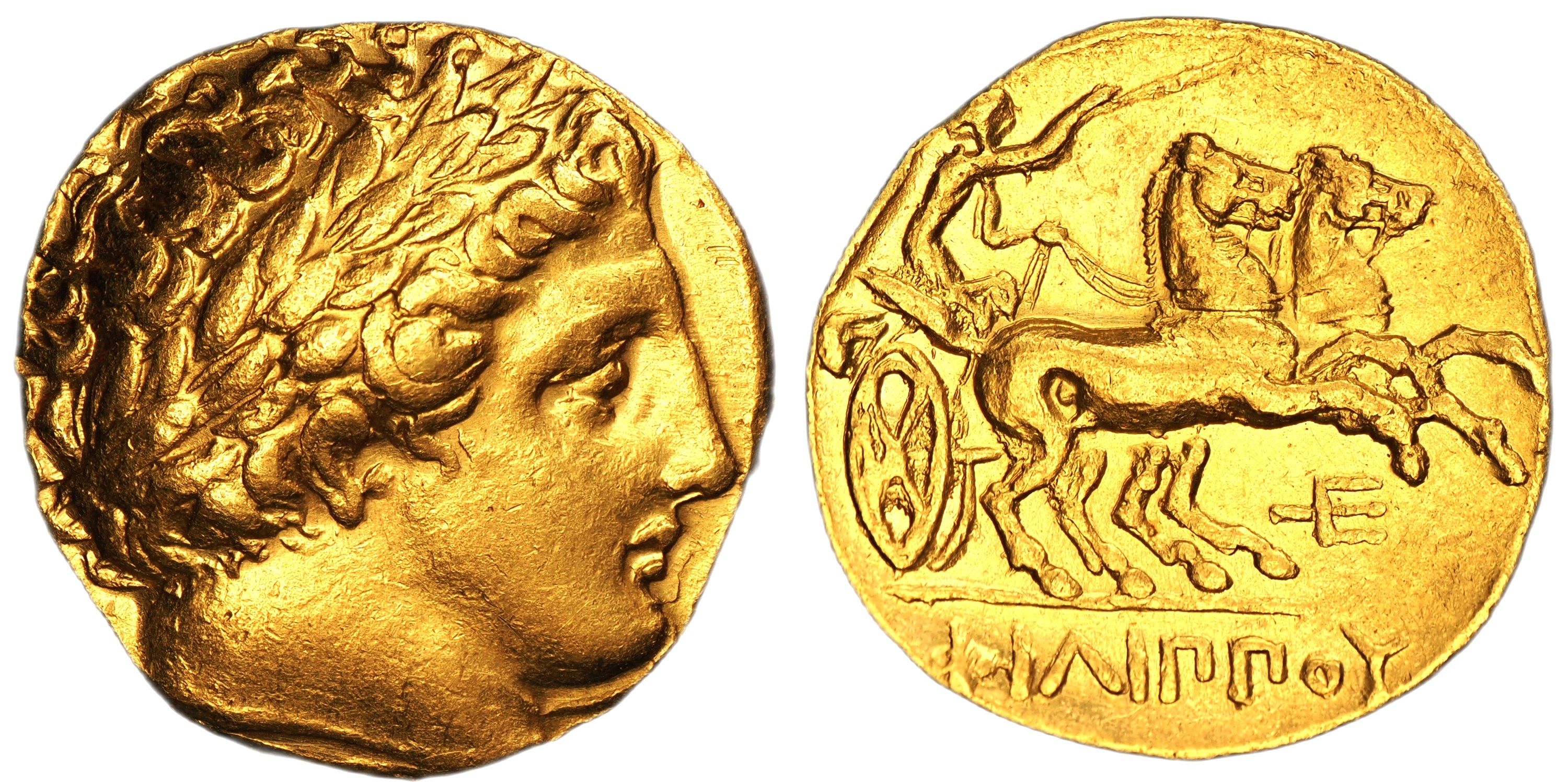
2. Posthumous Issue in the Name of Philippos II, Pella. AV Stater, After 336 BC.
In 1977, Manolis Andronikos discovered perhaps the most famous archeological find of the entire 20th century. Under the earthen loam of Vergina lay the remains of the greatest Greek statesman that the world ever saw – and now, thanks to Andronikos, the world again can see.
Philippos II of Makeonia stood as tall in his own life as he did in legacy. Analysis of a corpse found in Tomb II of the late 4th century BC grave complex showed a man originally 1.8 meters tall with a penetration wound to an eye socket. This taken into consideration with the location, date, and the sumptuous – obviously royal – circumstances of burial, leave only one contender to likelihood.
The discovery of Philippos sent shockwaves through the academic world, and the long lost remains of a major historical figure returned to be studied. Yet the legacy of Philippos did not cease with his body laid to rest, nor did the machinations of the crafty Makedonian fall apart after death. Under the brilliant leadership of his son, the very army, officers, and state structures built by Philippos were put to good use by another. Coins like the above example emphasize the importance of Philippos to Makedonian propaganda even after his death. The long shadow cast by the scarred, one eye hegemon of Greece extends still a small bit further today, thanks to Andronikos and the rediscovery of Philippos’ remains.
3. Elis, Olympia. AR Stater, 245-210 BC.
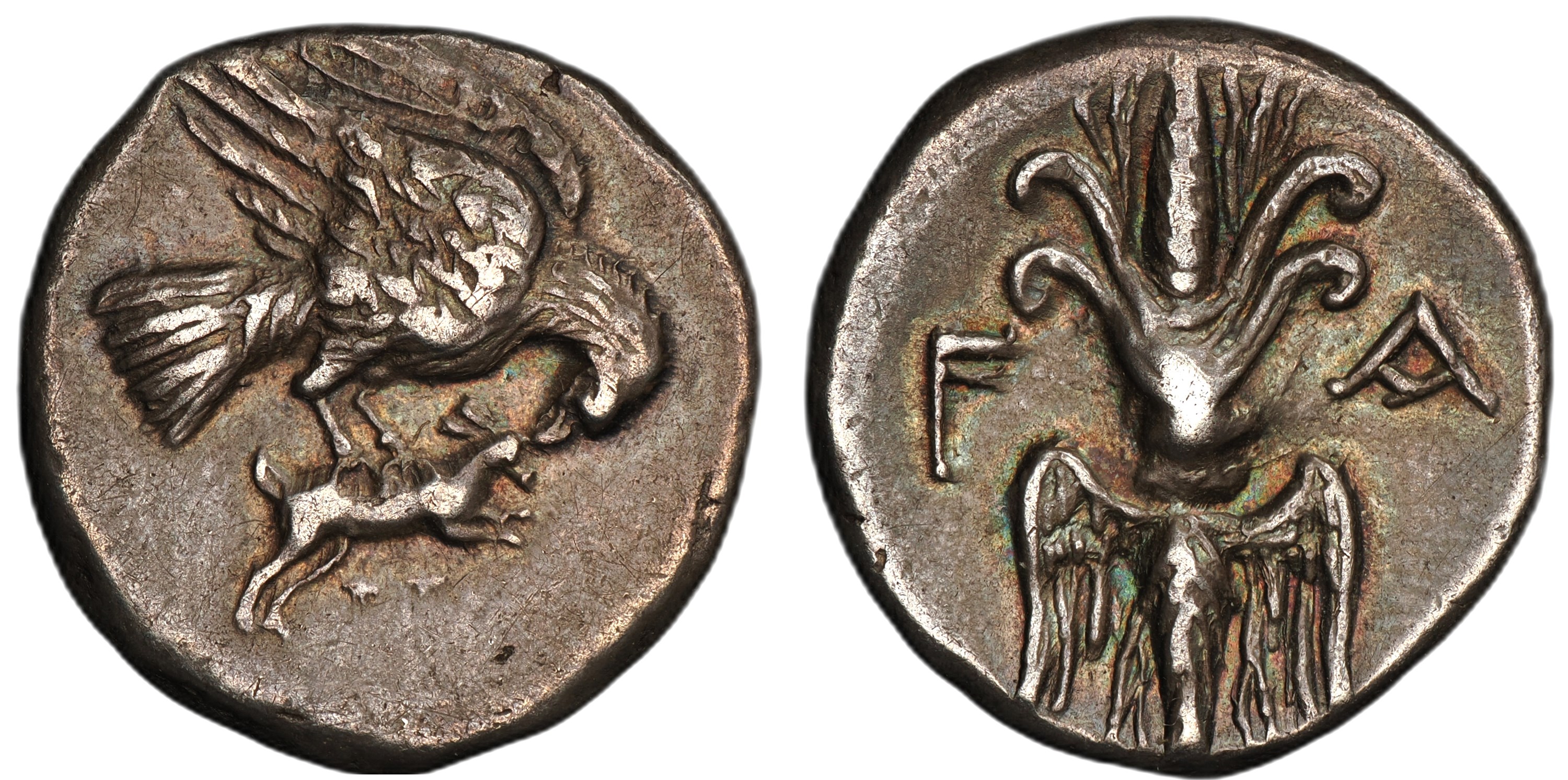
This attractive Greek stater embodies the quintessential Hellenistic spirit, minted in the heart of Greece. Olympia, as the name well betrays, was the host of the most famous sporting event in antiquity. Her namesake Olympic games were recurring athletic competitions celebrated in the region every four years. Greeks across the Aegean and beyond strove to not only compete in the illustrious event, but to win fame and fortune for self and polis. The golden tongue of Pindar has immortalized the exuberance and joys of victory, and numerous attestations across the ancient annals record great honors heaped upon those who stood victorious at the games. The prizes themselves were little to look upon, only but a wreath. Beneath the intertwined branches, however, lay civic commemoration, celebration, and immortality. For those fortunate and able enough to stand as victors of the games, their names carry through even to the current day. If we can no longer experience the ancient games as they once were, the fine coinage of Elis and Olympia present a tangible connection to this most Hellenistic of events.
4. Ionia, Magnesia pros Maiandro. AV stater, 130-120 BC.
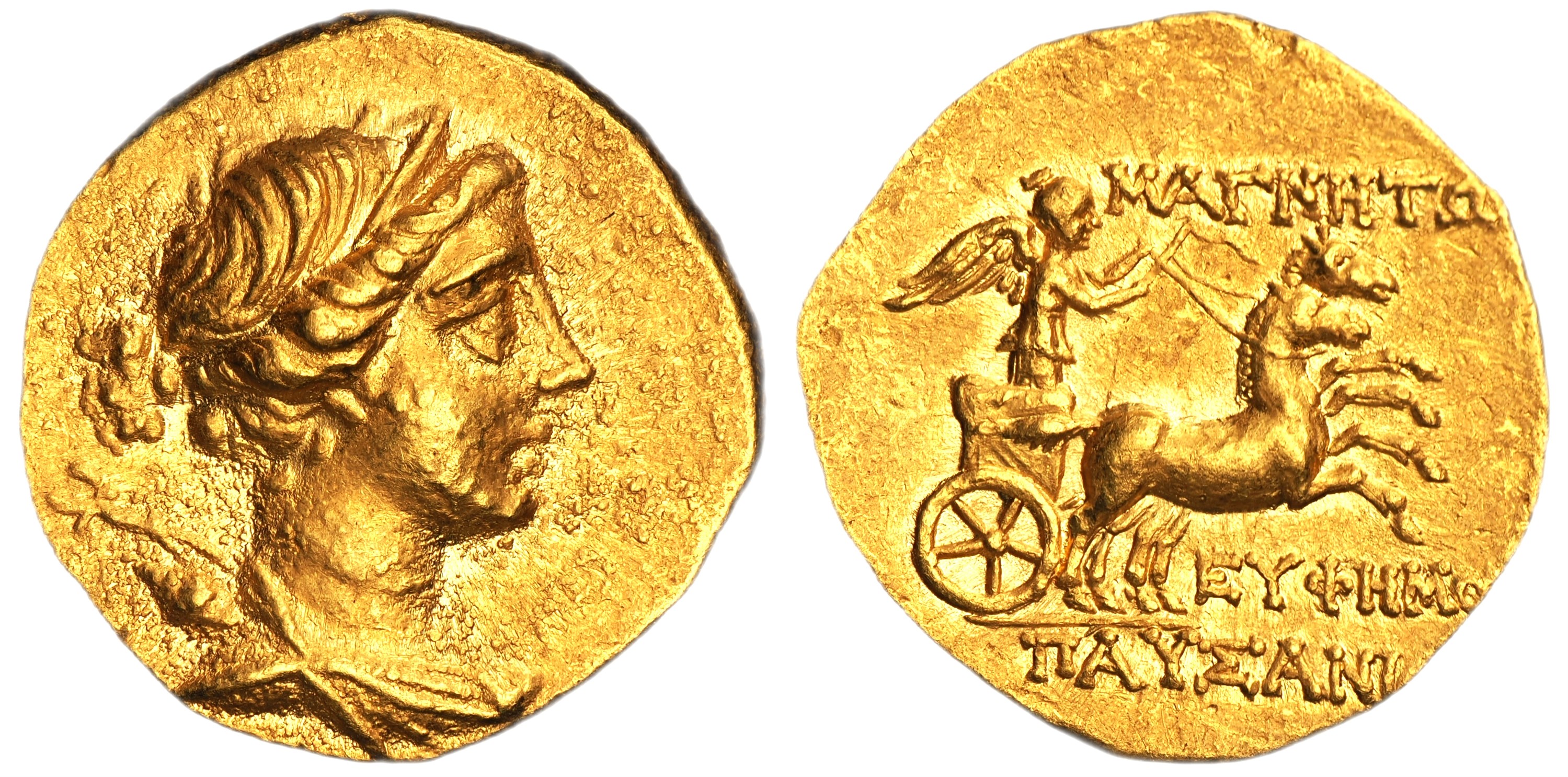
Magnesia pros Maiandro, or Magnesia ad Maeandrum according to the Latins, was a well to do polis in the south west of Anatolia. Like the drachme from Skepsis discussed in the write up for the top 10 coins of the L5 bourse, Magnesia was one of the five cities granted to Themistokles by the great king of Persia. Most important was Lampsakos, for it was to provide fine wine for the Greek expatriate. Myos was given for vegetables, Skepsis for clothes, Perkote for bedding, and Magnesia for bread. That most ancient and noble of foods dates back to the earliest traces of civilization, and undoubtedly any man of culture insists upon its regular presence at his tableside. Poor Pope Martin I, in his exiled exacerbations, laments how the city of Cherson had only heard of (but never seen) bread. Themistokles, whatever his ills in exile, was spared such a gruesome and hyperbolic fate. To him went Magnesia, with all its bread and revenues.
5. Krete, Lyktos/Lyttos. AR Stater, 330-270 BC.
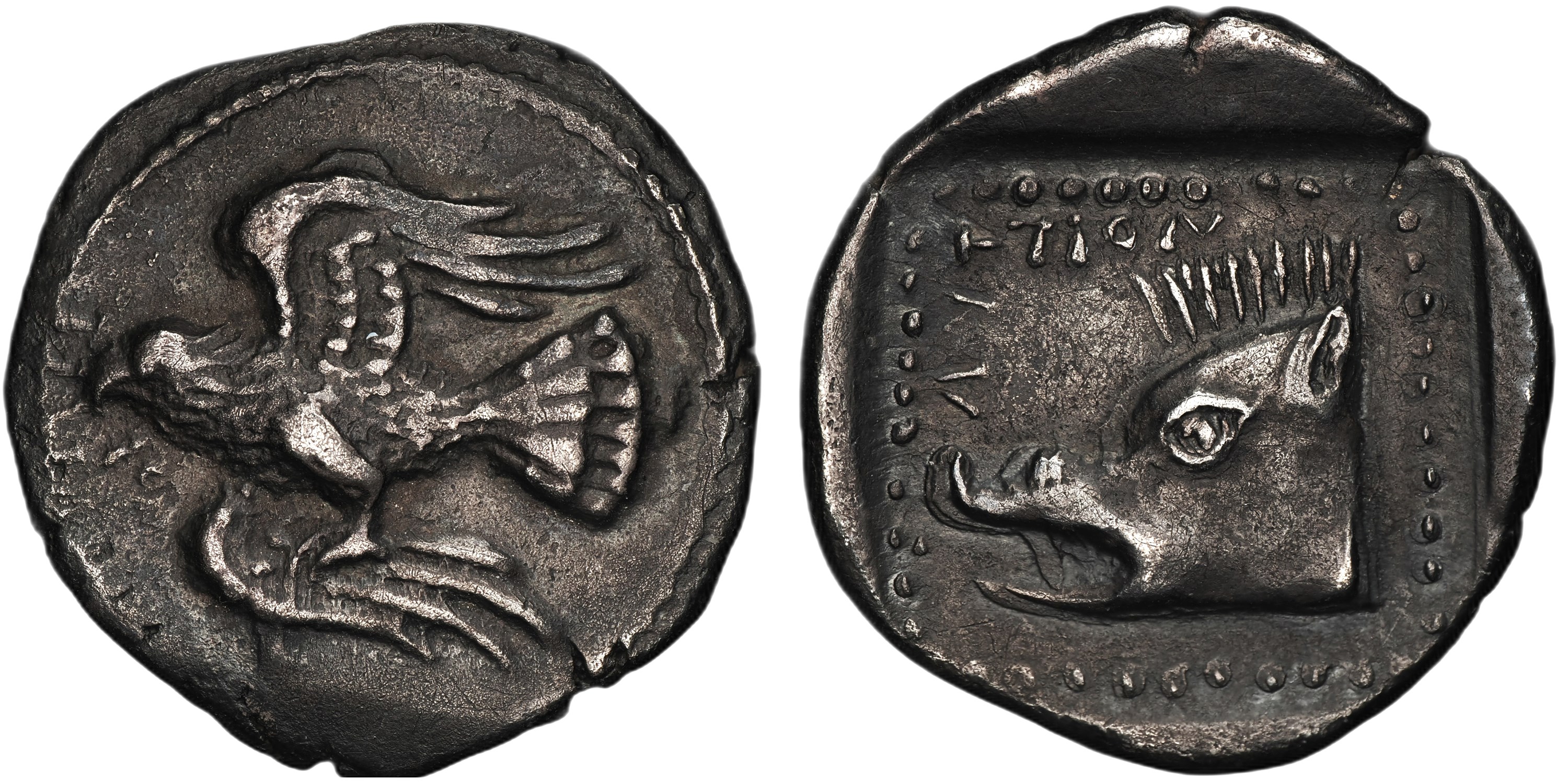
The history of Lyttos follows that of Krete, with the city state independent of, in coalitions with, or subject to outside powers depending on the current whims of fate. Prominent especially in the later Hellenistic age, Lyttos faced two unfortunate sackings. The first was made during a Cretan civil war, with the entire fighting-age, male population of the city returning from campaign to find their polis burned down and families enslaved. The second sack occurred at the hands of the Roman Republic, after which the city sank into relative prosperity but obscurity, before eventually being abandoned in the early medieval period. The above stater reflects the city at its most powerful, both economically and militarily active. The eagle represents the bold attitudes of the population before having their feathers twice so cruelly plucked.
6. Kyprus, Kition under King Pumaiyaton. AV Stater, 325-320 BC.
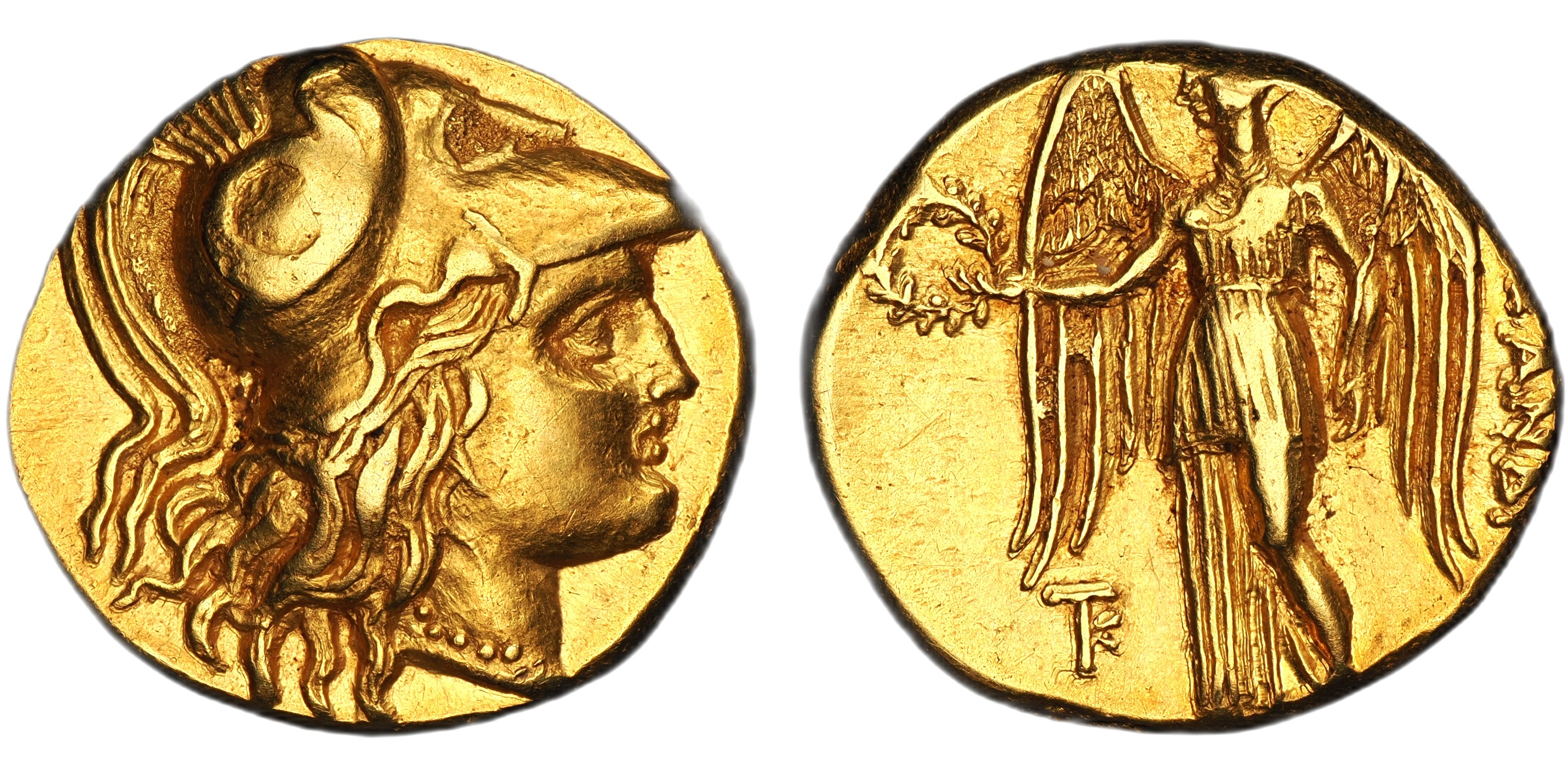
Little is known of Pumaiyaton besides a few surviving inscriptions and his numismatic proliferations. King of a subservient though nominally independent kingdom in Kyprus, Pumaiyaton was the last in a long line of Phoenician kings to rule on the island. Object 1872,0816.82 in the British Museum hosts a scant reference to the king, with the text assumed to read “[? Pumayyaton King of Kition and Idalion] son of Milkyaton, King of Kition and Idalion”. Of his rulership and accomplishments, little can be said save a brief expansion to claim Tamassos. The series of coinage struck in the name and with the standard designs of the lion maned pupil of Aristoteles raise the question of the relationship between Pumaiyaton and the Makedonian king. Whatever the leeway granted to Pumaiyaton may have been, wise policy for the period was adherence and submission to the new master of the region.
For the curious reader, Evangeline Markou discusses the coinage Kyprus during this period in a recent publication titled The Royal Coinages of Kition and Idalion. A Numismatic and Historical Study (6th-4th c. BC).
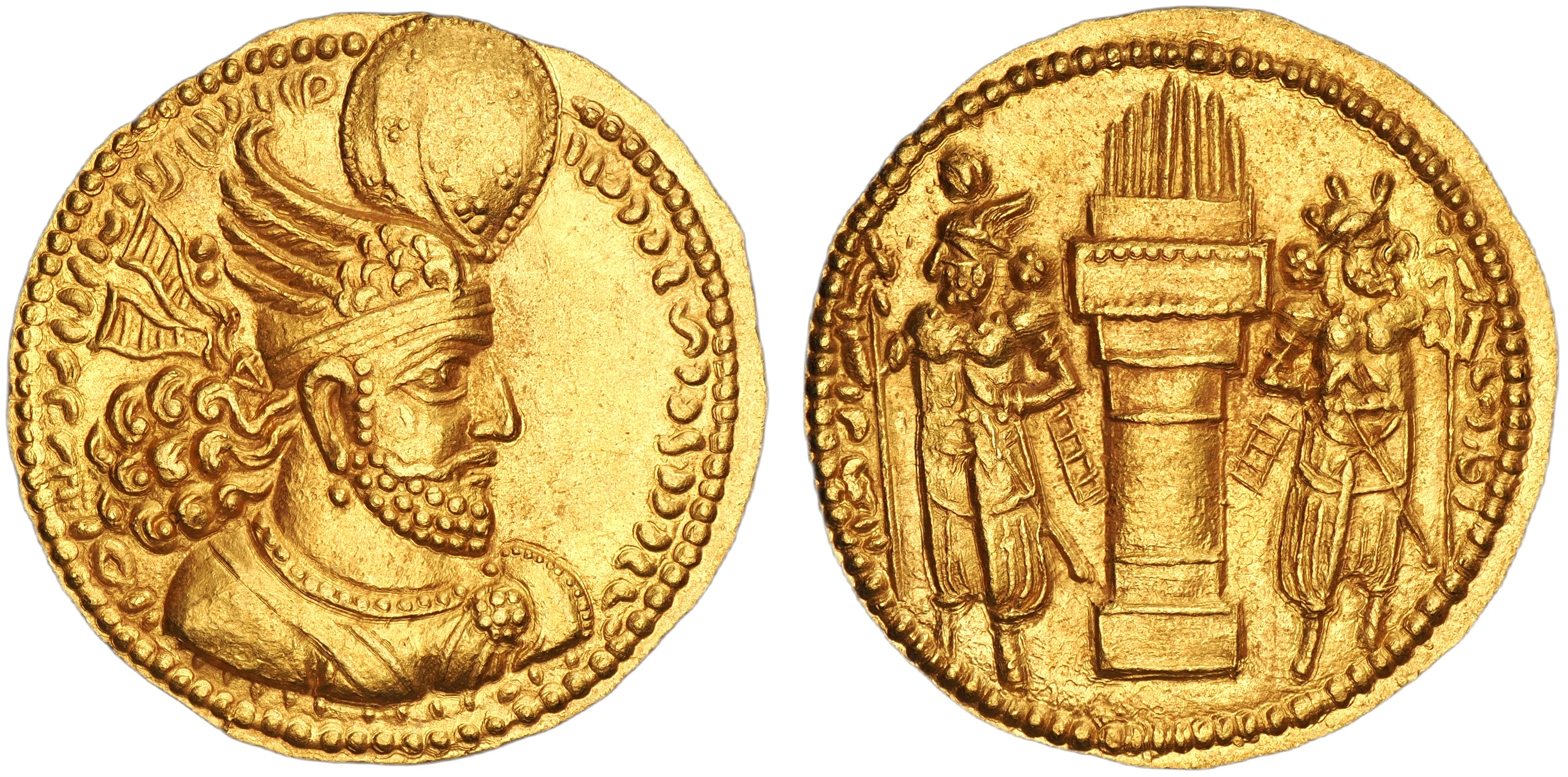
The disciple of Ahura Mazda needn’t fear the encroachments of the Western savage. King of kings, lord of lords, bringer of light, he has been chosen by the almighty to defend not only himself, or his kingdom, but the world from the powers of darkness. The bringer of deceit, Ahriman, wages an aeternal conflict for the patrimony of the universe. Baranes II has no doubt. He has seen the power of truth, and he has seen the evil of lies.
Foul, serpent tongued usurpers slithered from every corner. Where do they stand now? The uncouth Latins invaded his heart lands. And what of their efforts? Imperator Carus has been struck by lightning, the surest sign of divine blessing. The Latin invader is quite literally smote by the divine. What need is there of trembling? There can be no doubts now. Valerian was captured and had his flayed corpse stuffed, the fitting punishment for one who works evil. And this day Ahura Mazda has slain another bringer of falsehood. The unconquerable empire of the east was here before the Westerners, and surely it will outlast them too. Ahura Mazda has blessed Baranes’ reign, as he will many others. The victory of truth is inevitable.
8. Judea, Hierosolyma. AR Shekel, AD 66-70.
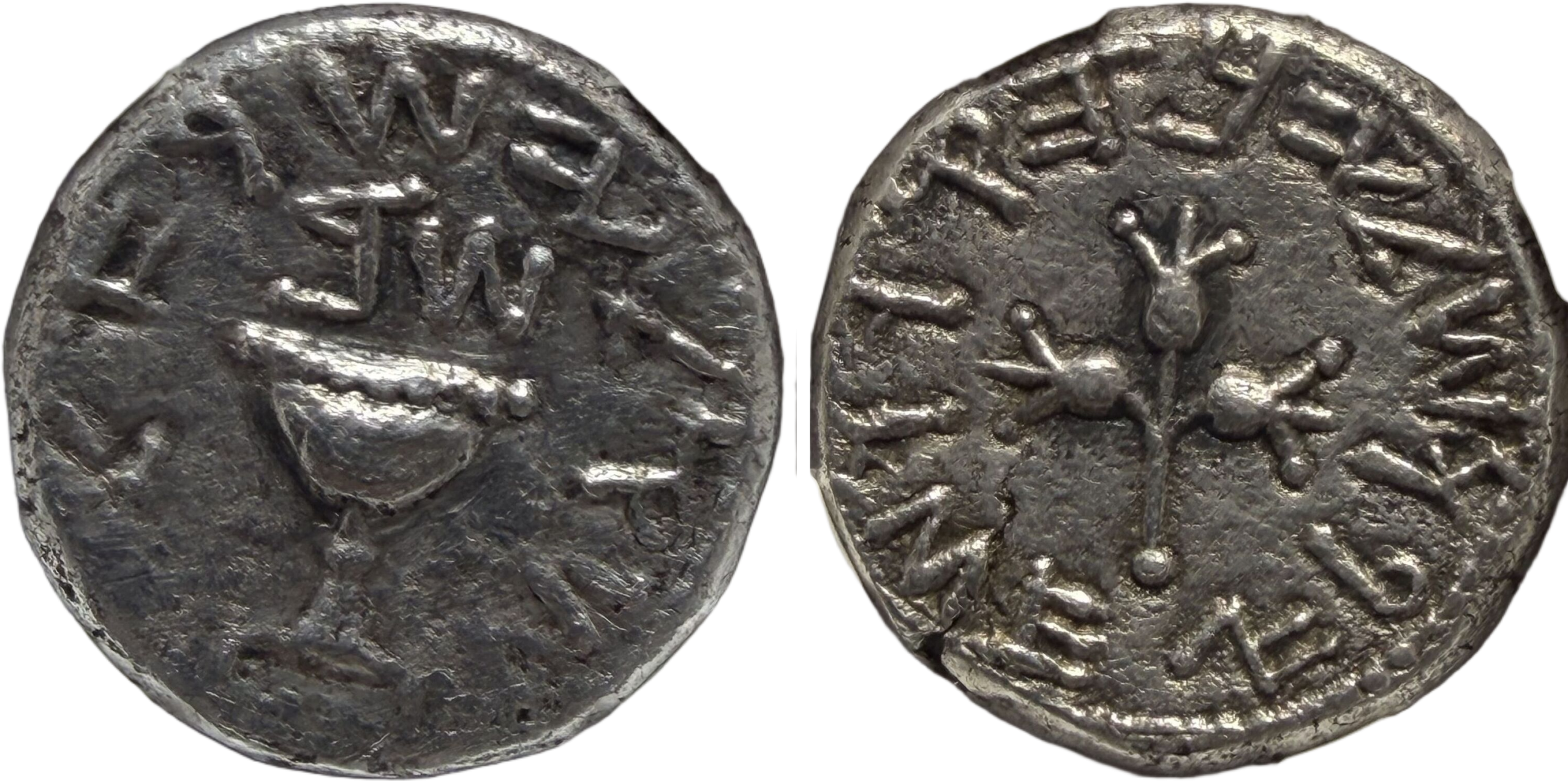
The great Jewish revolt of AD 66-74 ended as dramatically as it began. On the heights of Masada, one thousand Jewish soldiers and civilians chose suicide over surrender as the culmination of the most bitter siege in a long and protracted war. The Jewish rebellion met early success against regional officials of the Roman province, but once taken seriously, the might of Rome descended upon the region. Spearheaded by Vespasianus and his son Titus, future emperors of Rome, the gradual encirclement of Hierosolyma proved to be an effective strategy by the Roman military command. Cut off from the countryside, the capital of the rebels was left to simmer as tensions boiled over among disagreeing factions in the city. Infighting hastened their ruin, and the city walls were breached before the year of AD 70 passed. The temple was sacked and destroyed, and the spiritual nucleus of Judaism lay in ruins. A second attempt would be made half a century later, only to meet the same fate. The above shekel boldly proclaims the foundation and hopes of a new Jewish state, independent from the control of Rome. However, a single rebellious province, once the attention of a Mediterranean wide empire gazed upon them – tenacious as the struggle might have been – was inevitably doomed to failure.
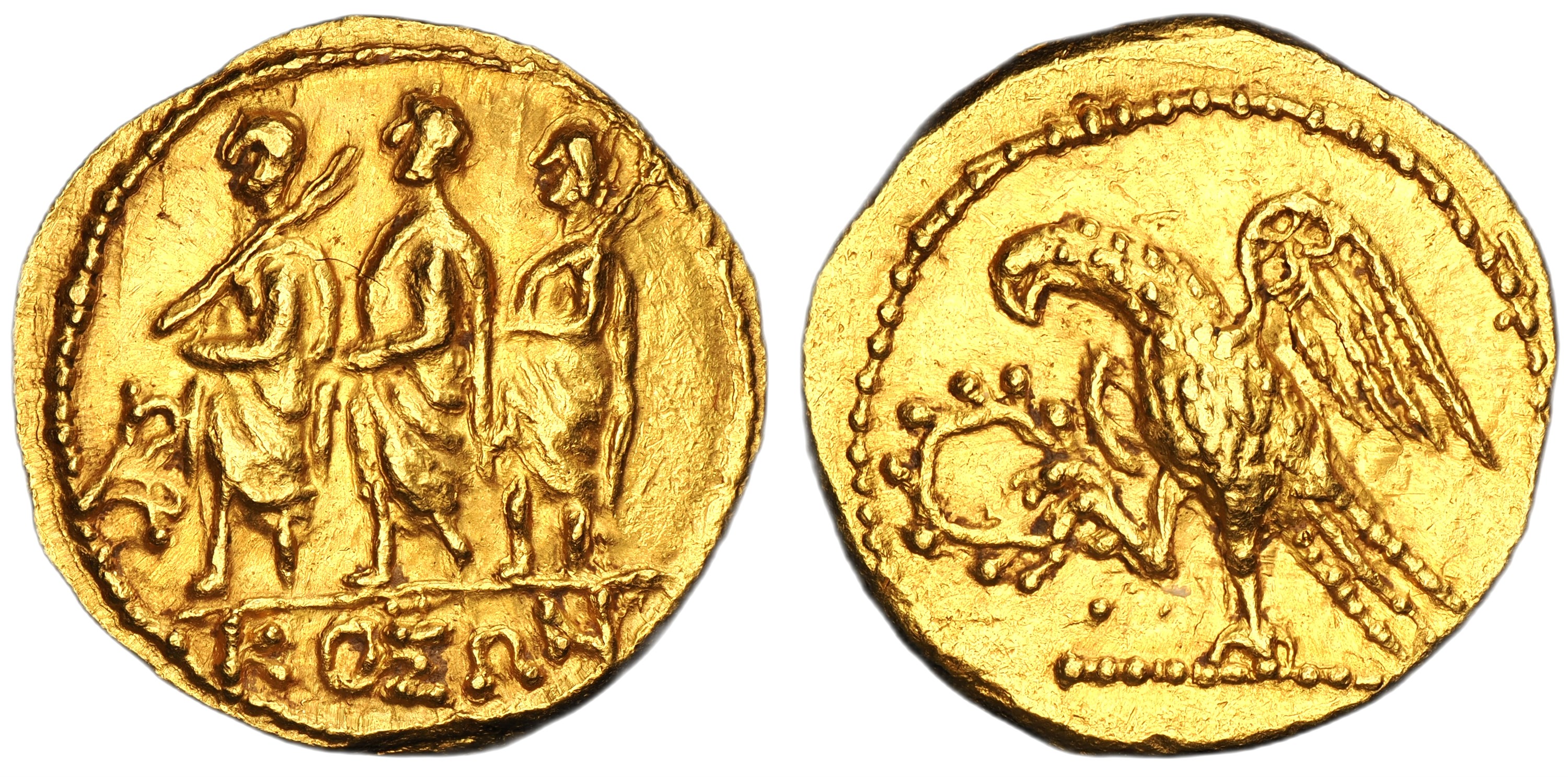
9. Skythia, Uncertain Dacian Mint. AV Stater, circa 42 BC.
Honorable Mention:
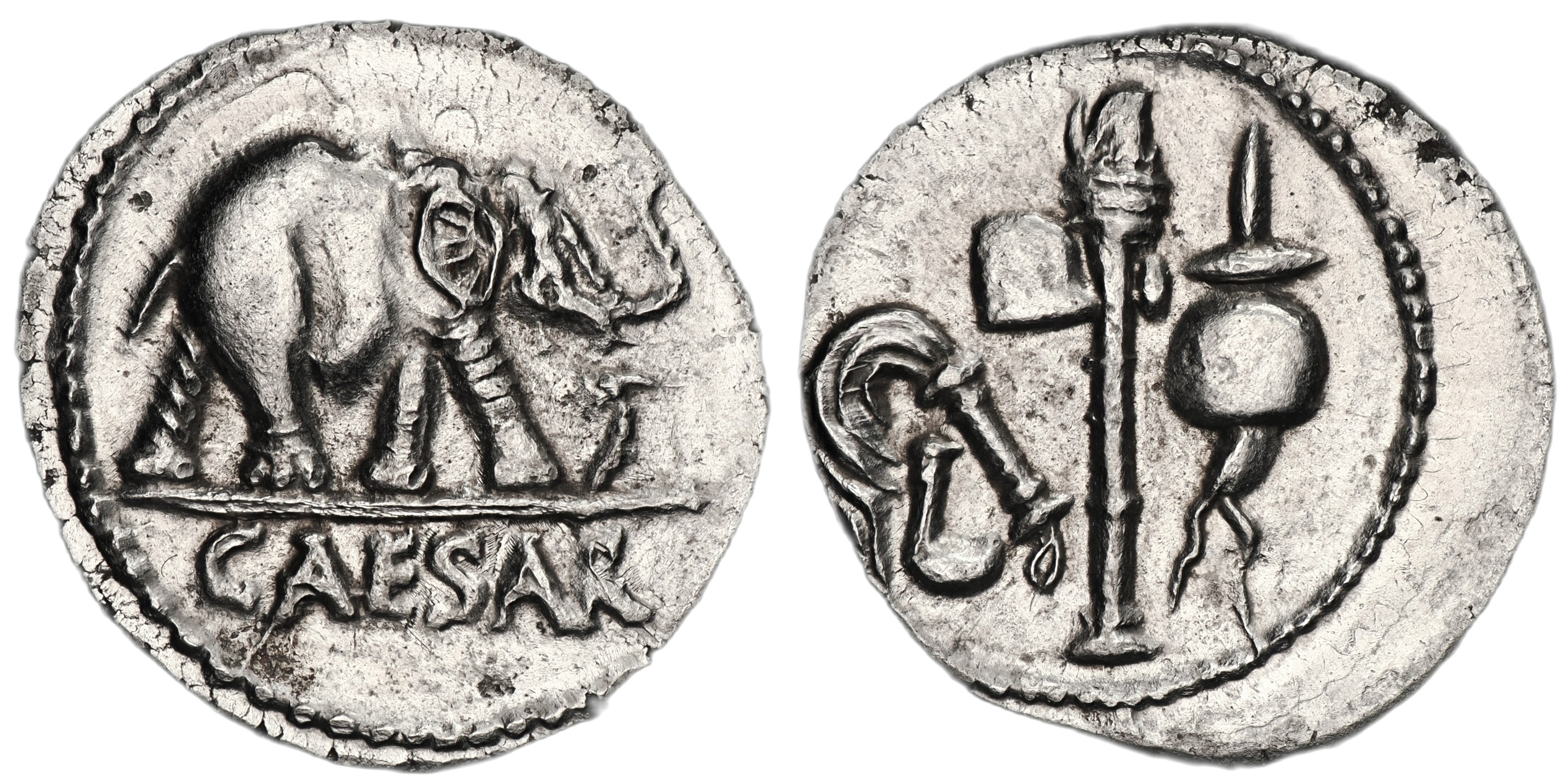
Julius Caesar, Uncertain Military Mint. AR Denarius, 49-48 BC.
The imperatorial period of coinage is among the best studied of antiquity, though numerous questions still remain. Perhaps most prominent among these is the coinage of Koson. Minted around the time of the late Roman republican civil wars, the obverse copies the 54 BC denarius of Marcus Junius Brutus. The legend in exergue reads ΚΟΣΩΝ, an otherwise unknown figure or place theorized by some to be a Thracian dynast. The reverse of the type features the eagle of Rome holding a wreath, a symbol of military victory.
The coinage as a whole is comprised of two series, one with and one without the monogram of Brutus on the obverse. The exact context and purpose of the coins remains contested, though a connection to the military campaigns of Brutus against Octavianus Caesar and Marcus Antonius in 42 BC seems likely. In this theory, a Dacian ally of Brutus named Koson minted this series of coinage to fund the Boni cause, perhaps even serving as a gift by Koson to Brutus. Whatever their relationship, the difference in prominence between the small monogram of Brutus and large legend naming Koson is clear.
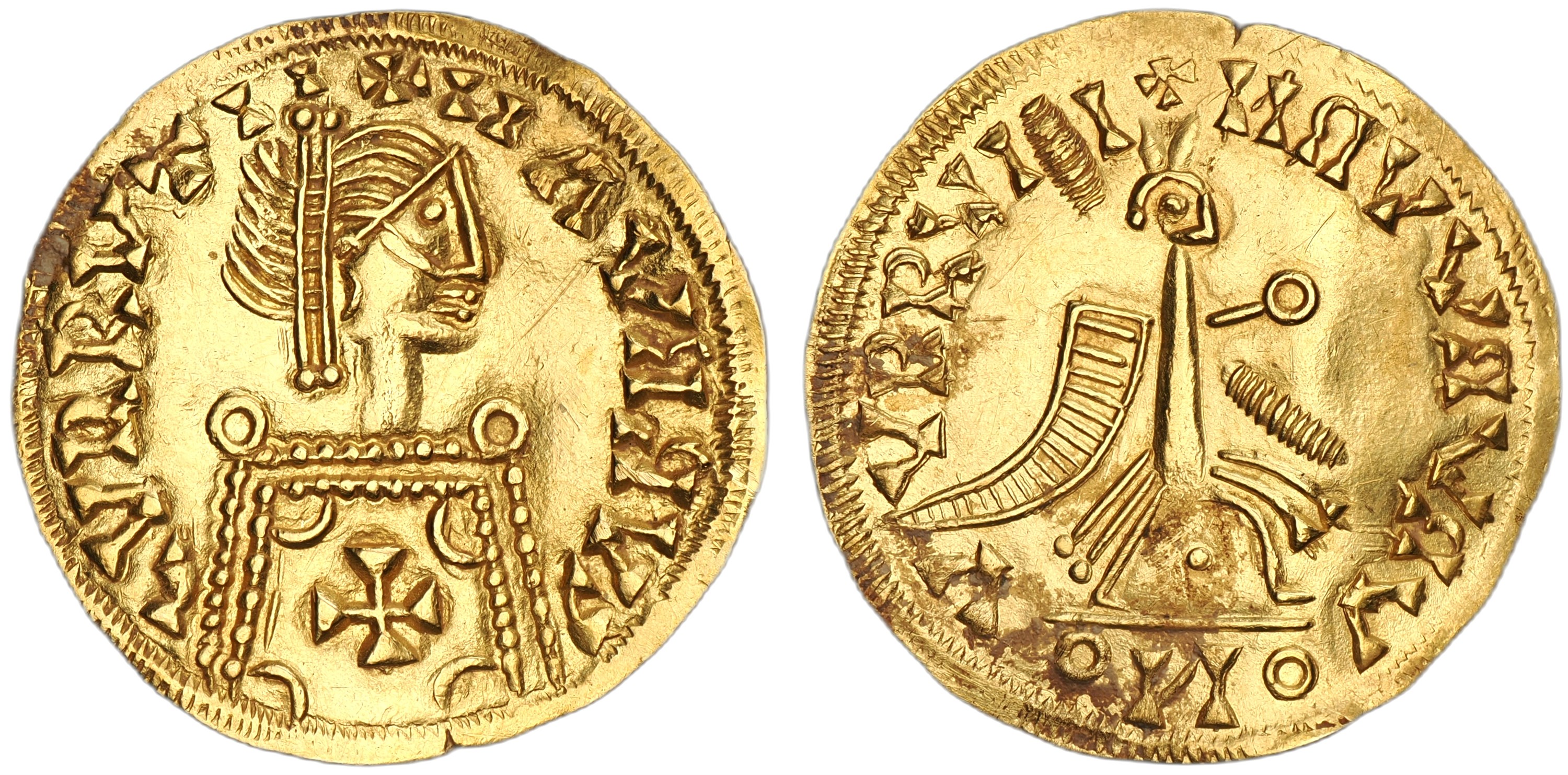
10. Leovigildus, Toldeo. AV Tremissis, AD 569-586.
The relentless tides of Teutonic invaders washed over the ruined empire like the relentless waves upon a floundering wreck. Robbed of strength and bereft of power, the once might Roman people shattered and were absorbed – not by the new comers, so much as the gradual effects of time and separation. For while the Germanic tribes certainly spread brazen destruction, the frothing inhibitions of all traversing bands were not equal. Gradual trends, already at play for some time, were irrevocably pushed forward by the introduction of new overlords.
The Visigoths in Spain, if one can charitably excuse pius historiography mixed with a healthy dose of hagiography, certainly seem to be of the meeker sort among the ferocious peoples who descended from the East and North. The kingdom established in Spain was one of general peace and concord, and of especial importance for Medieval chronicles, after the conversion of Reccaredus, decidedly Catholic. Leovigildus had the poor luck (and poor taste) to remain a staunch Arian when the matter of Christianity had been settled some two and half centuries before at Nikaia. Doubly so, the aforementioned Reccaredus who succeeded to the throne of Leovigildus as an Arian, immediately converted to the Catholic Faith. Thus, Leovigildus remains the last Visigothic king quagmired in the theological heresies of an age now past. The Catholic future was soon to arrive in Visigothic Spain. Quite fittingly then, do the emissions of the period still imitate the old Byzantine coinage of an age where the Teutons are not yet comfortable to rule in their own right. With adoption of Catholic Christianity came legitimacy, and with legitimacy came the confidence to challenge the old order. In some centuries, the squatting, Teutonic barbaroi would come to dominate the world.
So ends the top 10 list for L5 Auction 7. If any of these coins should have intrigued you, O’ reader, rest assured that many more treasures are to be found in the full sale. What was shared here is but a small preview. I hope that I have played my part well and to your satisfaction.
Acta est fabula, plaudite!