L5 News ·
L5 Bourse Highlights – the Harlan J. Berk Store
With almost 4,000 listings, the L5 Bourse is fast taking off as an industry leader in the peer-to-peer marketplace exchange of ancient, medieval, and modern coins. Prominent among sellers on the Bourse is a dealership with decades of market expertise: Harlan J. Berk, LTD. Founded in 1964, Berk is a leader in the attribution and authentication of ancient coins and artefacts. Among the numerous auctions and publications of the firm and its members, Berk stands out as among the most knowledgeable, respected, and trusted firms in the numismatic field today.
L5 is proud to announce that Berk has uploaded close to 3,000 coins of the highest quality to the L5 Bourse. Ranging from Archaic Greece to Medieval York, the breadth and depth of offerings are sure to have numismatic pieces of interest for everyone. Selected for both interest and variety, L5 presents 10 specimens from the Harlan J. Berk, LTD storefront, available for immediate purchase on the L5 Bourse page.
Visit the L5 Bourse, create your own store, browse through the inventories of industry leading experts, and experience your L5 low fee difference today!
Highlights from the Harlan J. Berk Store on the L5 Bourse
1. Sicily, Zankle (Messene). AR Drachm, 500-493 BC.
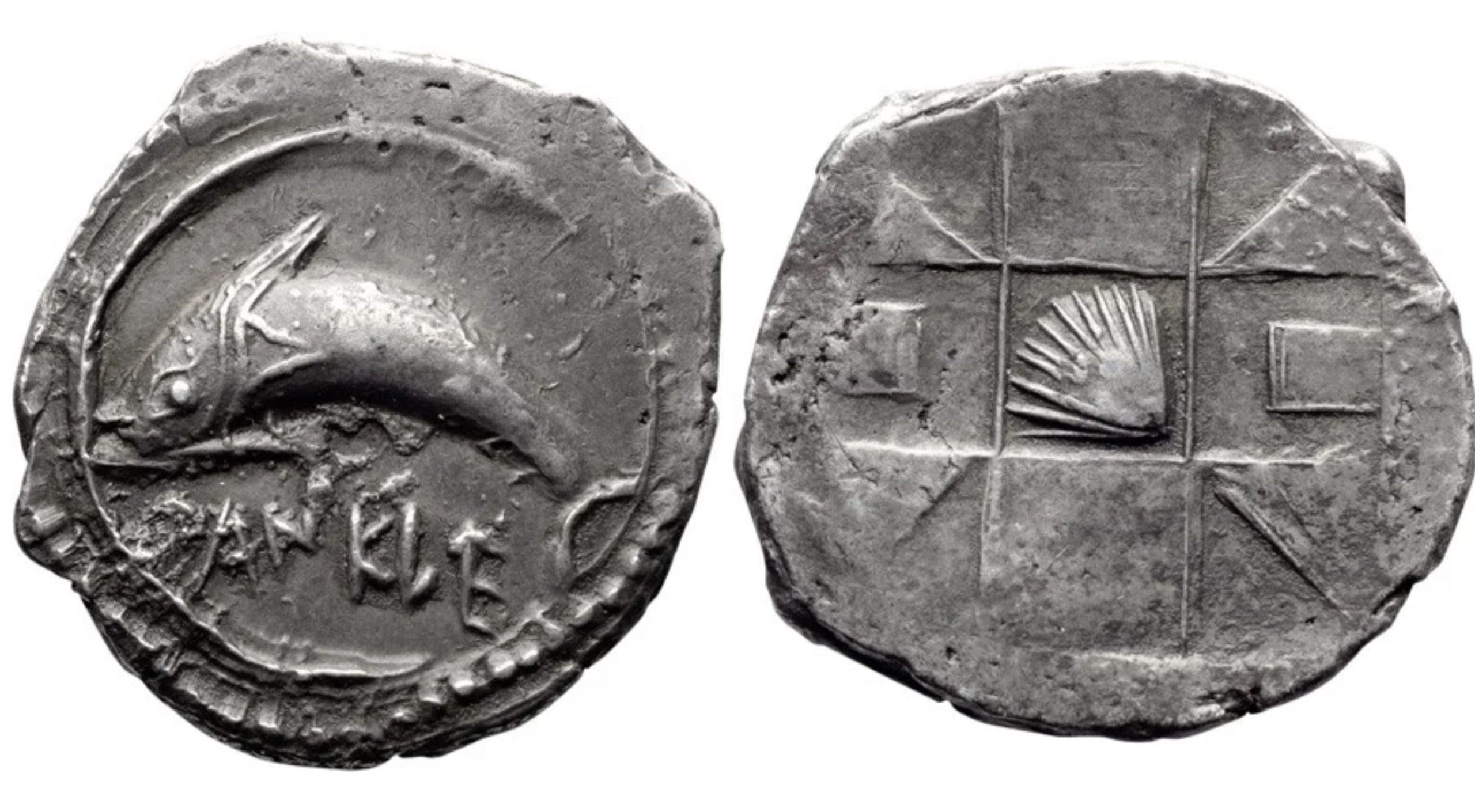
Ex Prof. Robert Gaupp Jr. Collection (1907-1978); ex Münzen und Medaillen 32, 20 October 1966, lot 44.
The charming and archaic issue above captures the early numismatic history of Messene, while the polis was still named Zankle. According to Thucydides, that name originated from the Sicilian word for a scythe, which the local harbor resembled. The name was apt indeed, for as the scythe marks a bountiful field of crops ready for the harvest, so too stood the prospering citizens of Zankle as golden wheat among the many weeds of the island. Tempting target for all, Zankle (by then named Messene) faced a tumultuous history of sackings and conquest.
The history of a certain Latin republic traced her steps through the centuries around Messene, and such colorful exploits as the hospitality of infamous Mamertine vagabonds or the piracy of dashing Sextus Pompeius ink pages of Messene lore. Left to recoup and recover under the blazing sun of the Pax Romana, the frigid winter of Teutonic migration brought unto the shores of Sicily a less kind master. Yet it was another of the Teutons who restored to her munificence, and Messene like all of Sicily fared well under the auspices of the Normans. In days more ancient, when the age of the Hellenes still reigned, the dolphin joyfully leaps from the scythe shaped harbor of Zankle onto the drachm above.
2. Troas, Skepsis. AR Drachm, 5th Century BC.
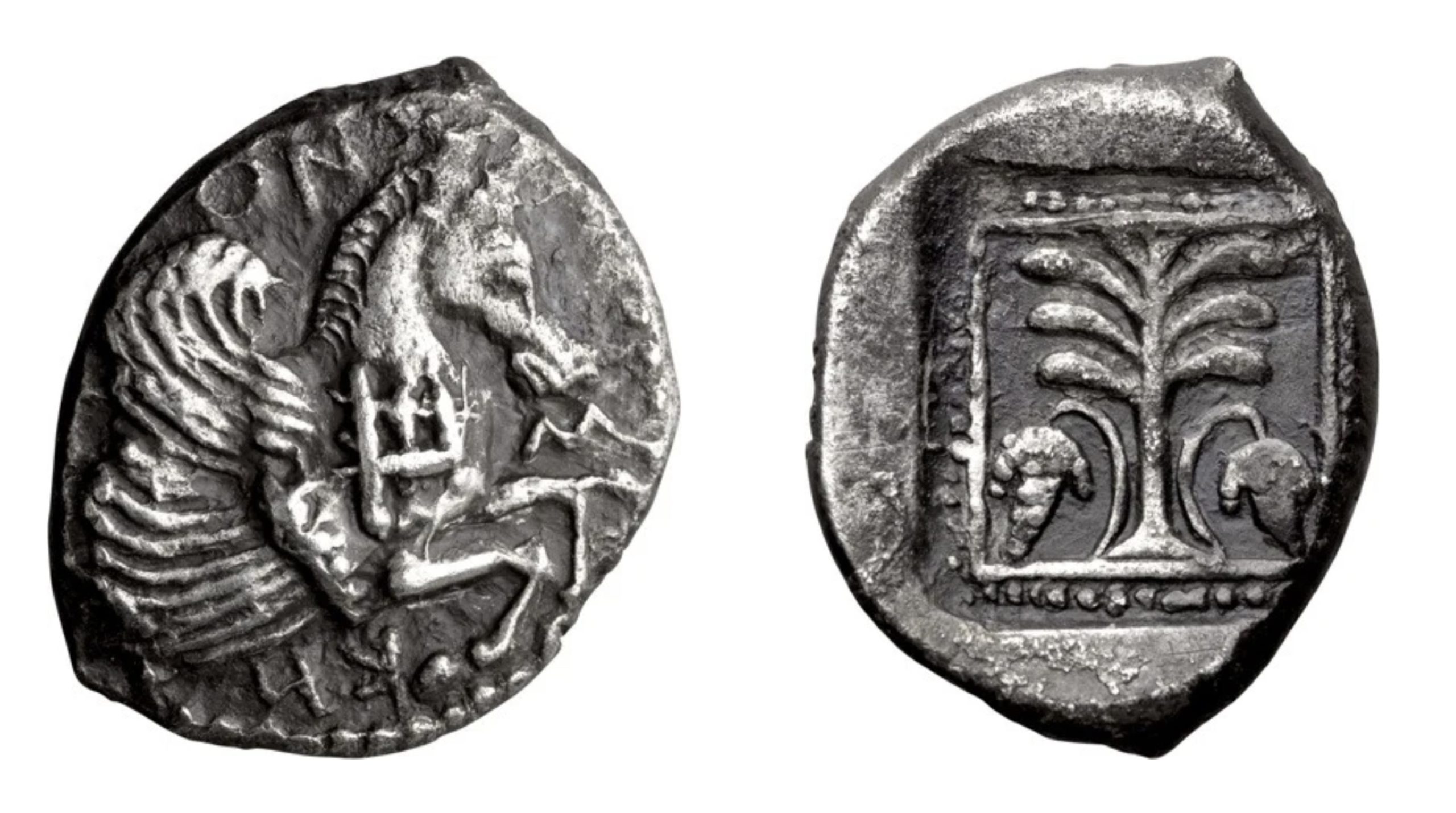
Ex CNG Esale 444, 15 May 2019, lot 131.
No history so shaped the culture of the Greeks than what unfolded across the centuries on Trojan shores. From the siege of Ilion to the crossing of Alexander, history too has oft awaited with held breath news from the plains yonder. Strategically important and environmentally rich, the fertile Troad has long been a jewel in many crowns. In the 5th century BC, the region remained under the dominion of the great king far to the east. The peregrinations of Themistokles ended under the same king and in the same region, for the brilliant Greek turned traitor was rewarded with five cities by the monarch of Persia to sustain his aristocratic bearings. Skepsis was given that he might not lack for clothes, and the above drachm represents the numismatic activity of the city during the same period. Perhaps the profits to be made in governing such a city were not always paid to Themistokles in kind but coin.
3. Ionia, Ephesos. AE24, AD 45-68.
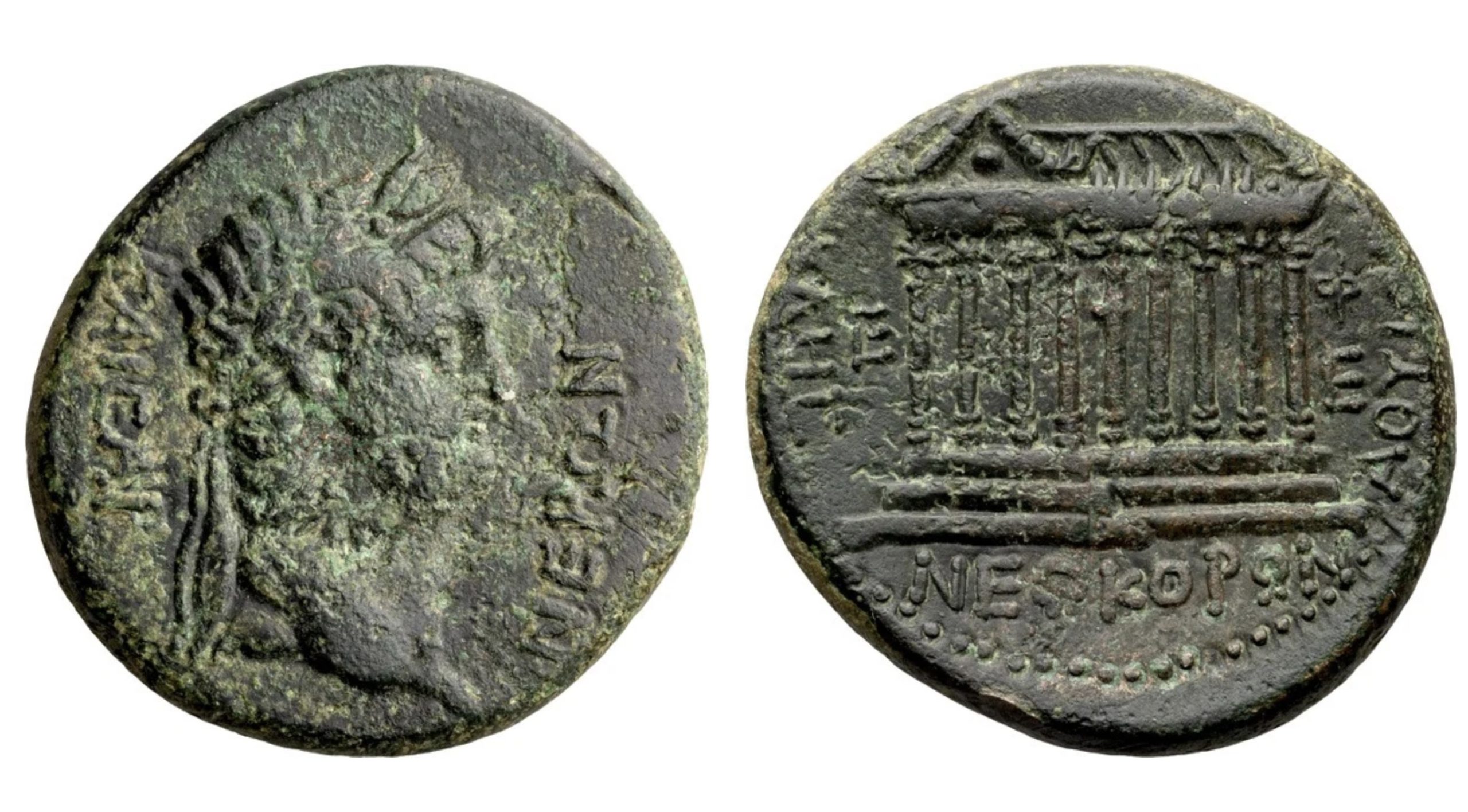
This fascinating provincial coin captures a unique trend in the development of the early imperial empire. The potential temple presented in three-quarters facing is attributed by the presence of the legend ΝΕΟΚΟΡΩΝ, indicating the building as being ‘of the temple priests’. The specific usage and mentioning of the νεωκόροι on proclamations by the early imperial period typically indicated a relationship of a priestly class with the cultus imperatorius (‘imperial cult’). Of especial interest to the provincial collector is that this is the first numismatic occurrence where the legend ΝΕΟΚΟΡΩΝ is found. Thus, combination of the architectural iconography with the specific naming of the temple as of the νεωκόροι likely indicates an early form of what would become all too common in the later empire – the worship of the emperor as god.
4. Syria, Seleucis and Pieria. AE As, AD 69.
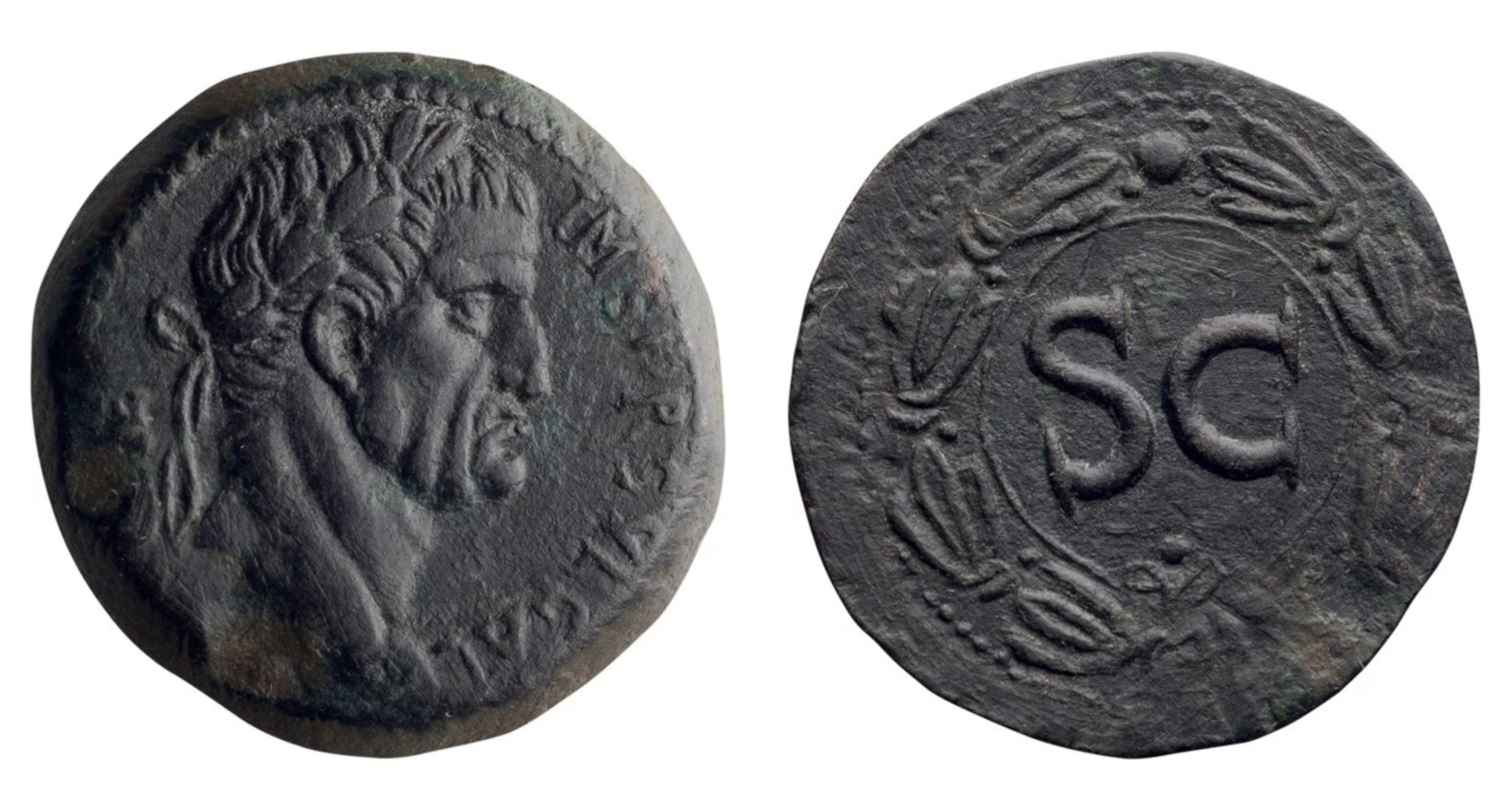
For having such a brief reign, even the provincial portraiture perfectly captures the essence of the old curmudgeon Galba. Stern, taciturn, and unwavering, the mistake of the man was to not more fully purge the Roman state of those miscreants and sycophants who swarmed the courts of the Julio-Claudians. More at home with Cincinnatus than the likes of Nero, Galba had the poor fate to be born inflexible in an age where stubborn virtue was not appreciated.
5. Didia Clara, Roma. AE Sestertius, AD 191.
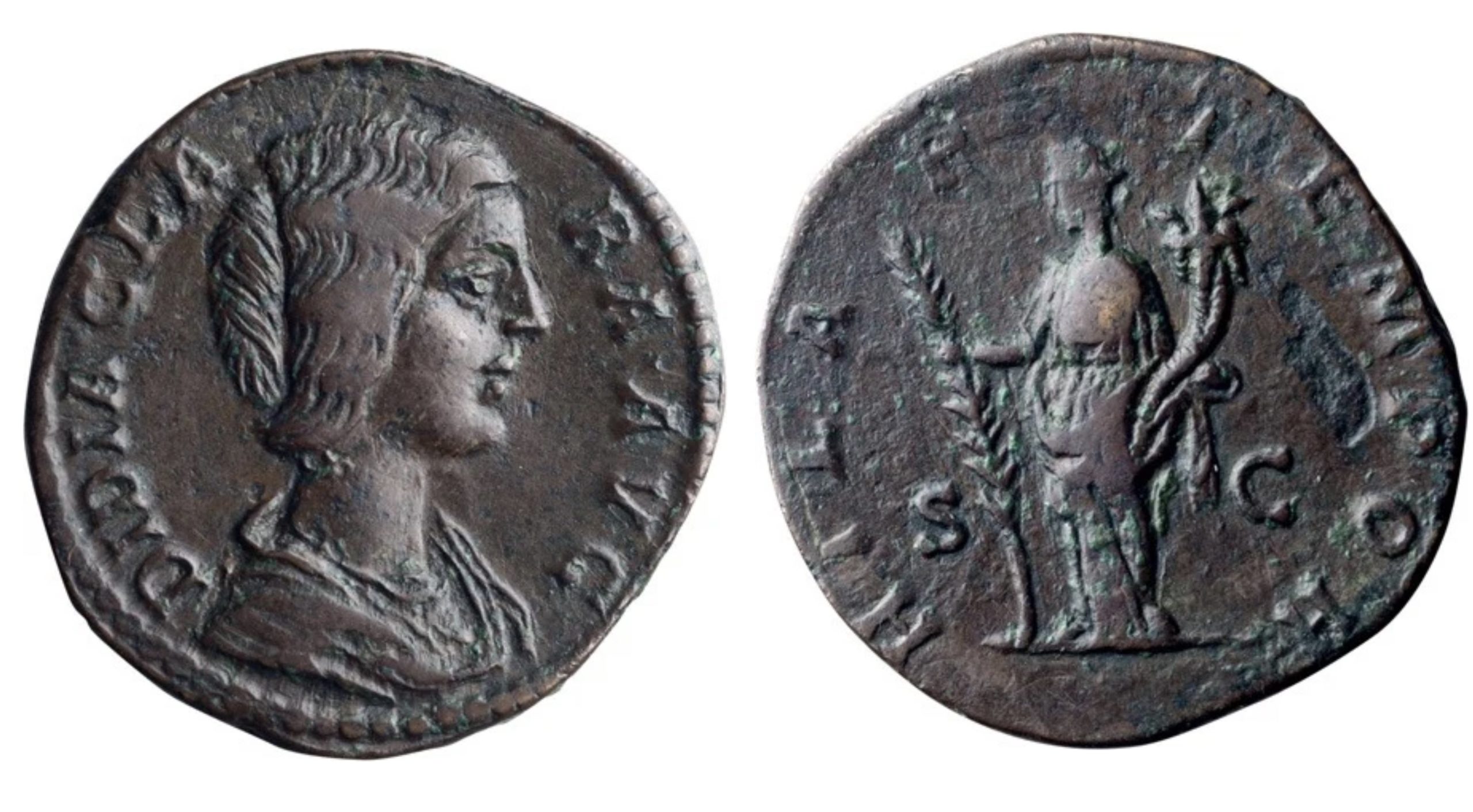
Ex Sotheby’s Collection of Eton College, London, December 1-2, 1976, lot 732.
For the collector of imperial rarities, this splendid Didia Clara sestertius presents the chance to own what is perhaps the finest known for the type. Herself wanton, crass, and vain, the schemings of Clara and her family pushed the unfortunate Didius Julianus to assume the eternal indignity as the man who purchased the imperial throne. For a few short weeks could Clara and Julianus enjoy their newfound status. The former was soon to meet the fate of his predecessor, and the latter had only a sestertius like the above to remember the great fortune she once enjoyed and the misfortune to clamour yet higher.
On this semiquincentennial anniversary, who is better to hear from about these events than a certain Mr. Edward Gibbon. We now turn to that sardonic and insightful author for an account no where else found to be as refreshing or enticing:
[B]ut the more prudent of the Praetorians, apprehensive that, in this private contract, they should not obtain a just price for so valuable a commodity, ran out upon the ramparts; and, with a loud voice, proclaimed that the Roman world was to be disposed of to the best bidder by public auction.
This infamous offer, the most insolent excess of military license, diffused a universal grief, shame, and indignation throughout the city. It reached at length the ears of Didius Julianus, a wealthy senator, who, regardless of the public calamities, was indulging himself in the luxury of the table. His wife and his daughter, his freedmen and his parasites, easily convinced him that he deserved the throne, and earnestly conjured him to embrace so fortunate an opportunity.
…From the senate Julian was conducted, by the same military procession, to take possession of the palace. The first objects that struck his eyes, were the abandoned trunk of Pertinax, and the frugal entertainment prepared for his supper. The one he viewed with indifference, the other with contempt. A magnificent feast was prepared by his order, and he amused himself, till a very late hour, with dice, and the performances of Pylades, a celebrated dancer.
Yet it was observed, that after the crowd of flatterers dispersed, and left him to darkness, solitude, and terrible reflection, he passed a sleepless night; revolving most probably in his mind his own rash folly, the fate of his virtuous predecessor, and the doubtful and dangerous tenure of an empire which had not been acquired by merit, but purchased by money. He had reason to tremble. On the throne of the world he found himself without a friend, and even without an adherent.
6. Geta, Roma. AE Sestertius, AD 209.
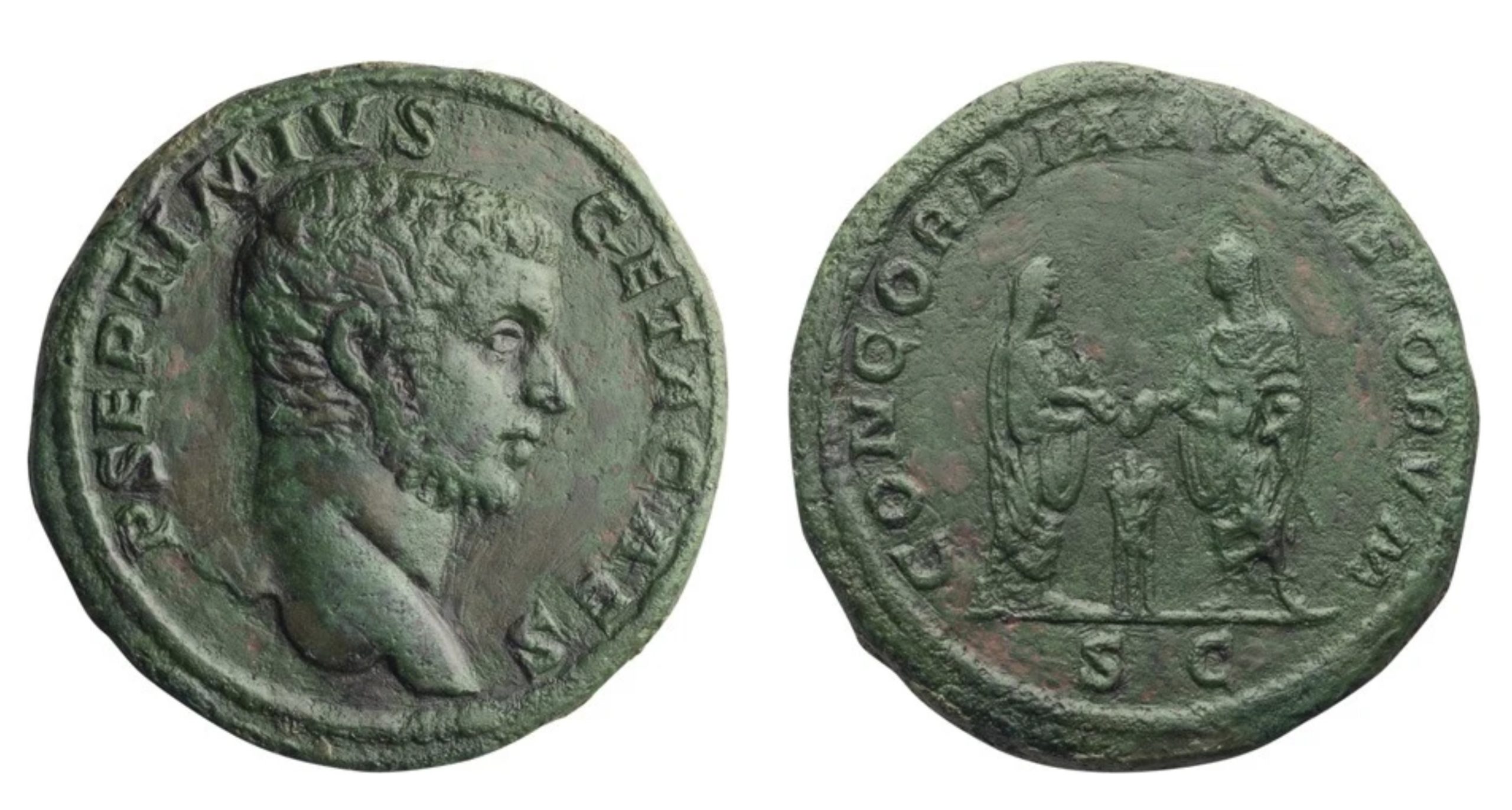
The only redeeming quality of Geta is that his brother did the kindness of performing fratricide first, saving Geta from that particular disgrace. Somewhat sympathetic by means of the manner of his death, one can not help but notice the long records of vainglory and debauchery, surmising that Geta himself was only too keen to return the favor to his brother.
Still Ceasar, almost Augustus, soon to be deceased and damned, the above sestertius captures the likeness of a vindictive and cruel man. And even in death can Geta not escape, as more than a hint of Caracalla’s snarl ghosts the portrait.
7. Postumus, Lugdunum. AE Double Sestertius, AD 260-268.
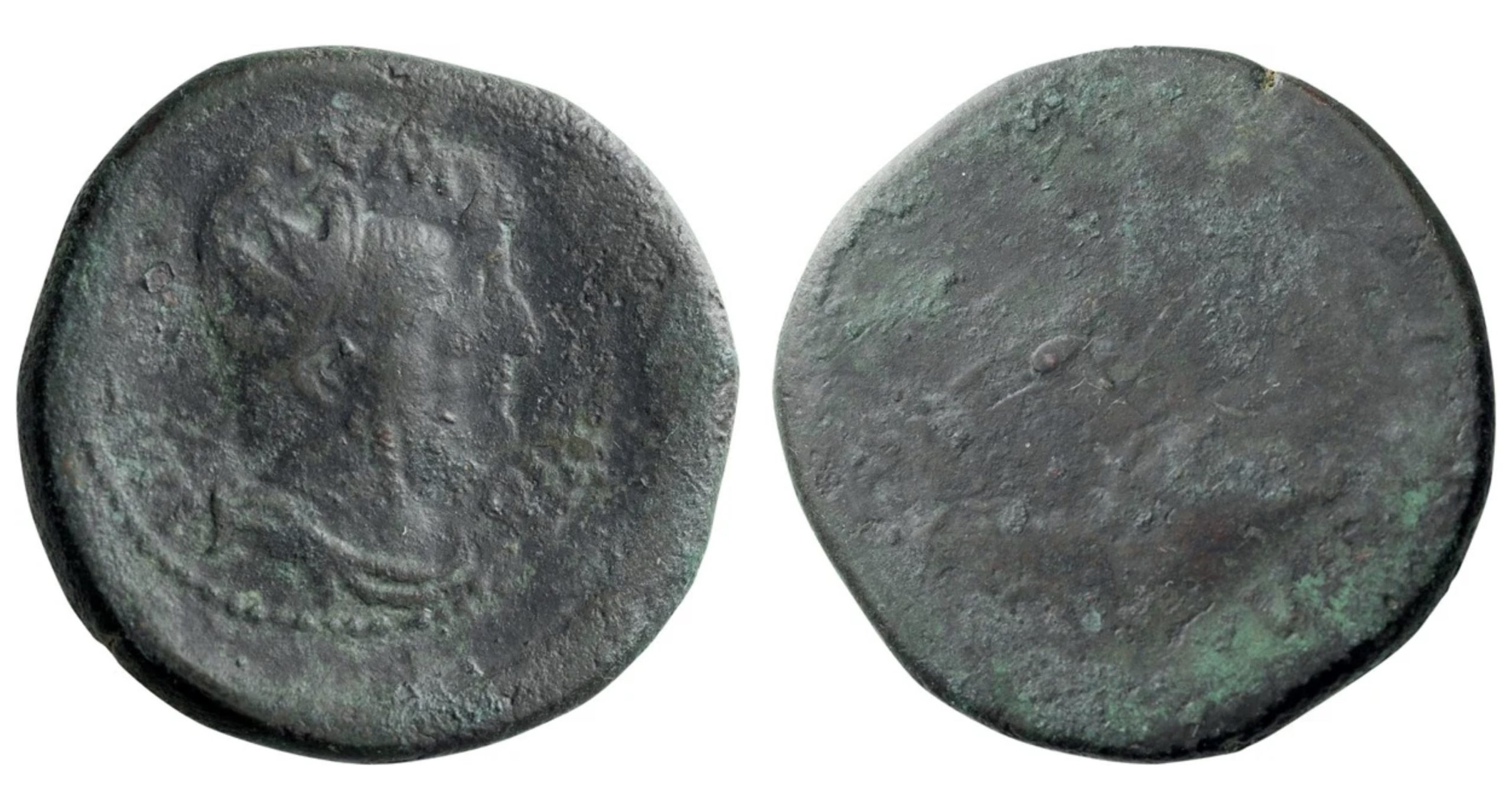
This fascinating double sestertius captures the economic woes of the Gallic separatist state and wider Roman world in the crisis of the third century. Underneath the bust of usurper Postumus lies an emperor from a more tranquil and docile age, capturing an ugly truth. By the time of the third century, the economic inflation had reached such a point that older imperial sestertii could be overstruck and retariffed as double sestertii. This curious specimen represents one such case, with a sestertius of Hadrainus serving as double sestertius for Postumus.
Hadrianus was the finest of the philhellenes who embodied the great virtues and vices of that temperament. To his credit lies the restoration of Roman imperial art through the transfusion of Greek practice. What would his reaction be upon seeing the once mighty empire reduced to such dire straits! Beneath the crude style of the third century lies a portrait from a more attractive style and age.
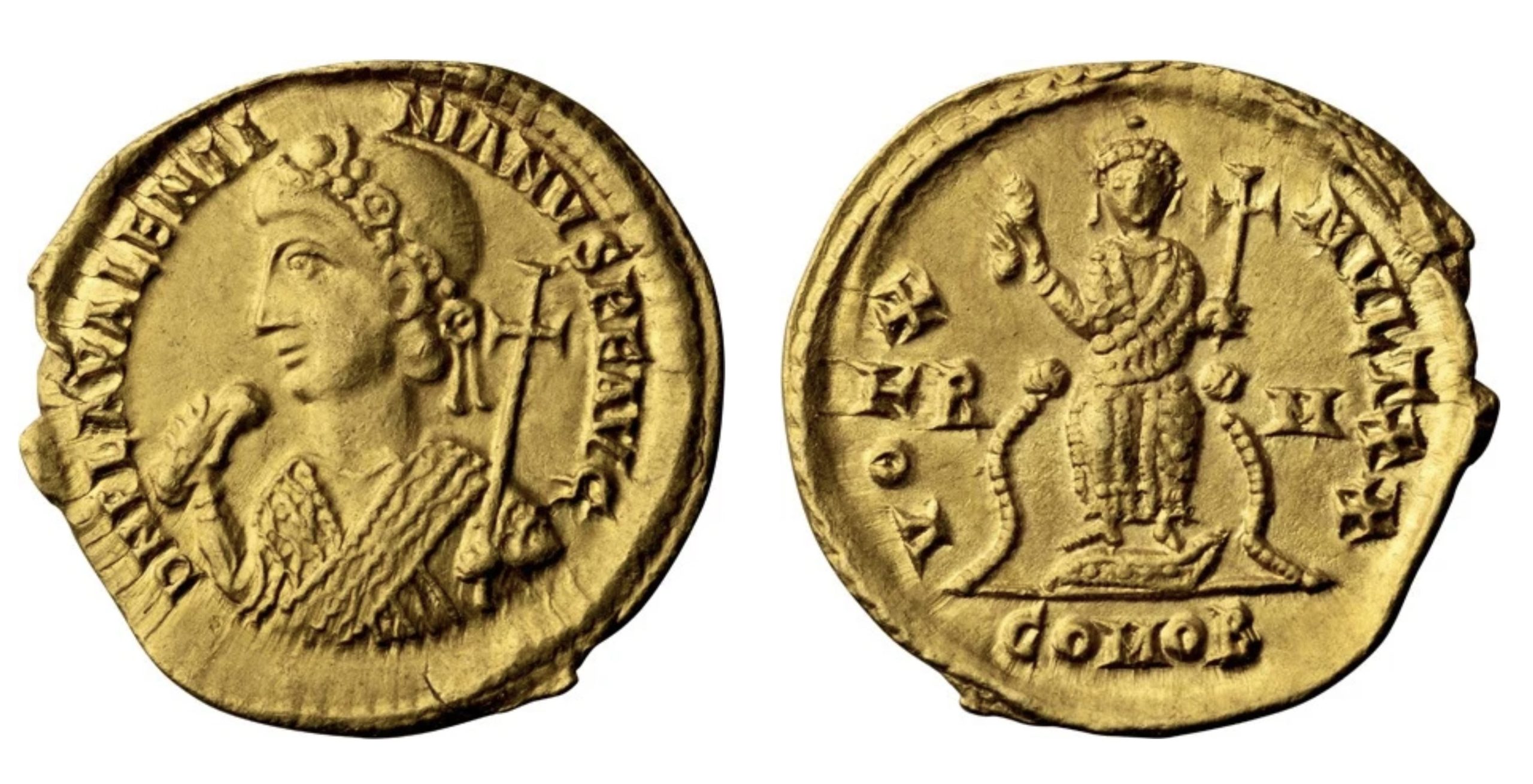
Valentinianus III came to the throne of an empire collapsing. The historic capital of Rome was only two decades before sacked by marauding Vandals. The scourge of God was rising in the east, and the relentless tide of the Huns crashed over his empire. But for a few months after his death, Rome would be sacked a second time. Within two decades, an Ostrogothic warlord would rule his dominions.
In spite (or because) of these relentless external foes, the Romans hung tenaciously to their ancient heritage. Here the emperor is presented in the traditional consular garb, holding a mappa and cruciform scepter. The lines between the old imperium and medieval epoch dawning are blurred. The astute collector will notice the similarities of such late antique garb with the later λῶρος and ἀκακία, and it is no coincidence. Tracing their descent to Romulus himself, the later Byzantines have many direct parallels with the late antique world, including such shared iconographical sources.
9. Leontios, Konstantinoupolis. AE Half Follis, AD 695-698.
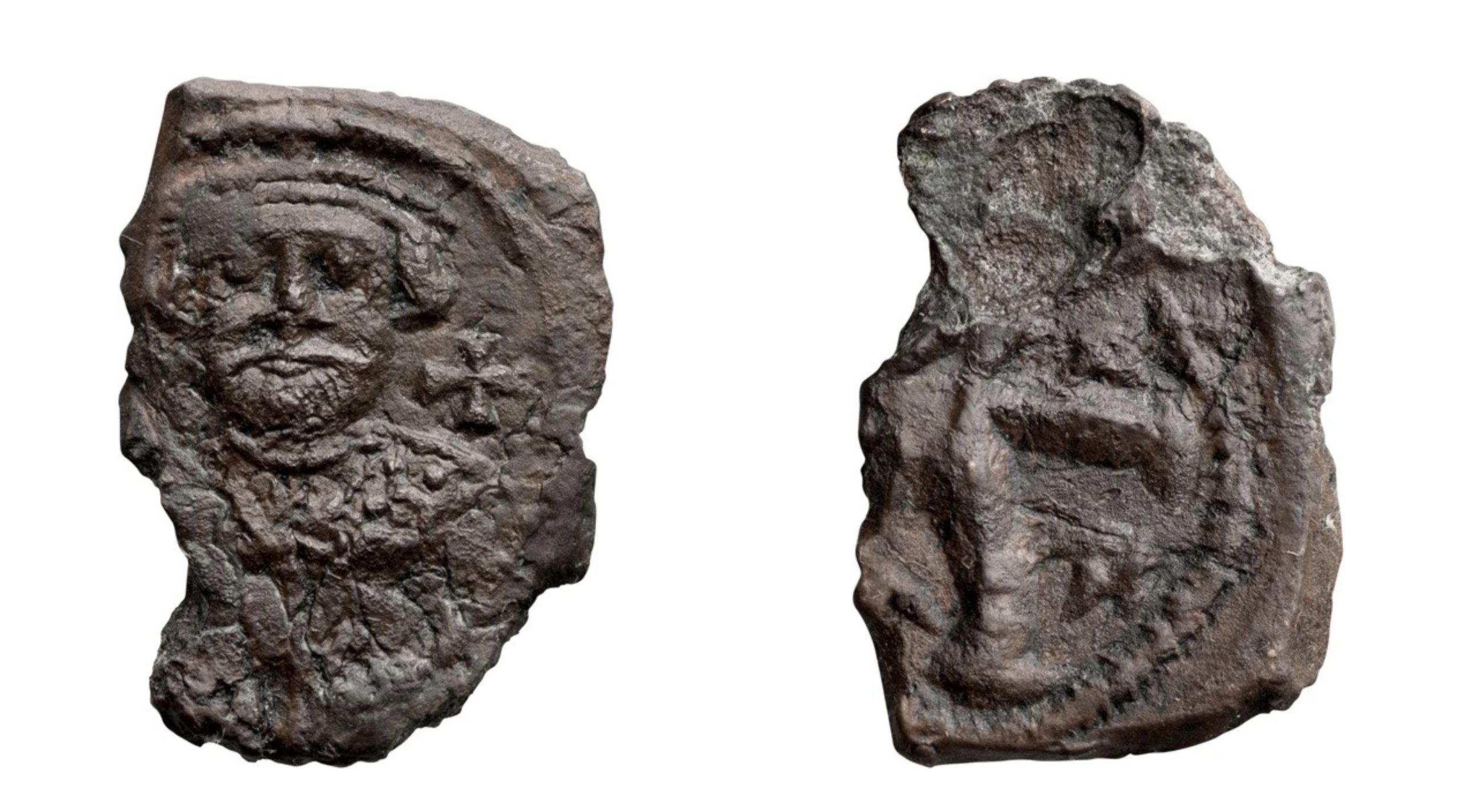
Even in the rough can treasure be found! The curator of this list, in his sublime wisdom, has decided a crude bronze with magnificent style must grace the eyes of the readership. For as the previous soldius demonstrates the capabilities and priorities of the late antique empire, so too does this half follis lay forth the Byzantine claims to authority and power. The consular robes of Valentinianus III have developed into the early λῶρος, and the mappa into the ἀκακία (as seen on this coin).
The last consuls of Rome were the joint usurpers of Herakleios the Elder and Younger. Launching from the shores of Carthage to topple emperor Phokas, the father and soon staked their credibility and claim to the office of emperor in their consular ranking and status.
In the very success of the Herakleian cause did the father and son grow weary of the ancient office which granted unto men so much authority and prestige. From the advent of their dynasty, the empire never again saw the office. As for the raiments of the consulship turned into Byzantine regalia, it would the last of the Herakleian dynasty who first depicted them in the numismatic medium. That ruler, Ioustinianos II, would be toppled by the man who struck the above follis. Himself now depicted in the λῶρος with ἀκακία, Leontios would meet the same fate that he meted out: mutilation and death.
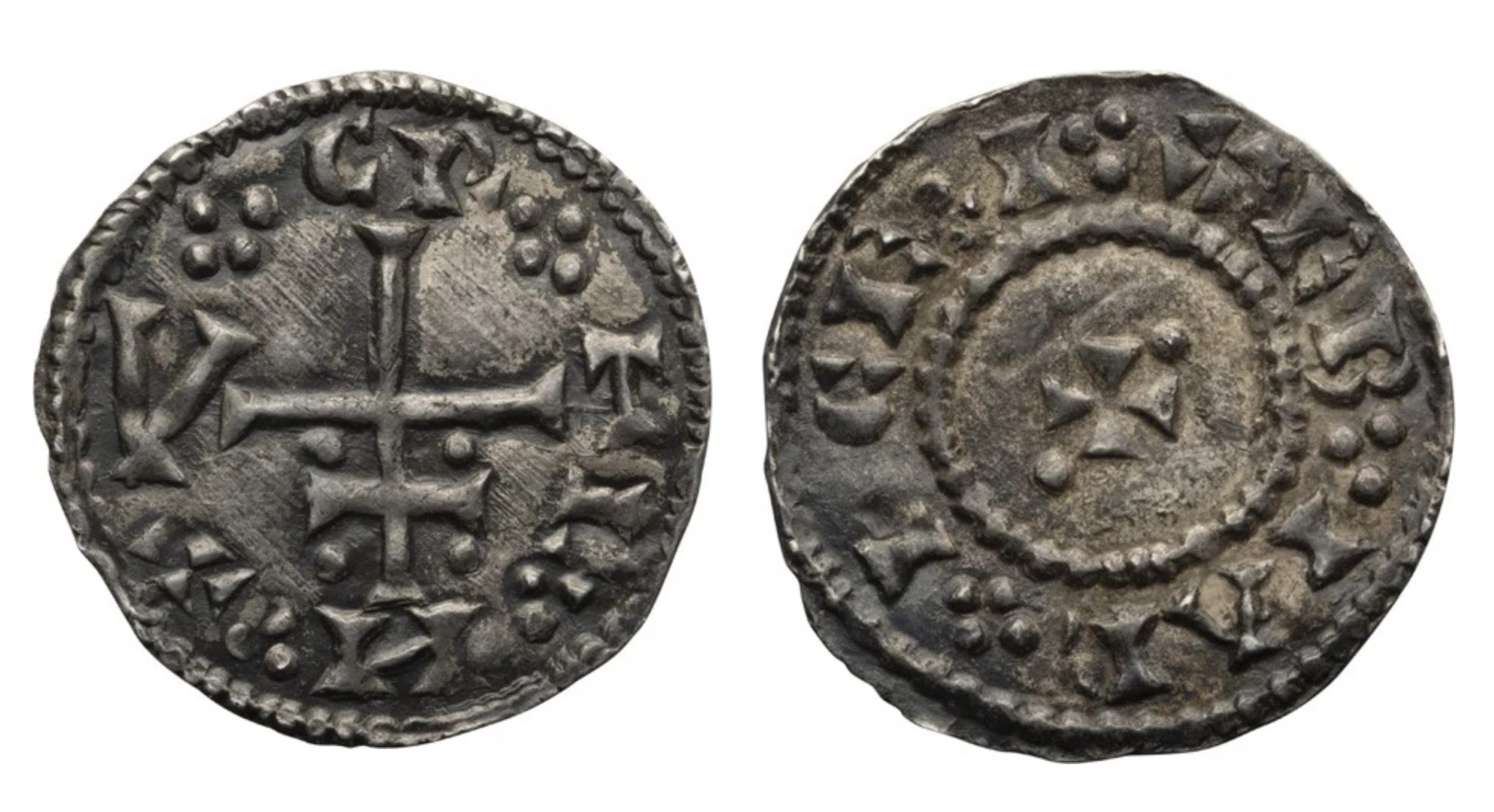
The vision of Aelfred the Great was challenged by permanent settlement and invasion of pagan Danes into the British Isles. Both conversion of the unbeliever and liberation of English lands from Danish hands were a long and arduous process, neither of which Aelfred himself lived to see the fruition of but both of which he was the catalyst for. In that age of iron, Aelfred spread the light of salvation and learning to those who actively opposed both. From the nadir of burnt cakes in the marshlands, Aelfred could look upon his nation and isles at the end of a long life with joy. Pennies such as the above example evidence the growing Christian beliefs among the Danes, a key pillar of Aelfred’s foreign policy. His was not the day to see England liberated, but that of his grandson, mighty king Aethelstan.
If any of these coins should have intrigued you, O’ reader, rest assured that many more treasures are to be found throughout L5’s new bourse. What was shared here is but a small preview. We at L5 heartily thank the Harlan J. Berk, LTD team for choosing L5 as their venue to sell many wonderful ancient, medieval, and modern coins.
I hope that I have played my part well and to your satisfaction. Acta est fabula, plaudite!