L5 News ·
Top 10 Coins of L5 Auction 6
Before presenting our top 10 coins of auction 6, we have an exciting update to share. L5’s new ancient coin provenance search is bringing artificial intelligence to make your collecting experience the best possible. Our provenance search boasts an impressive 2,890 catalogs featuring a cumulative 2,570,434 images, and there is no better site in the industry for finding the sales history of your collection. From 19th century catalogues to important sales in the 21st century, every period and region from the advent of illustrated coin sales are covered by L5’s new provenance search. Needless to say, here at L5 we are not squeezing you for every last penny. We are not charging for the use of our tool nor for any successful provenance finds. The L5 Ancient Coin Provenance Search is completely free to use – and will remain that way. Come test the newest innovation in the field of ancient numismatics thanks to L5, your low fee ancient coin marketplace!
After you have tried your collection in the provenance search (and hopefully found many verified matches), it is time to present what is perhaps the most delightful aspect of every L5 auction: its accompanying top 10 coin list. Surveying the broad sweeps of antique history through individual numismatic specimens, it is a privilege to again exhibit 10 varied and exciting ancient and medieval coins.
The Top 10 Coins of L5 Auction 6
1. Mysia, Kyzikos. EL Hekte, 550-450 BC.
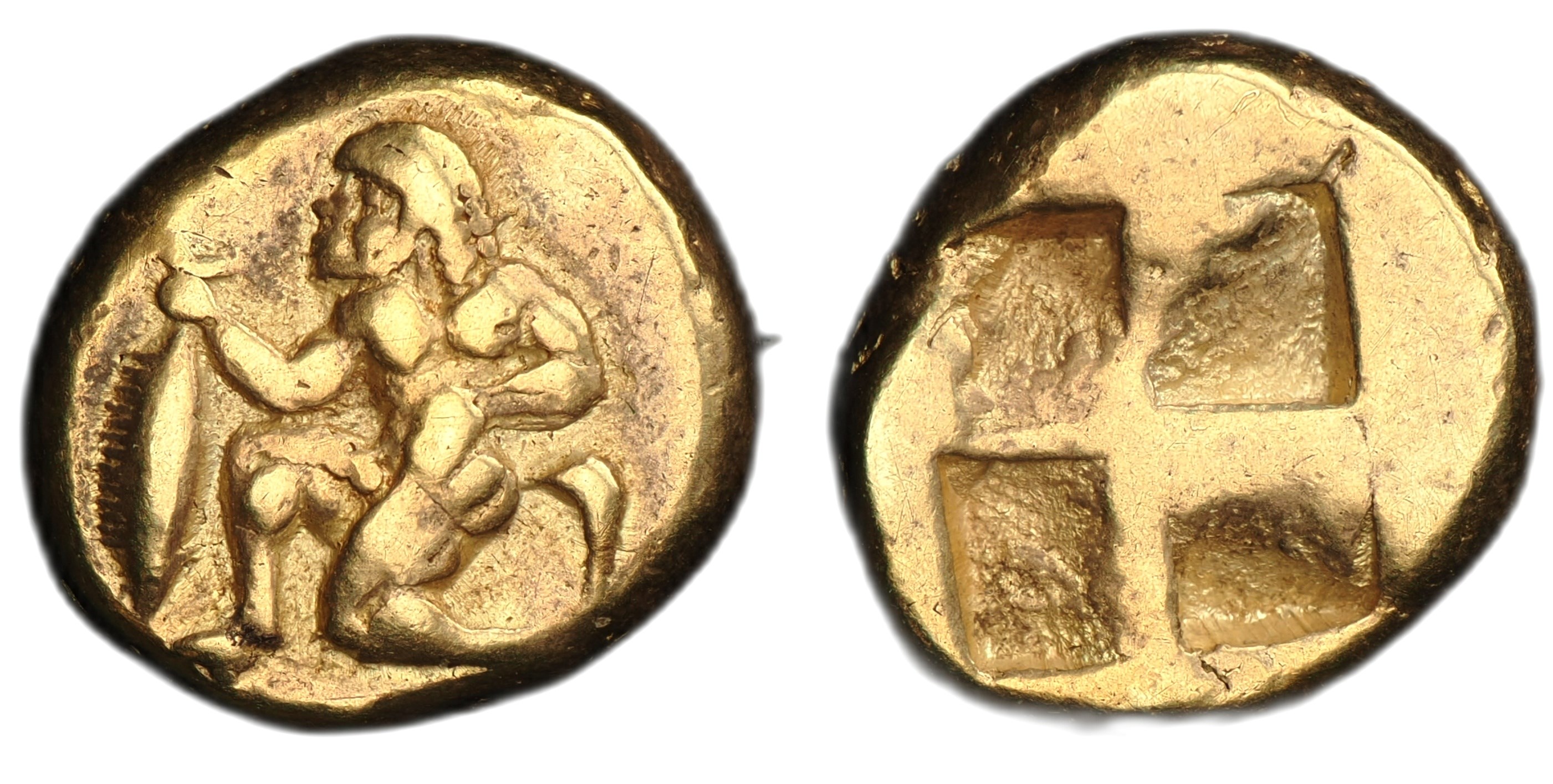
Ex Numismatik Lanz 156, Lot 171, 2013.
If the inception of coinage occurred in Lydia, Kyzikos has no less of a claim to fame in the first decades of numismatic production. Situated in an ideal location on the Sea of Marmara, Kyzikos was connected in trade with Greek settlements from Sicily to the Crimea and beyond. Kyzikos herself rapidly grew in wealth and influence, as is evidenced by her extensive minting and numismatic circulation. Before the economic dominance of Macedonian hegemony, the coinage of Kyzikos formed a reliable and constant medium of exchange in the Hellenistic world.
The tuna fish Staatswappen of Kyzikos was frequently represented on its stateres and associated fractions. Depicting not only the swarming schools to be found in the harbor of Kyzikos and beyond, the tuna fish embodied the abundance and prosperity of the city and its citizenry. The above example of a 1/6th stater features a seilenos kneeling to the left as he holds out a large tuna fish. As varied as they are historic, the coinage of Kyzikos presents to the collector the ability to purchase affordable and charming examples of classical Greek artistry from one of the most prominent Hellenistic cities in Antiquity.
2. Kassandros in the Name of Philippos II, Amphipolis. AR Tetradrachmon, 316 BC.
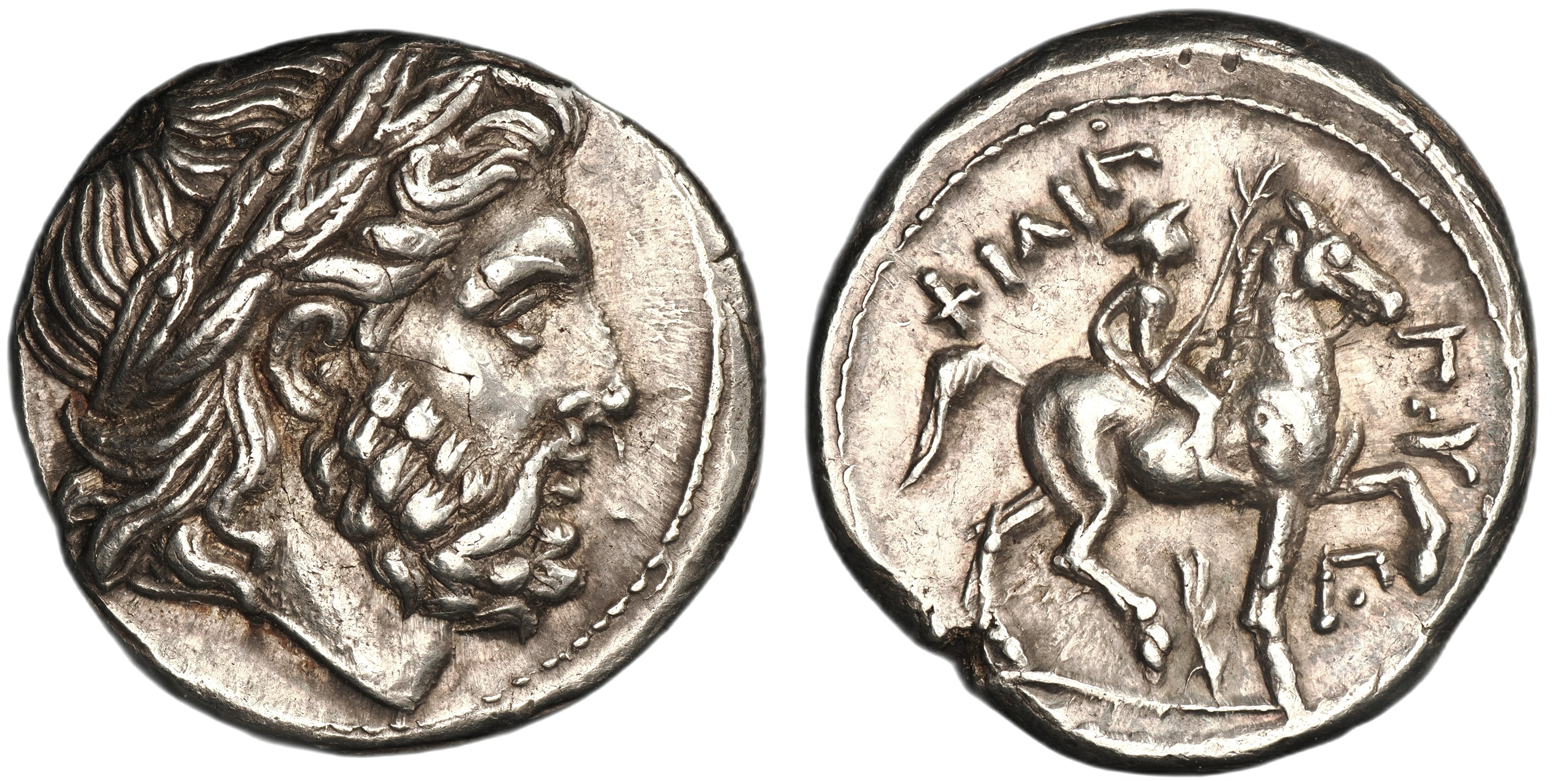
Ex Stacks, NYINC 1988; Superior Coin and Stamp, NYINC 1991.
The army honed by Philippos II and overwrought by Alexandros III introduced and promoted not only Hellenistic culture but economic practices to their conquests. The vast treasures of the Achaemenid empire were coined into the denominations familiar to and accepted by the troops of the Macedonian kings. The string of unbroken success to the frontiers of India spread experience with and expectations of the drachmai paid to and spent by the ever victorious soldiers. Thousands of peoples and millions of souls now subjects in a massive empire ruled by the monarch of a distant region found distant practices enforced upon their own homes.
The legacy of Hellenistic influence on the various portions of Alexandros’ conquests extended beyond the forms of specific denominations into the realm of iconography. Whereas Alexandros promoted his own divine cult and rumors of a father not mortal, the shadow that Philippos cast was such even his own son could not blot it out with three continents set ablaze. The genius of Philippos still had great intrinsic value to contemporaries of the Diadochoi. To those antipathetic towards the legacy of Alexandros yet operating within the confines of his achievements, the father scorned presented dynastic continuation and intelligible legitimacy to a degree outside the nigh inescapable umbrella of the son. To this end, Kassandros married the daughter of Philippos and issued such coins as the above example. In name and design paying homage to the famous tetradrachma of Philippos, Kassandros was able to stress his own dynastic rights thanks to his connections with the man who studied under Epaminondas and forged a provincial backwater into the master of Greece and impending ruler of the greatest empire the world had seen to date.
3. Kyrenaika, Kyrene. AV 1/10th Stater, 331-313 BC.
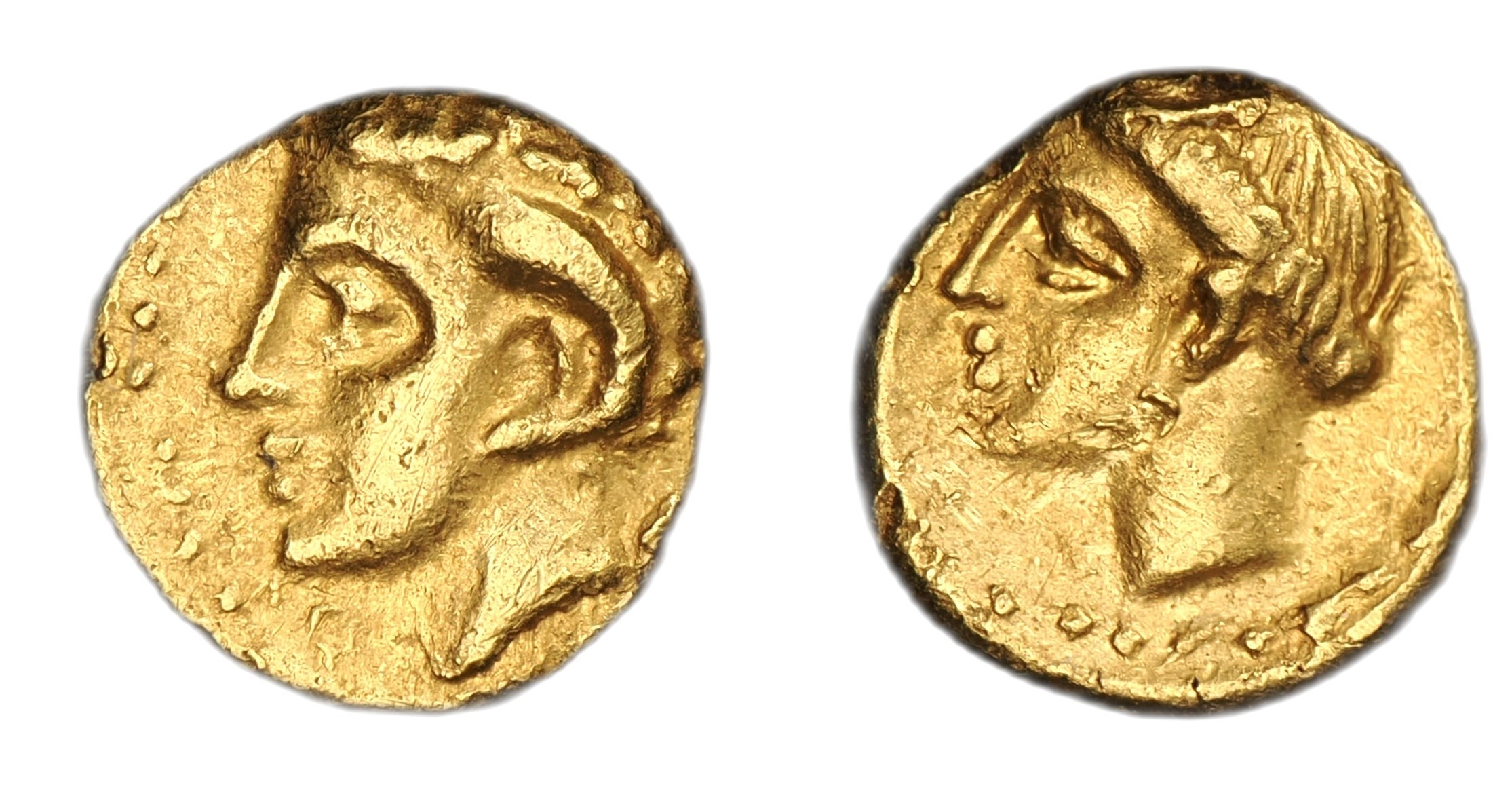
Kyrene stood as most prominent of the cities clustered on the Libyan coast in antiquity. Founded by the god Apollon in honor of his consort, Thessalian princess Kyrene, the namesake polis paid especial honor to the pair. For while the sun rises on all alike, he does not distribute his warmth and rays evenly. So it was with Kyrene as predominant city in the wider Kyrenaika region. Of the five settlements in the pentapolis, the progeny of that divine union superseded the rest in affluence and success. Nor did the ramifications of celestial love limit themselves to a quiet reverberation in local Realpolitik. As is so often the case, when the divine lusts of the Hellenistic pantheon burst forth into the wider world, the effects of such actions were not temporally limited to the immediate affair. Indeed, one wonders what role bright Apollon had to play in the proliferation and exclusivity of mystical Silphion to the Kyrenaika. Aphrodisiac and contraceptive, the presence of that enigmatic plant seems to have played little role in hampering regional fecundify, all the while enhancing opulence and prestige. The above 1/10th stater is evidence of the devotion that Kyrene paid to Apollon – and the fruits of those labors.
4. Sikelia, Syrakousai. Agathokles, AV Hemistater, 317-289 BC.
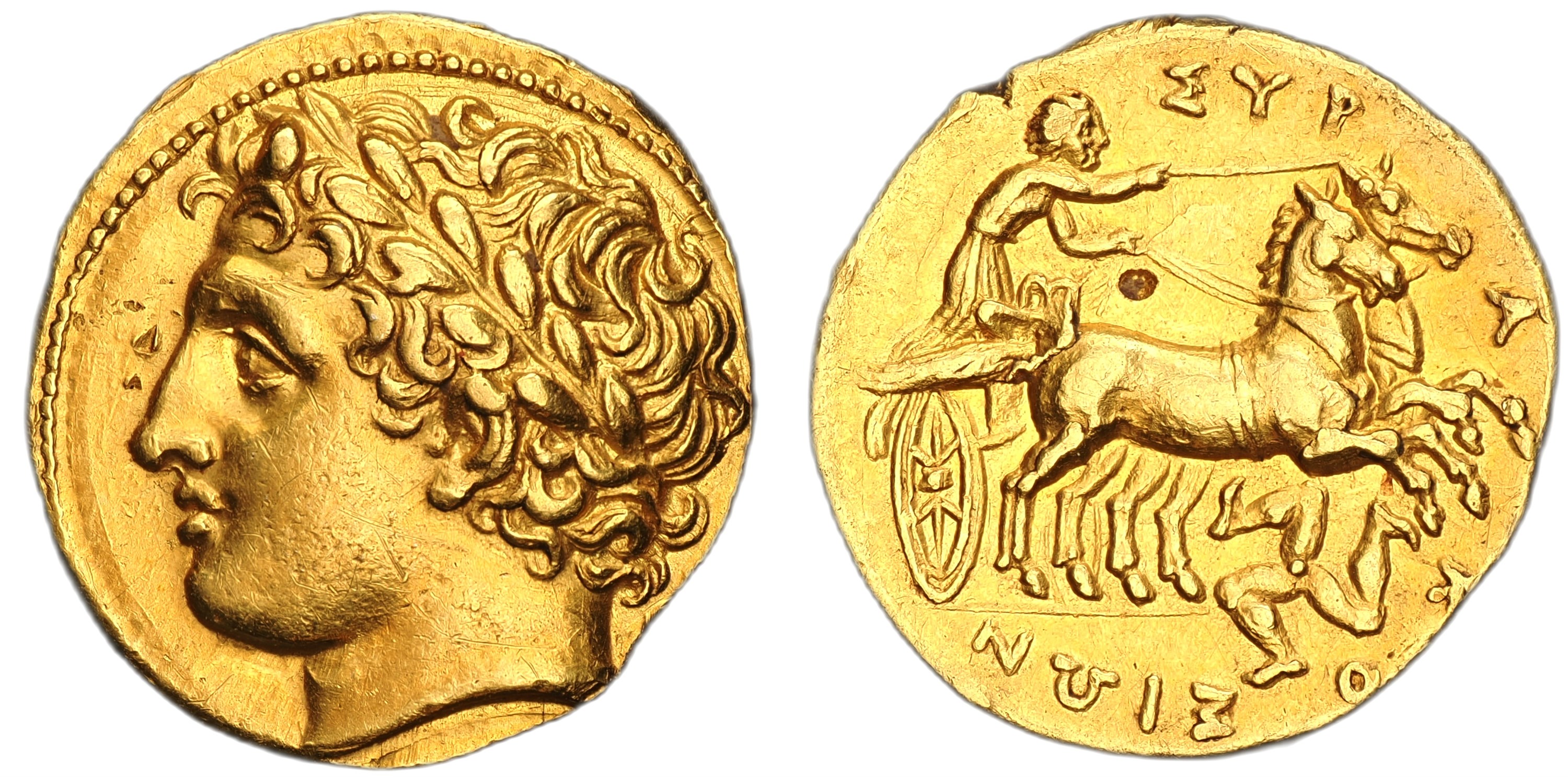
There are rare occasions in the curation of a top 10 coin list where the author must temporarily set aside wry humor and a sharp quill to bask in the glories and refinements of antiquity. Whosoever should have argued for Roman artistic refinement or the cultural marvels of other barbaroi is silenced at a glance. Even the loquacious praises the author has just sung for Kyrene are caught in throat when faced with the majesty of the above coin. August Apollon faces right in tranquil transcendence. The god of the lyre in serene simplicity shows the superb sophistication of the Syracusan celator. What need is there to mention the career and accomplishments of Agathokles? What insight is shed or gain wrought by elucidating the years of exile, return, conquest, and tireless expansion? What epitaph, what description, what pithy saying pays better tribute to the refinement of that fine ruler than the above?
5. Seleukos I Nikator, Sousa. (Fourrée) Tetradrachmon, 305-297 BC.
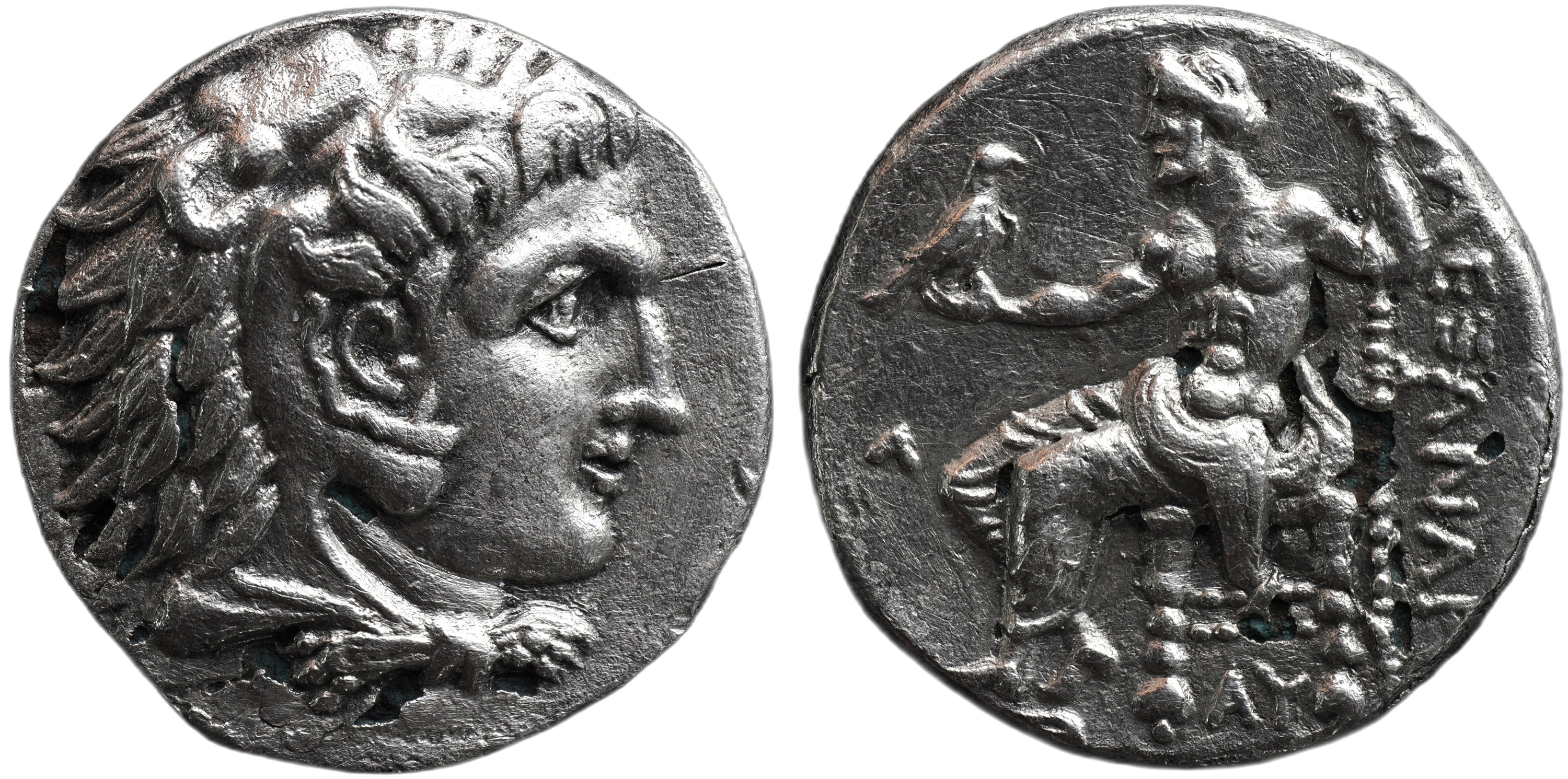
Of the many Macedonians and Greeks who set out with Alexander to campaign in Asia Minor and beyond, Seleukos I Nikator and Ptolemy I Soter had the skill and good fortune to seize and solidify their holdings into cohesive and durable states. Twin facets of the Hellenistic age, the aptly named Seleukid and Ptolemaic empires forged, defined, and stewarded global events for centuries to come. Husbanding the Mediterranean and Near East until the dominion of Rome, the solid rock that each patriarch established their kingdom upon resisted the crashing of many waves. The honorific of Nikator does betray the career of Seleukos, as he led a series of triumphs culminating in the establishment of a kingdom with a centuries long duration.
As abhorrent as it may be for an Anglophile to use the French language, the above tetradrachmon has a certain je ne sais quoi – fourrée and all. Touched upon in the entry for Kassandros, the Diadochoi utilized the reputation and magnetism of Alexandros ho Megas to promote their own claims with varying degrees of success. Seleukos recalls and emphasizes his ties to Alexandros through the minting of posthumous pieces. The fine style raises questions of the origin of such a brilliant coin, and whether perhaps some official elements were involved in its production. Ultimately, the tetradrachmon faces the same fate as the Seleukids: a once mighty object tempered in fire and under hammer slowly broken over the passage of time.
6. Marcus Antonius and Octavia, Ephesos. AR Kistophoros, 39 BC.
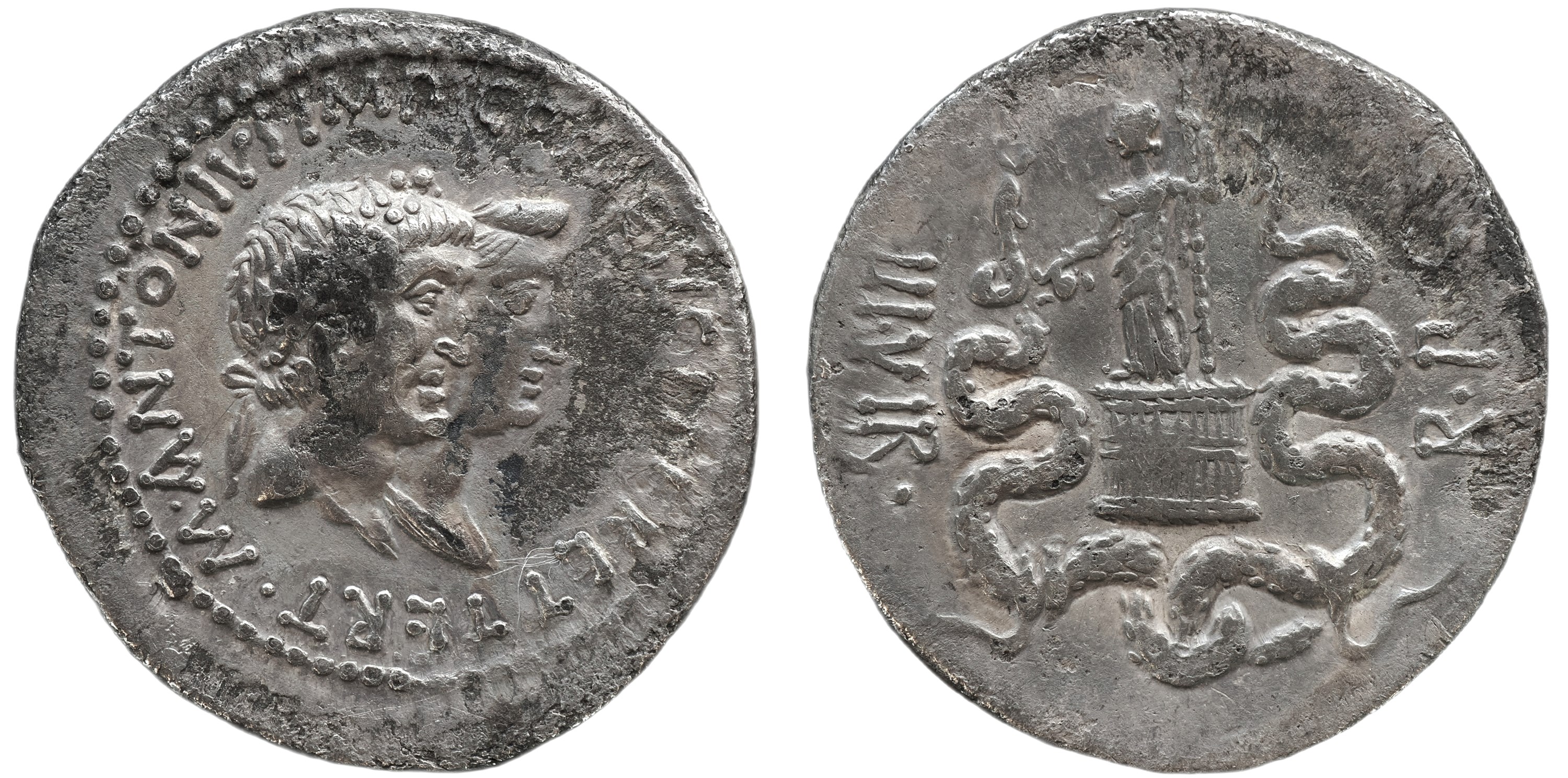
Hail the divine imperator Marcus Antonius, ‘neos Dionysos‘. In the orient arrives a quirite of noble stock but temperamental spirit. Having entered Ephesos as a god, Antonius was welcomed in the streets by Ephesians dancing in the garb of satyrs. Inexorably linked with the fate of Antonius, Ephesos hosted the triumvir and his entourage throughout the years leading up to Actium. Provincial capital suitable to the tastes of the Philhellene, Antonius found not only a convenient logistical hub for operations but ample opportunity for relaxation and enjoyment. The above kistophoros cements the authority of Antonius in Ephesos, promoting his marriage to Octavia, sister of Octavianus divi filius. A dynastic proclamation of forthcoming unity between the two men takes the form of the jugate nuptial pair. One the reverse, Dionysos is boldly perched on the cista mystica. Whether this is Dionysos neos, palaios, or both, is left to the interpretation, discretion, and propriety of the reader.
7. Antoninus Pius, Roma. AV Aureus, AD 158-159.
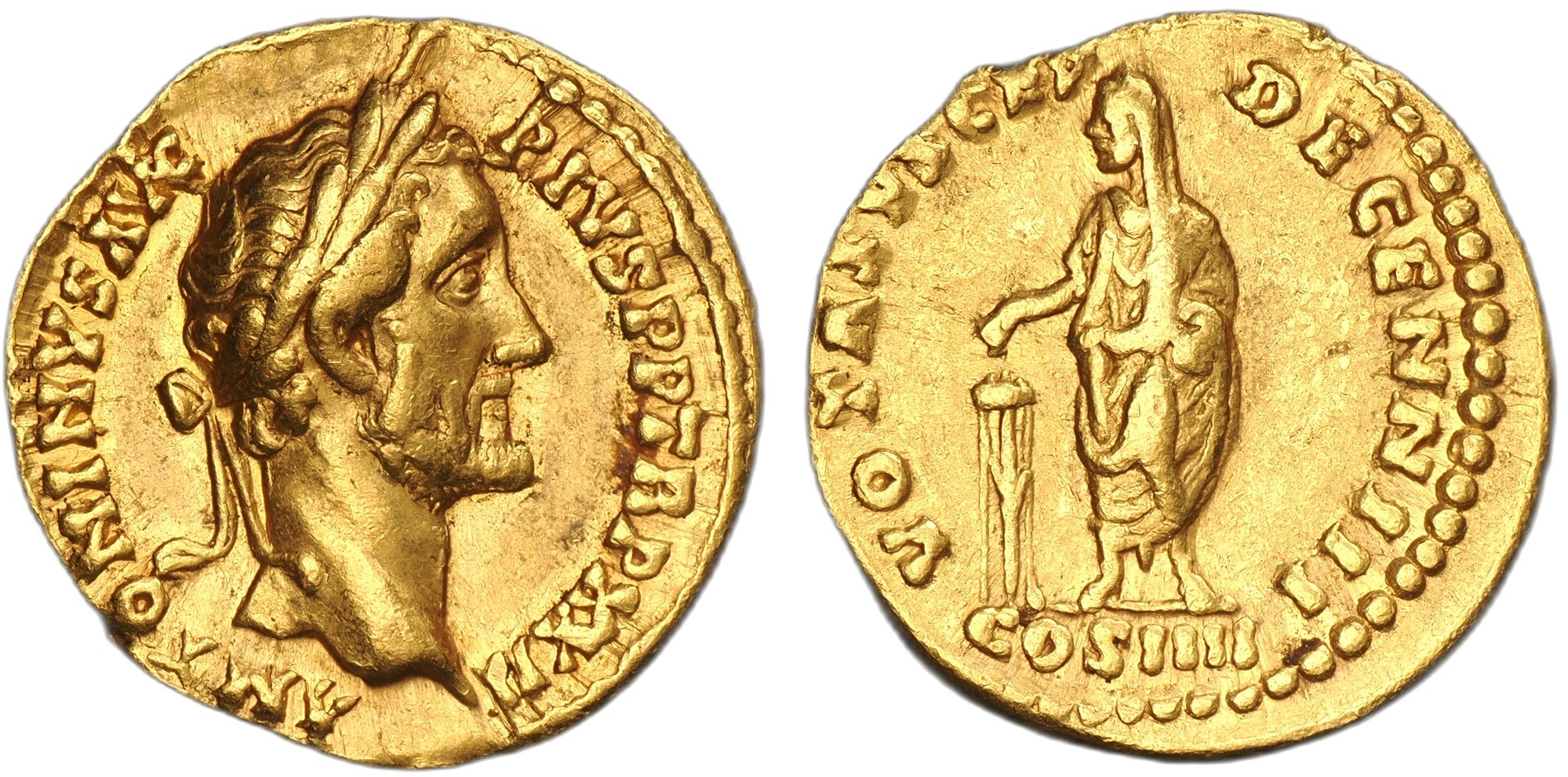
Ex NAC Spring Sale 2020, 1058.
If the provocative and excitable emperors are the figures that most grab the attention and imagination of the reader, they likewise form the element of leadership that one would most like to avoid living under. Antoninus Pius, the embodiment of stability and continuity, did not have wars to wage. Swords were sheathed, torches left unlit, the soldiery manning guard duty, and the citizenry enjoying the benefits and opportunities of a transcontinental empire under steady leadership and in widespread peace. The grand campaigns of Caesar, Traianus, and Aurelius overshadow the gentle administration of Pius. Yet without a doubt, the agricultural estates of the Roman aristocracy were not fertilized with the blood of fellow citizens for this period, and the farms on the frontiers avoided the devastating raiding that became all too common in the crisis of the next century. Pius is not the most glamorous nor seductive of the Roman emperors, but for the well being of the wider population, he ranks among the best. The above aureus depicts Pius in this very role, renewing the oaths that the emperor was accustomed to swear, promising security and protection for his people. Unlike many colleagues, Pius kept true to his word.
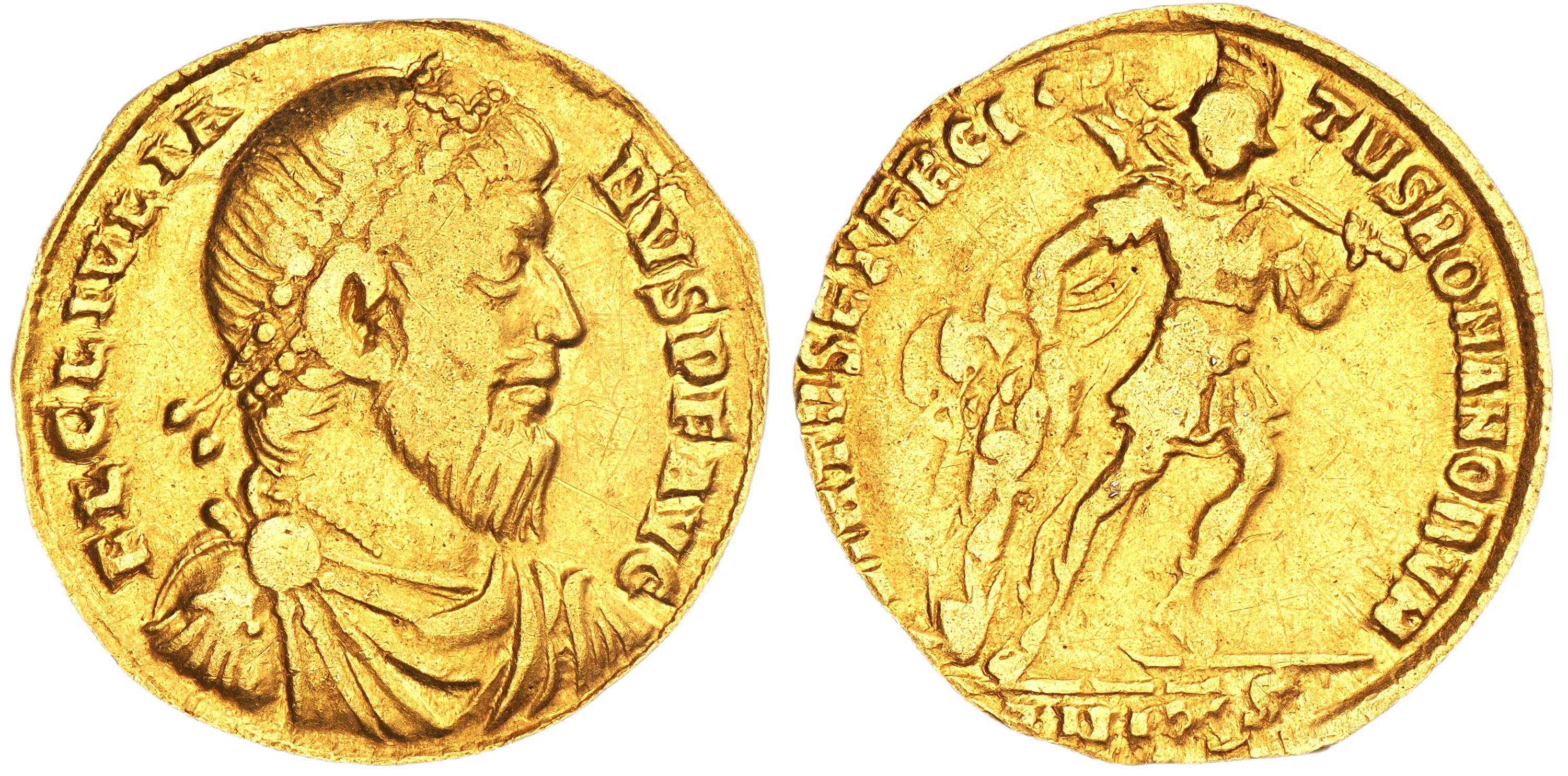
The apostate and pagan met his end in the sands of Persia via a spear hurled by an unknown assailant. The last emperor of the old religion, with Iulianus died some part of the Roman past. Inveterate and staunch men of the old guard like Libanius and Ammianus Marcellinus remained ever true to the faith of their fathers and grandfathers, but the position in which they sat was not longer central at court but in the ever distant fringes of high society. Without the financial and institutional support of the imperial personage, salvation for the pagans gasped its last with the premature death of the self styled philosopher monarch. Bitter recriminations did little to salve the festering wounds of a dying religion, and the sprouting of monks throughout the Italian peninsula bore an ominous omen for those who clung to the old way in the eternal city.
Processu pelagi iam se Capraria tollit;
Squalet lucifugis insula plena viris.
Abjuration of the pantheon was the new norm, and as men like Symmachus faded out of the lime light, the young minds they once tried to sway were to define the next millennia of western thought. Try as hard as Iulianus did, it was to Augustinus and his ilk that the eyes of the world turned. Vicisti, Galilaee.
9. Herakleios, Herakleios Neos Konstantinos, and Herakleios (Heraklonas), Konstantinoupolis. AV Nomisma/Solidus, AD 638-641.
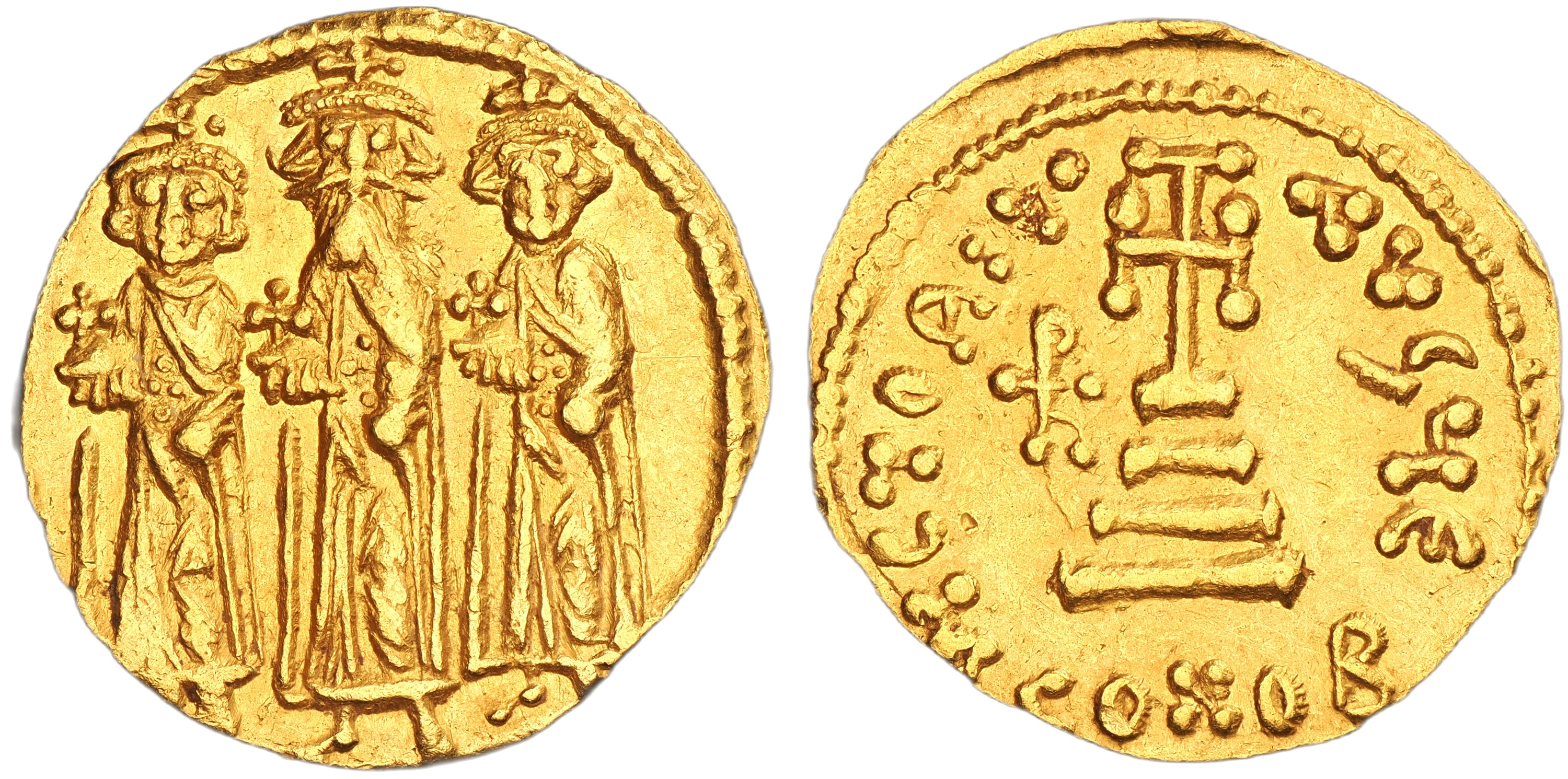
This exemplary solidus captures the imperial family during a time of great tumult. The Arab invasions had begun in earnest, and the life work of emperor Herakleios was being undone before his weary and aged eyes. The results of two decades of campaigning, bloodshed, sacrifice, and loss dissolved alongside the fragile peace established with the Sassanians. The victors of that legendary conflict through strength earned a stay of execution from the Arabs at the cost of half their empire. The losers became the vanquished, and the political balance of the Near East was forever changed. Whispers floated in the streets that the unprecedented rise of the Arabs was the result of the emperor marrying his own niece. Others speculated it was due to the presence of Jews and heretics in the empire. Still others proposed new formulations of Christology as the solution. Unease and fragmentation diminished influence in the provinces, and the prospects of the empire were on the certain decline. Gold coinage like the above specimen helped to keep the imperial administration functional with the all important process of taxation in coin. Without a centralized and developed state using coinage like the solidus, it is unlikely that the Rhomaioi would have survived beyond 717.
Ex Mike Gasvoda Collection.
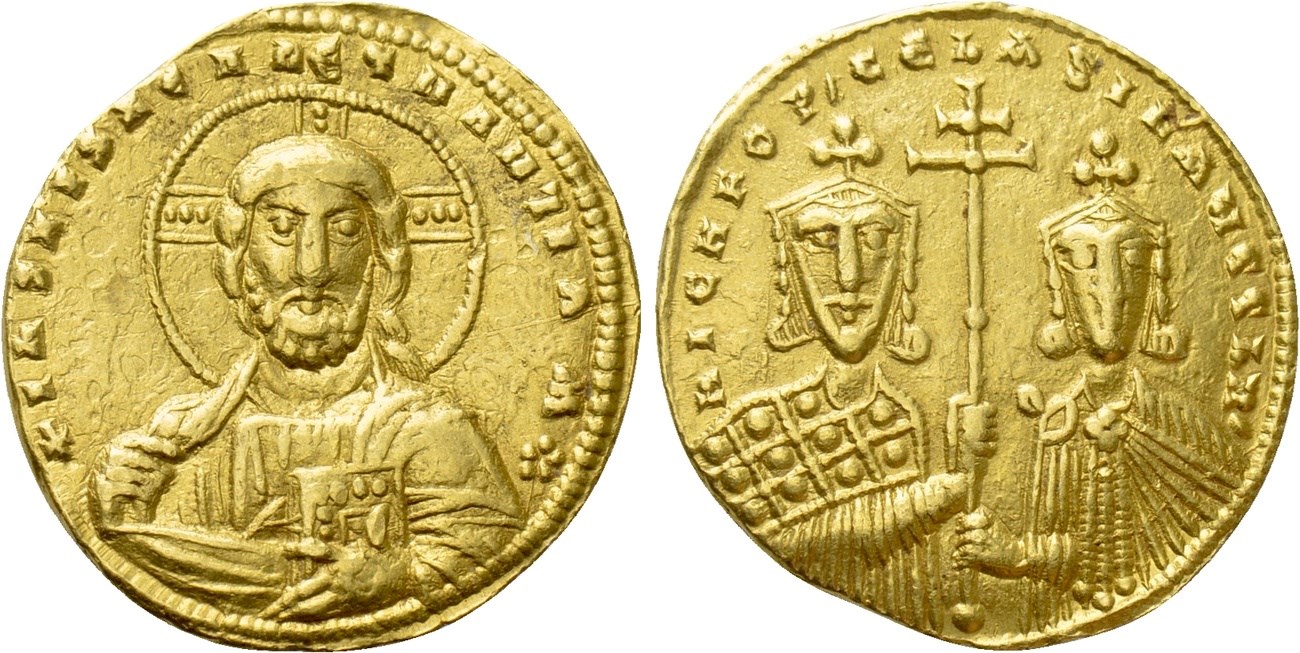
The death meted upon emperor Nikephoros II Phokas is among the most cruel and least deserved among the imperial ranks,
“..the emperor, who was already growing faint and did not have anyone to defend him, kept calling on the Mother of God for assistance. But John grabbed hold of his beard and pulled it mercilessly, while his fellow conspirators cruelly and inhumanly smashed his jaws with their sword handles so as to shake loose his teeth and knock them out of the jawbone. When they had their fill of tormenting him, John kicked him in the chest, raised up his sword, and drove it right through the middle of his brain…”
Betrayed by wife and nephew, the most competent general and pious emperor of the Byzantines was slain in his private chapel, with his final words crying out for aid from the Theotokos. Founder of the Mount Athos monasteries, patron of the Church, ascetic and austere, Nikephoros was cut from a different cloth than the imperial court writ large. A frontiers magnate accustomed to the discipline and the obedience of marshal action, delicate sensibilities of urban elites inevitably clashed with the brusque and squat general. With growing discontent, it was the wife of Nikephoros who despised him above all. Cavorting with his nephew and encouraging a coup d’état, thus was the dastardly deed accomplished. The white death of the Saracens faced the fate alone and abandoned that no fiendish army could accomplish against his command on the battle field.
The full account of Nikephoros’ last moments is worth a full recounting, and the above quote is fully expounded in the dramatic story unfolding below. Following the translation of Alice-Mary Talbot and Denis F. Sullivan,
“During a whole watch of the night the emperor made his usual prayers to God and devoted himself to study of the Holy Scriptures. When the need for sleep came upon him, he lay down on the floor, upon the leopardskin and scarlet felt cloth, before the holy icons of the theandric image of Christ and of the Mother of God and of the Holy Forerunner and Herald.
Meanwhile John’s retainers, who had been admitted by the augusta, had emerged from the room, armed with swords, and were awaiting his arrival, watching closely from the terrace of the upper rooms of the palace. The clock was just indicating the fifth hour of the night, a fierce north wind filled the air, and snow was falling heavily. Then John arrived with his fellow conspirators, sailing along the shore in a light boat and disembarking on land where the stone Hon is seizing the bull (traditionally the place is called Boukoleon; whistling to his retainers, who were leaning out from the terrace above, he was recognized; for this was the signal he had given to the murderers.
They let down from above a basket attached to ropes, and hauled up first all the conspirators one at a time, and then John himself. After thus ascending without being detected, they entered the imperial bedchamber with swords drawn. When they reached the bed and found it empty with no one sleeping in it, they were petrified with terror and tried to hurl themselves into the sea [from the terrace]. But a dastardly fellow from [the staff of] the women’s quarters led them and pointed out the sleeping emperor; they surrounded him and leapt at him and kicked him with their feet.
When Nikephoros was awakened and propped his head on his elbow, Leo, called Balantes, struck him violently with his sword. And the emperor, in severe pain from the wound ([for] the sword struck his brow and eyelid, crushing the bone, but not injuring the brain), cried out in a very loud voice, “Help me, Ο Mother of God!”; and he was covered all over with blood and stained with red. John, sitting on the imperial bed, ordered [them| to drag the emperor over to him. When he was dragged over, prostrate and collapsing on the floor (for he was not even able to rise to his knees, since his gigantic strength had been sapped by the blow of the sword), [John] questioned him in a threatening manner, saying, “Tell me, you most ungrateful and malicious tyrant, wasn’t it through me that you attained the Roman rule and received such power? Why then did you disregard such a good turn, and, driven by envy and evil frenzy, did not hesitate to remove me, your benefactor, from the command of the troops? Instead you dismissed me to waste my time in the countryside with peasants, like some alien without any rights, even though I am more brave and vigorous than you; the armies of the enemy fear me, and there is no one now who can save you from my hands. Speak then, if you have any grounds of defense remaining against these charges.”
The emperor, who was already growing faint and did not have anyone to defend him, kept calling on the Mother of God for assistance. But John grabbed hold of his beard and pulled it mercilessly, while his fellow conspirators cruelly and inhumanly smashed his jaws with their sword handles so as to shake loose his teeth and knock them out of the jawbone. When they had their fill of tormenting him, John kicked him in the chest, raised up his sword, and drove it right through the middle of his brain, ordering the others to strike the man, too. They slashed at him mercilessly, and one of them hit him in the back with an akouphion and thrust it right through to the breast. This is a long iron weapon that very much resembles a heron’s beak. But it differs from the beak in its shape, inasmuch as nature bestowed a straight beak on the bird, whereas the akouphion gradually extends in a moderate curve, ending in a rather sharp point. Such was the end of the life of the emperor Nikephoros, who lived fifty-seven years, but held the imperial power for only six years and four months.
He was a man who unquestionably surpassed every man of his generation in courage and physical strength, and was very experienced and energetic in warfare; unyielding in every kind of undertaking, not softened or spoiled by physical pleasures, a man of magnanimity and of genius in affairs of state, a most upright judge and steadfast legislator, inferior to none of those who spend all their lives on these matters; he was strict and unbending in his prayers and all-night standing vigils to God, and kept his mind undistracted during the singing of hymns, never letting it wander off to worldly thoughts. Most people considered it a weakness in the man that he wanted everyone to preserve virtue uncompromised, and not to debase the scrupulousness of justice. Therefore he was relentless in the pursuit of these [goals], and seemed implacable and harsh to wrongdoers, and annoying to those who wanted to lead an unprincipled life. But I say that, if some malicious fortune had not begrudged his prospering affairs and suddenly snatched away this man’s life, the Roman empire would have obtained greater glory than ever before. But Providence, which abhors harsh and overweening spirits in men, curtails and checks them and reduces them to nothing, with its incomprehensible decisions steering the transport ship of life on an expedient course.”
Vanitas vanitatum, et omnia vanitas.
So ends the top 10 list for L5 Auction 6. If any of these coins should have intrigued you, O’ reader, rest assured that many more treasures are to be found in the full sale. What was shared here is but a small preview. I hope that I have played my part well and to your satisfaction.
Acta est fabula, plaudite!