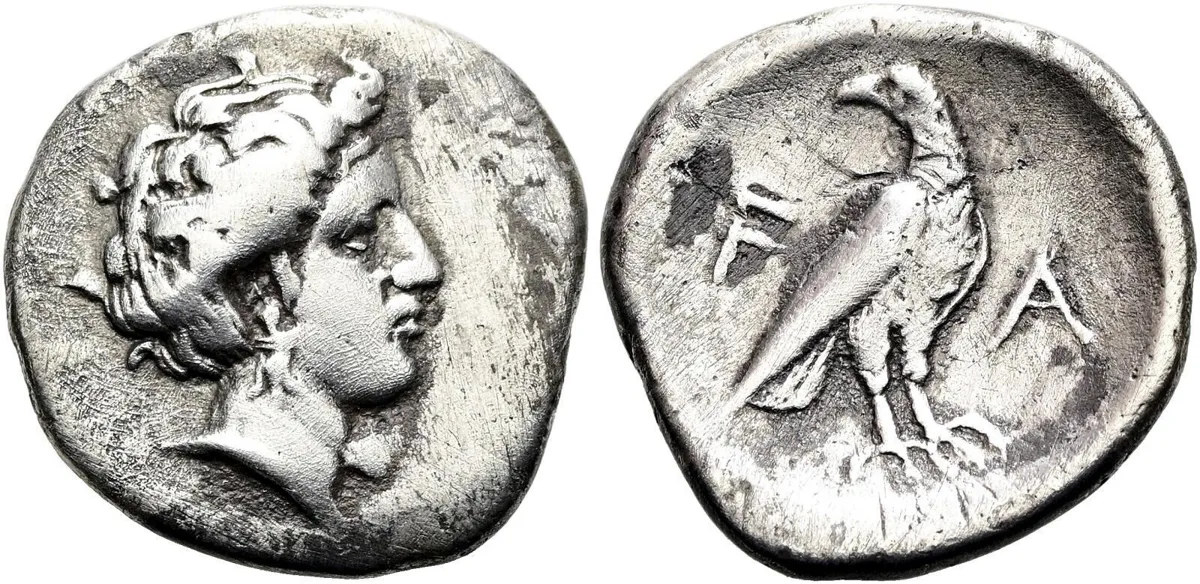
ELIS, Olympia – Silver Hemidrachm, 111th-114th Olympiads (336-324 BC)
Lot 028 · Consigned by NumisOne
Closed
Description
ELIS, Olympia – Silver Hemidrachm, 111th-114th Olympiads (336-324 BC) 17 mm · 2.65 g · “Olympia” standard hemidrachm. Struck at the sanctuary mint near the Heraion between the 111th and 114th Olympiads, 336-324 BC. Obv.: Head of the nymph Olympia right, wearing a plain band; bead-and-reel border. Rev.: Ϝ-Α (retrograde digamma and Alpha) – Eagle standing right, but turning its head back left; exergual line. BCD Olympia 191; cf. Seltman “Temple” 202 (same dies). Toned silver with scattered horn-silver deposits; softly struck on the highest curls, reverse devices sharp. Very Fine. Pierre & Angélique Amandry Collection; Jean Vinchon Numismatique (Dec 2021), lot 99.
Olympic silver was coined only in the months immediately surrounding each festival, making these hemidrachms the ultimate sporting souvenirs. The Ϝ (digamma)-Α on the reverse abbreviates Phialai Alfē, “cup-money of Elis,” a legend unique to the 4th-century emission and thought to record the surplus of sanctuary revenues devoted to prizes and public distributions.
Nymph Olympia on the obverse personifies the sacred grove of the Altis; her youthful, serene features contrast with the bearded Zeus who dominates earlier Elis coinage.
The eagle—Zeus’ messenger—glances back over its shoulder as if to the great statue of Phidias that once towered inside the temple nearby.
Numismatic finds in the stadium’s embankments show that athletes and pilgrims alike hoarded these half-drachms as keepsakes, while the Eleans spent them farther afield to import grain and timber for festival infrastructure. Issued during the dramatic decade that began with Alexander’s accession (336 BC) and ended with his Asiatic conquests, this modest coin links the timeless traditions of Olympia to the dawn of the Hellenistic age.