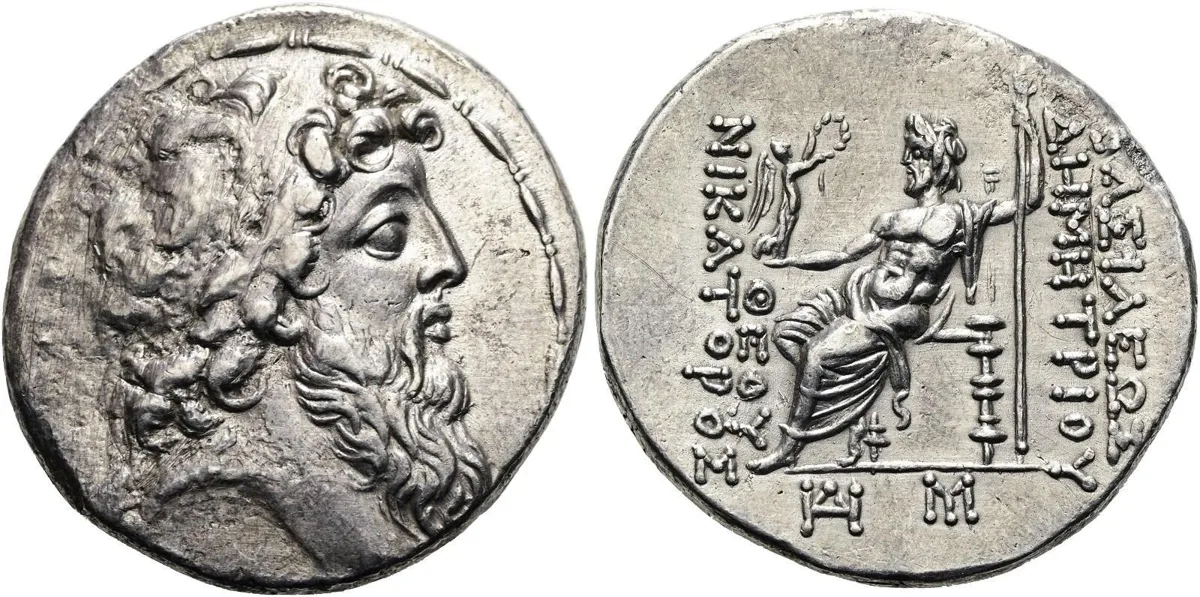
SELEUCID KINGDOM – Demetrios II Nikator, Second Reign, c. 130-125 BC.
Lot 102 · Consigned by NumisOne
Closed
Description
SELEUCID KINGDOM – Demetrios II Nikator, Second Reign, c. 130-125 BC. Silver tetradrachm, Ake-Ptolemais mint, struck 127-126 BC. 29 mm, 15.49 g. Obverse: Diademed and long-bearded head of Demetrios right. Reverse: ΒΑΣΙΛΕΩΣ ΔΗΜΗΤΡΙΟΥ / ΘΕΟΥ ΝΙΚΑΤΟΡΟΣ. Zeus Nikephoros seated left on a high-back throne, holding small Nike and long sceptre; monograms beneath the throne. References: SC II 2202; CSE 802; Newell LSM 4; HGC 9, 1117g. Cleaned on the obverse; otherwise toned and well centred.
After ruling Syria from 146 BC, Demetrios II marched east against the Parthians and was captured in 138 BC. Held nearly nine years at the Parthian court, he adopted the long beard then fashionable among Iranian princes—the feature that dominates this portrait. In 129 BC the new Parthian king Phraates II released Demetrios, hoping to destabilise the Seleucid realm; the epithet “Nikator” (“Bringer of Victory”) on the coinage proclaims a triumph that existed more in royal propaganda than on the battlefield.
Ake-Ptolemais (modern Acre) struck only a handful of dies for Demetrios’ brief second reign. The seated Zeus Nikephoros echoes the legendary golden statue of the god that stood in the temple precinct at Antioch, while the upright sceptre and extended Nike symbolise Demetrios’ fragile claim to divine favour. Within two years the king lost Antioch to the usurper Alexander Zabinas and was executed at Tyre—ending the last realistic attempt to reunify the Seleucid kingdom.
This rare tetradrachm, produced during that turbulent interlude, preserves the mature likeness of a monarch who had already lived—and failed—once before.