KINGS of THRACE, Local Dynasts. Skostokos
Lot 044 · Consigned by NumisOne
Closed
Description
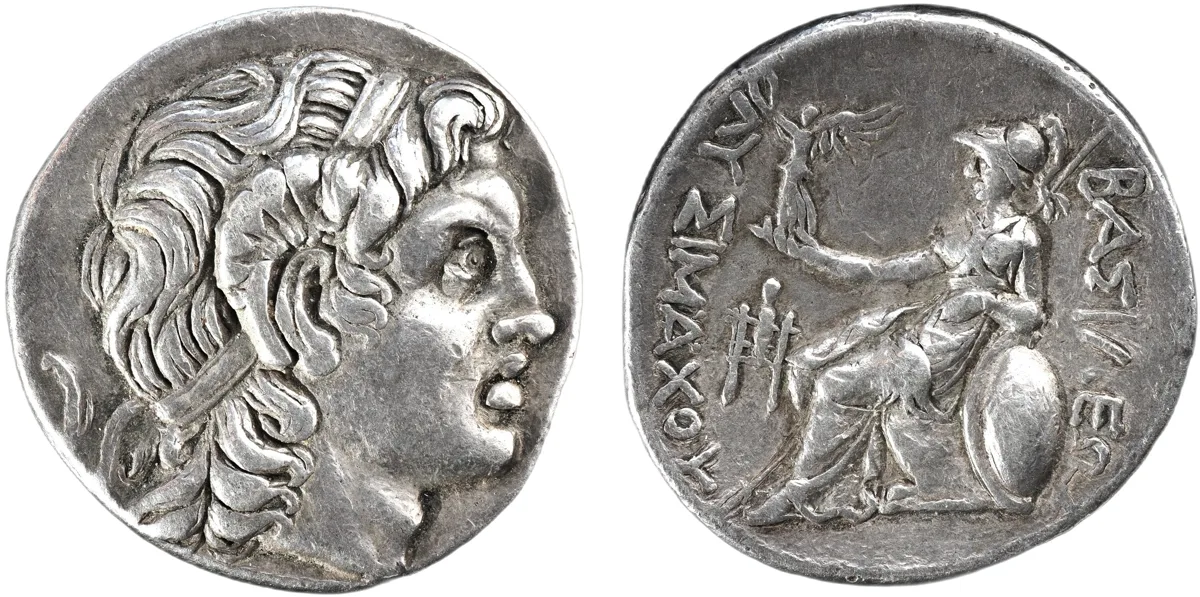
Kings of Thrace, Local Dynasts. Skostokos. Circa 285/4–273/2 BC. AR Tetradrachm (29 mm, 17.17 g, 8 h). Ainos mint. Struck circa 280 BC.
Obv. Diademed head of the deified Alexander the Great right, with horn of Ammon.
Rev. Athena Nikephoros seated left, left arm resting on shield, transverse spear behind; in inner left field, cult image set upon a throne.
Fischer-Bossert, Lysimacheier C7 (V c6/R c7); Thompson 257 var. (with additional control marks); Müller 114; HGC 3, 1750r; Weber 2727 (same dies).
Lightly toned. Extremely fine. Well struck. Very rare, with six examples recorded by Fischer-Bossert and a further six noted in CoinArchives.
This exceptionally rare tetradrachm belongs to the short and historically charged coinage of Skostokos, a local dynast at Ainos operating in the power vacuum that followed the death of Lysimachos. In the years around 280 BC, Thrace became a contested landscape as successor kings and regional authorities sought control of former Lysimachan territory. Skostokos asserted his authority by striking coinage in the established Alexander–Lysimachus tradition, thereby claiming continuity with the royal order of the Successors.
The obverse preserves the deified Alexander the Great, identifiable by the horn of Ammon, an image that had become the supreme emblem of legitimate Hellenistic rule. On the reverse, Athena Nikephoros sits in composed authority, a figure associated with victory, protection, and good governance. The small cult image on a throne in the inner field is a distinctive local feature, likely referring to a civic or regional cult at Ainos and anchoring the universal royal type within a specifically local religious context.
Struck from the same dies as the Weber specimen and recorded in only a handful of examples, this issue stands among the rarest survivals of the Lysimachean monetary tradition. It offers a rare glimpse into the strategies of legitimacy, continuity, and local identity employed by minor dynasts during one of the most unstable phases of the early Hellenistic world.