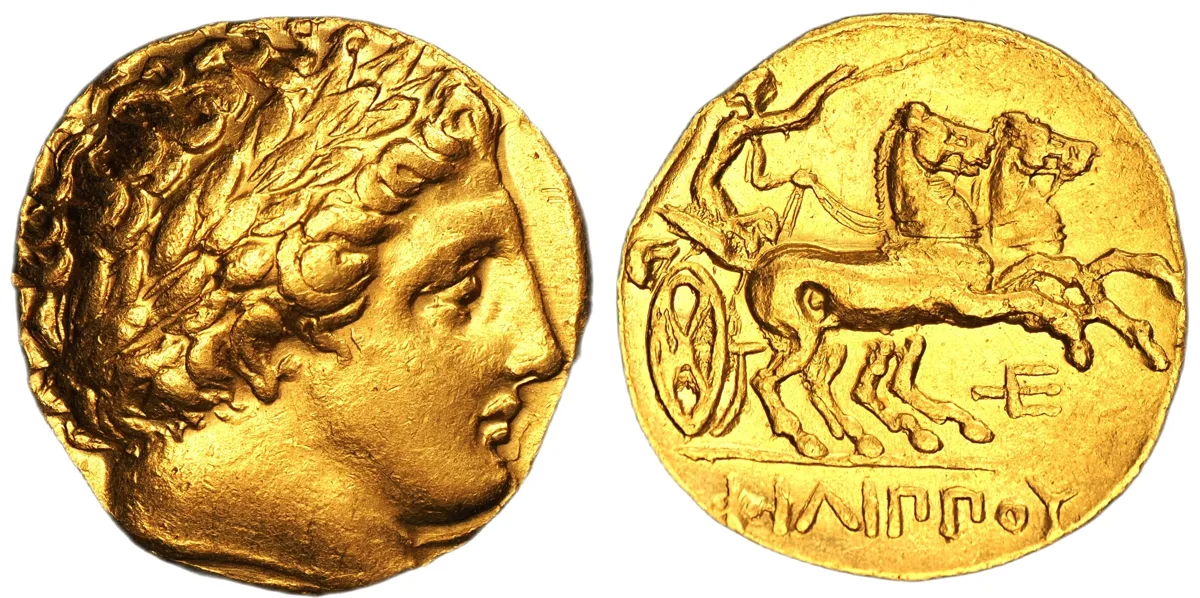
Macedon. Philip II, 359-336 BC, and posthumous issues. Stater
Lot 047 · Consigned by NumisOne
Closed
Description
Macedon. Philip II, 359-336 BC, and posthumous issues. Stater (Gold, 17 mm, 8.51 g). Pella, circa 340-328 BC. Laureate head of Apollo right. Rev. ΦΙΛΙΠΠΟΥ Prancing biga right, driven by charioteer holding reins and kentron; trident below horses. Le Rider 313 this reverse die. Good very fine. Ex Hirsch 272, 4 May 2011, 186. A handsome gold stater from the great Macedonian series introduced by Philip II and continued after his death under Alexander III and the early successors. The type became one of the most influential gold coinages of the Greek world, combining a refined head of Apollo with an equestrian reverse that advertised Macedonian prestige, aristocratic identity, and victory in the games. Philip’s gold coinage was made possible by his control of the rich northern mines, especially after the capture of the mining region around Krenides, refounded as Philippi. This new gold supply gave Macedon a financial instrument equal to its military ambitions, supporting diplomacy, mercenary payments, and expansion throughout Greece and the Balkans. By the time this piece was struck at Pella, the stater type had already become a widely recognized expression of Macedonian royal power. The biga reverse is often connected with Philip’s Olympic victories, particularly his success in equestrian events. The image is therefore not merely decorative: it links the king to Panhellenic competition and aristocratic honor while also presenting Macedon as fully integrated into the Greek world. The trident beneath the horses is the issue symbol and, together with the die citation to Le Rider 313, places the coin securely within the Pella sequence. Although only good very fine, the coin has strong historical interest as part of the gold currency that helped finance the rise of Macedonian hegemony.