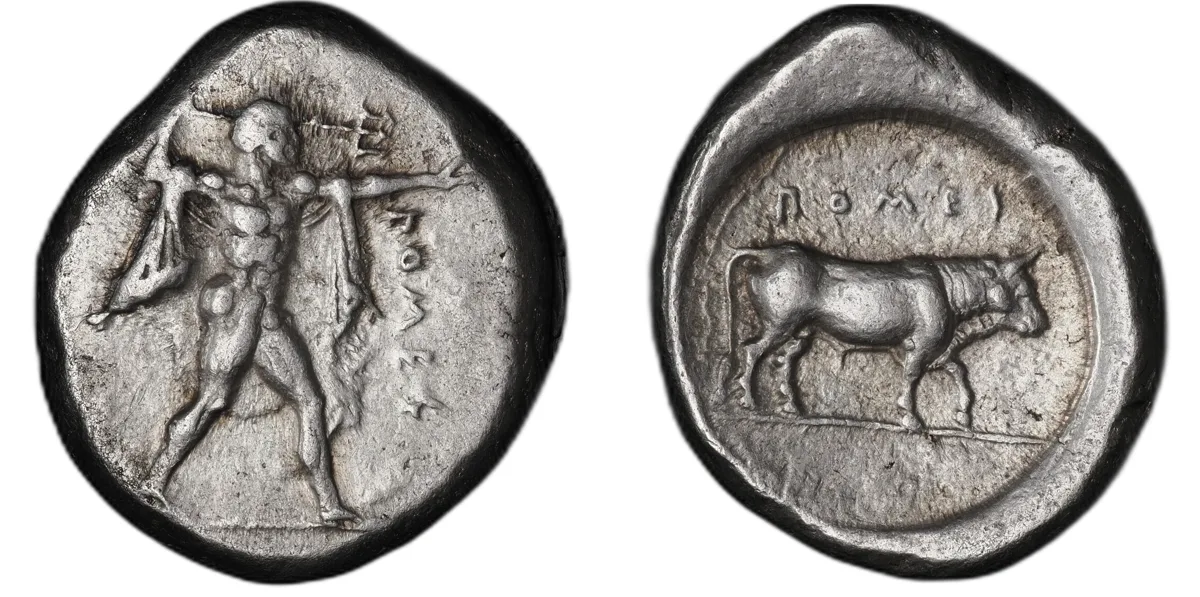
ITALY, Lucania. Poseidonia (later Paestum). AR Stater
Lot 031 · Consigned by hhf
Closed
Description
ITALY, Lucania. Poseidonia (later Paestum). AR Stater, c. 470-445 BC Diameter 20.22 mm; weight 7.99 g; die axis 1 h.
Obv. Poseidon, nude but for a chlamys over his shoulders, striding right; brandishes trident in raised right hand, left arm out-stretched; ethnic ΠΟΣ (retrograde HΟΜΕΣ) before.
Rev. ΠΟΣ above a standing bull right; all within a shallow circular incuse.
Refs. SNG ANS 647; SNG Copenhagen 1282; HN Italy 1114; Sear GCV 424 variant.
Poseidonia—founded by colonists from Sybaris in the mid-7th century BC—struck silver incuse staters that closely echoed the fabric of its Achaean mother-city. After Sybaris fell to Croton in 510 BC the coinage lapsed, resuming a generation later on a heavier standard and now in full relief. The revived issues kept the dynamic striding Poseidon but replaced Sybaris’s bull-punch with a bull in relief, symbolising the influx of Sybarite refugees who settled at Poseidonia and restarted its mint. The types were soon copied back at re-founded Sybaris (453 BC), underscoring the two cities’ enduring ties. Staters like the present piece therefore mark a moment when Poseidonia rose to regional prominence, serving as cultural and economic heir to a destroyed metropolis—a prominence later erased when the Lucanians captured the city (early 4th century BC) and renamed it Paestum, and finally when Roman colonists arrived in 273 BC.