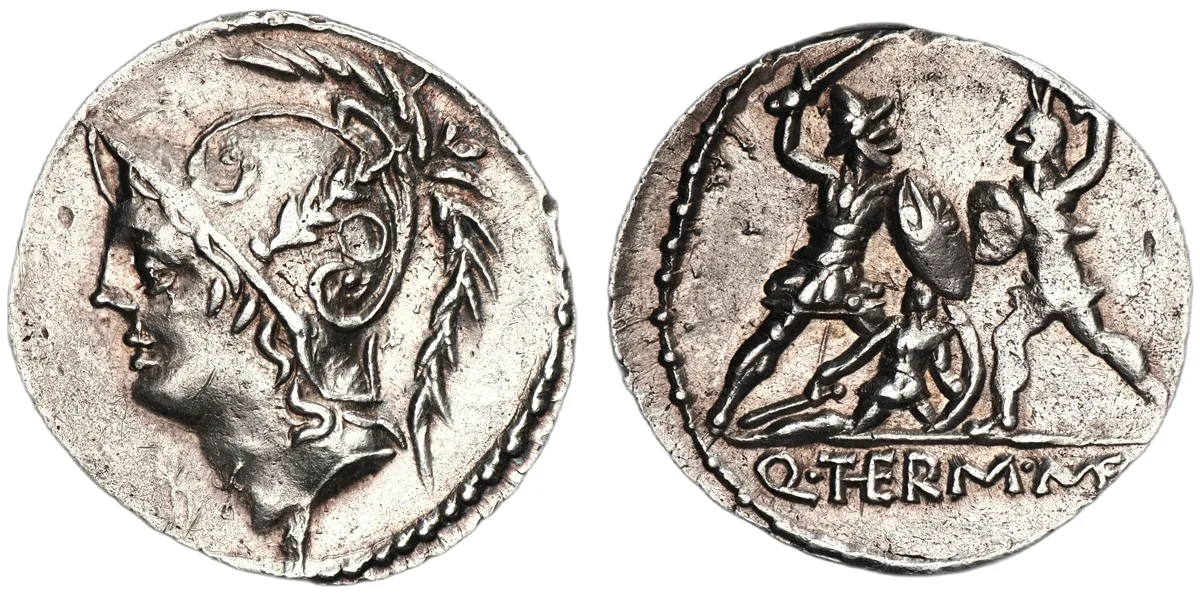
Q. Minucius Thermus M.f. 103 BC. AR Denarius
Lot 317 · Consigned by GreatCoinsUSA
Closed
Description
Q. Minucius Thermus M.f. 103 BC. AR Denarius (20 mm, 3.91 g, 11 h). Rome. Obv. Head of Mars left, wearing crested helmet decorated with volutes and plume. Rev. Q•THERM•M•F, two warriors engaged in combat, each armed with sword and shield; the figure on the left shields a fallen comrade, while the opposing warrior wears a horned helmet. Babelon (Minucia) 19; Crawford 319/1; Sydenham 592; RBW 1174. Lightly toned and well preserved. Very fine. Ex Giessener Münzhandlung, Auction 97, 11 October 1999, lot 845.
This denarius was issued in 103 BC by Q. Minucius Thermus, a member of the plebeian gens Minucia, during a period marked by sustained military pressure on Rome’s northern frontiers and the continuing wars against the Cimbri and Teutones. The obverse type of Mars, the Roman god of war, is rendered in a robust and archaizing style, emphasizing martial virtue and preparedness. The elaborate helmet, with its volutes and prominent crest, reflects a conventional late Republican iconography associated with military authority and ancestral valor. The reverse depicts a vivid combat scene, unusual in its narrative detail. One warrior is shown actively defending a fallen companion, a motif that underscores ideals of virtus, loyalty, and collective discipline, values central to Roman military ideology. The opposing figure’s horned helmet may be intended to mark him as a foreign or archaic adversary, heightening the contrast between Roman solidarity and the threat posed by external enemies. Such scenes are often interpreted as references to legendary or ancestral exploits, a common strategy employed by Republican moneyers to advertise the martial traditions of their families. Overall, the issue combines traditional religious imagery with dynamic historical allusion, producing a denarius that reflects both the political climate of the late second century BC and the competitive self representation of Rome’s aristocratic elite.