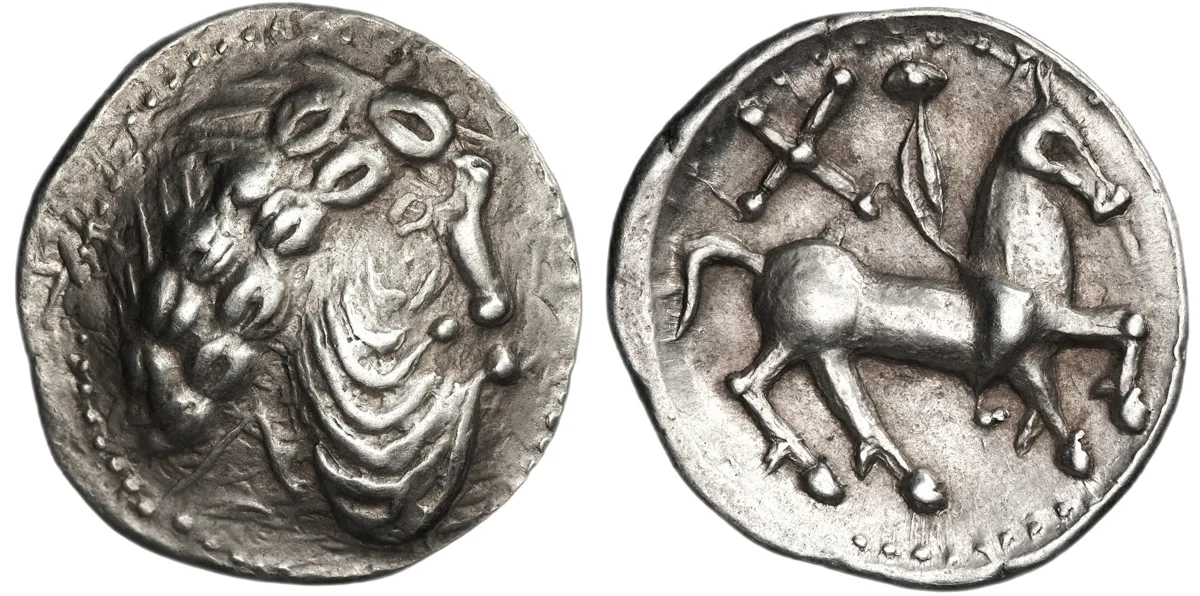
Celtic, Middle Danube region. ‘Kreuzelreiter’ type. AR Tetradrachm
Lot 009 · Consigned by NumisOne
Closed
Description
Celtic, Middle Danube region. AR Tetradrachm (23 mm, 12.18 g, 7 h). ‘Kreuzelreiter’ type, imitating Philip II of Macedon. 2nd century BC. Obv. Celticised laureate head of Zeus right. Rev. Stylised horseman riding right; above, cross with central pellet. Refs: Dembski 1067; Flesche –; Lanz 408; OTA 108/2.
This striking and characterful tetradrachm belongs to the so-called ‘Kreuzelreiter’ (cross-rider) group of Celtic issues from the Middle Danube, produced by tribal mints that flourished in the 2nd century BC. The type is a distant descendant of the famous coinage of Philip II of Macedon, whose design—Zeus and a horseman—was absorbed and transformed through centuries of Celtic reinterpretation. Here, the classical imagery has been wholly abstracted and reimagined: Zeus’s portrait becomes a mask-like head of flowing lines and dots, while the reverse horseman, once a proud Macedonian warrior, is reduced to a geometric symbol framed by a cross with central pellet—likely imbued with tribal or solar symbolism. These later imitative issues reflect not ignorance but artistic evolution, as Celtic engravers adopted and reinterpreted Greek motifs within their own cultural and spiritual vocabulary. Such pieces circulated widely in the Danubian and Pannonian regions, testifying to both the economic reach and the cultural independence of the Celtic peoples on the periphery of the Hellenistic world.