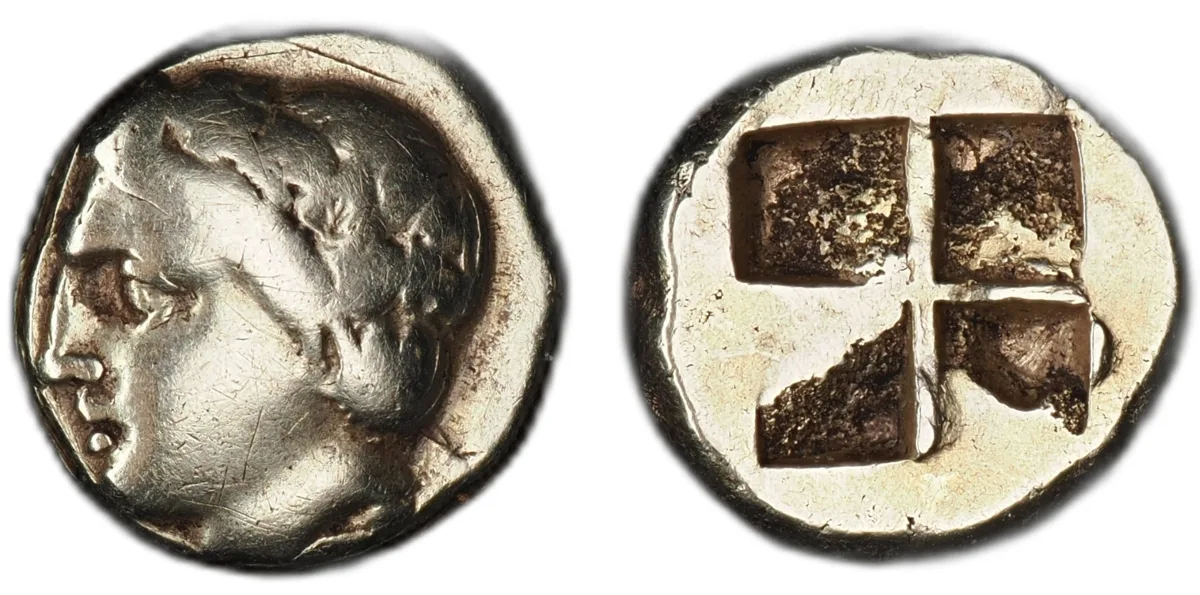
Ionia, Phokaia EL Hekte. Circa 387-326 BC
Lot 121 · Consigned by Scaruffi
Closed
Description
Ionia, Phokaia Hekte (EL). Circa 387-326 BC. Wreathed head of Demeter to left, hair in sakkos; below, small seal left / Quadripartite incuse square. Bodenstedt 102; SNG von Aulock -; Boston MFA 1920. 2.52g, 11mm.
Struck in the coastal Ionian city of Phokaia between circa 387 and 326 BC, this electrum hekte reflects both the city’s long-standing maritime wealth and its deep-rooted traditions in small denomination trade coinage. The obverse depicts the wreathed head of Demeter, goddess of agriculture and fertility, her hair bound in a sakkos, a style associated with dignity and modesty. This imagery likely alludes to the city’s agricultural prosperity and the importance of grain supply—particularly significant for a trading hub reliant on both sea-borne imports and exports. Beneath the portrait appears a small seal, a civic emblem referring to Phokaia’s very name (phōkē meaning "seal" in Greek), a clever visual pun that also served as a recognizable symbol of local identity.
The reverse bears the characteristic quadripartite incuse square, a holdover from archaic coinage that remained in use for centuries on Phokaian electrum. Hektes of this type formed a key part of the city’s economic system, facilitating trade across the Aegean and eastern Mediterranean where electrum was widely accepted. Their small size and high intrinsic value made them ideal for both regional commerce and long-distance transactions. This particular issue, cataloged by Bodenstedt as type 102, comes from the late Classical period, just prior to the sweeping political changes brought by Macedonian hegemony under Alexander the Great. As such, it represents the enduring autonomy and commercial vitality of one of Ionia’s most prominent maritime powers during the final century of widespread civic coinage in the region.