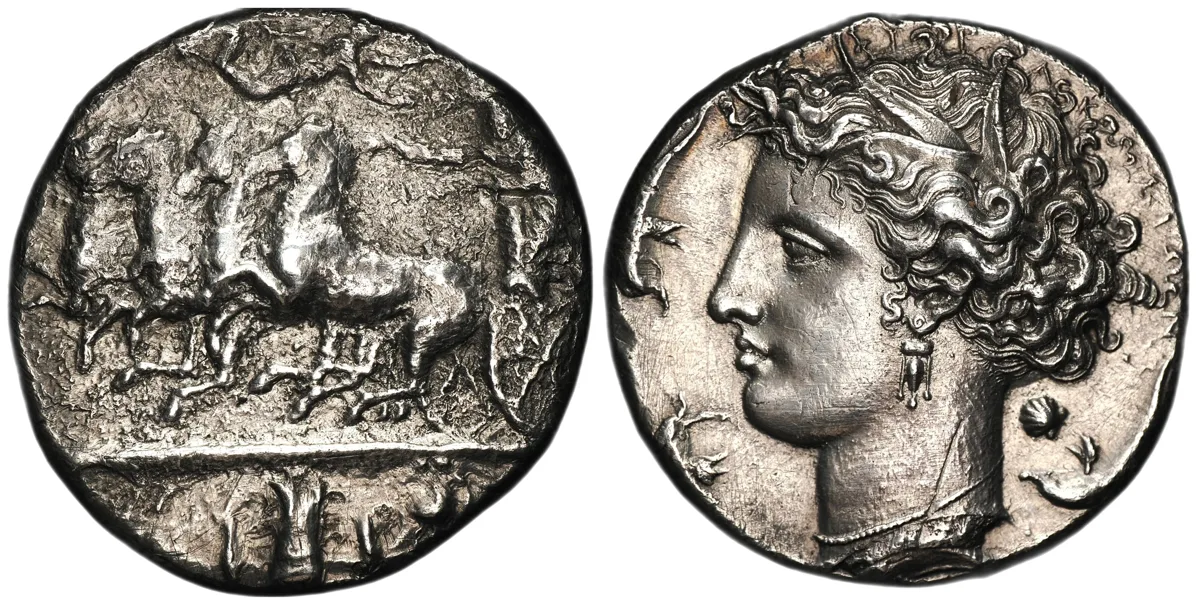
Sicily, Syracuse. AR Decadrachm, unsigned dies of the Euainetos master
Lot 031 · Consigned by GreatCoinsUSA
Closed
Description
Sicily, Syracuse. AR Decadrachm, unsigned dies of the Euainetos master, circa 400 BC. Obv. ΣΥΡΑΚΟΣΙΩΝ, quadriga galloping left, the charioteer holding reins and kentron; above, Nike flying right to crown the driver; in exergue, panoply of cuirass, greaves, shield, and helmet. Rev. Laureate head of Arethusa (or Persephone) left, wearing earring and necklace; four dolphins around; shell behind. 42.48 g. Gallatin O.VIII–R.F.I; SNG Copenhagen 692 var.; Dewing 907 ff. Reverse in high relief with minor marks; obverse struck from a slightly rusted die. Attractive tone. Ex Gorny & Mosch 195 (2011), lot 69.
This magnificent decadrachm, struck from the celebrated Euainetos series, represents one of the supreme artistic achievements of classical Greek numismatics. Produced at Syracuse at the height of its power in the late fifth and early fourth centuries BC, these large silver pieces are masterpieces of die engraving, unmatched in breadth of influence and longevity. Their fame spread throughout the central Mediterranean, inspiring numerous later imitations, most notably among the Carthaginians. The obverse depicts a racing quadriga, its horses in full gallop, animated with extraordinary dynamism. Nike crowns the victorious charioteer, while the panoply in the exergue commemorates martial success and civic celebration. The balance of composition and richness of detail reveal the hand of a master engraver working within the tradition established by Kimon and Euainetos. The reverse presents a radiant head of Arethusa, though some scholars identify her as Persephone on the basis of the grain wreath. The soft modelling of the features, the graceful turn of the head, and the encircling dolphins create an idealized yet deeply expressive portrait. The shell placed behind adds subtle maritime symbolism, linking the nymph to the waters surrounding Ortygia. Coins of this series served both as prestigious civic issues and as powerful visual statements of Syracusan wealth, artistic sophistication, and naval supremacy. Few ancient coinages have exerted such enduring influence, and even fewer rival their refinement and sculptural beauty. A distinguished and rare example of one of the most iconic types of the Greek world.