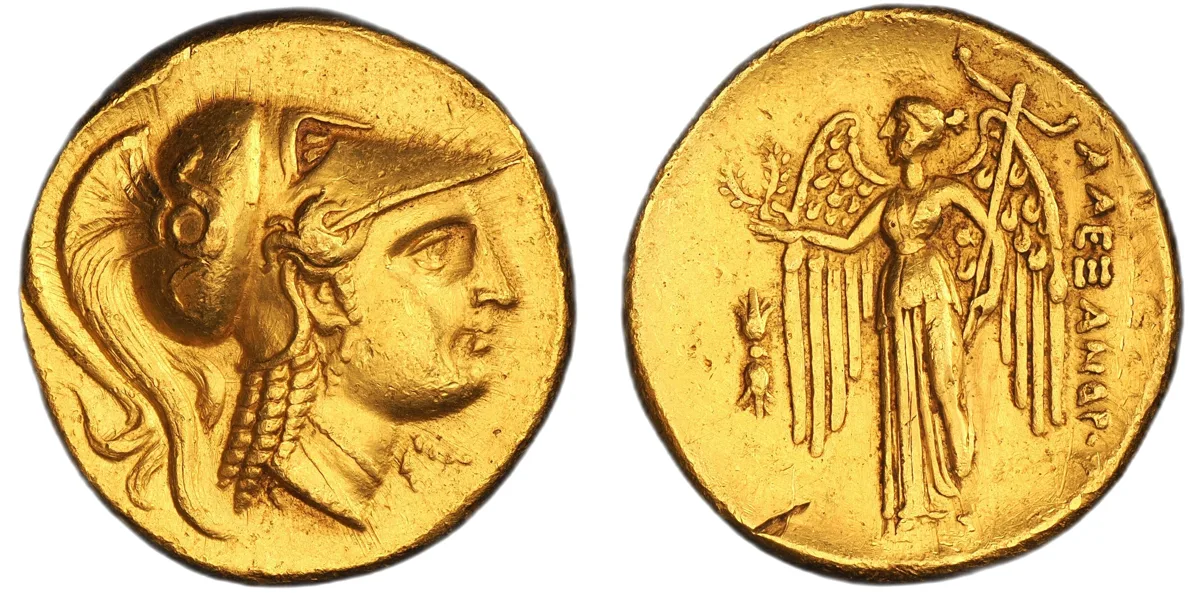
Alexander III the Great, 336–323 BC. AV Distater
Lot 037 · Consigned by GreatCoinsUSA
Closed
Description
Macedonian Kingdom. Alexander III the Great, 336–323 BC. AV Distater (21 mm, 17.14 g, 9 h). Amphipolis, lifetime to early posthumous issue, circa 330–320 BC. Obv. Head of Athena right, her hair arranged in three tight corkscrew curls upswept at the temple and three more falling over the left shoulder; wearing pendant earring, double necklace, and a triple-crested Corinthian helmet pushed back on the head, the bowl decorated with a coiled serpent to right. Rev. ΑΛΕΞΑΝΔΡΟΥ, Nike standing facing, head left, holding wreath in extended right hand and stylis cradled in left arm; thunderbolt in left field.
Price 163. Nicely centred, struck from highly reflective dies. Extremely fine.
Struck at Amphipolis, the principal royal mint during Alexander’s reign, this impressive distater represents one of the most prestigious gold denominations of the Macedonian kingdom. The portrait of Athena on the obverse is rendered in a refined late Classical style, her elaborate coiffure and richly ornamented helmet testifying to the exceptional skill of the Amphipolitan engravers. The serpent motif upon the helmet bowl alludes to the goddess’s protective and chthonic aspects, while the triple crest underscores her martial authority.
The reverse type, with Nike advancing to crown the name of Alexander, encapsulates the ideological essence of the coinage. The stylis she holds evokes naval power, while the thunderbolt in the field reinforces the king’s association with Zeus. This issue belongs to the period of Alexander’s eastern campaigns and their immediate aftermath, when vast quantities of Persian bullion poured into Macedonia and fuelled a dramatic expansion of royal gold coinage.
Amphipolis’ distaters are among the finest Hellenistic gold coins ever produced, combining elegant proportions, exquisite detail, and political symbolism. Their circulation served both as payment to elite units and as a declaration of imperial triumph during the age when Alexander’s conquests reshaped the Mediterranean and Near Eastern worlds.