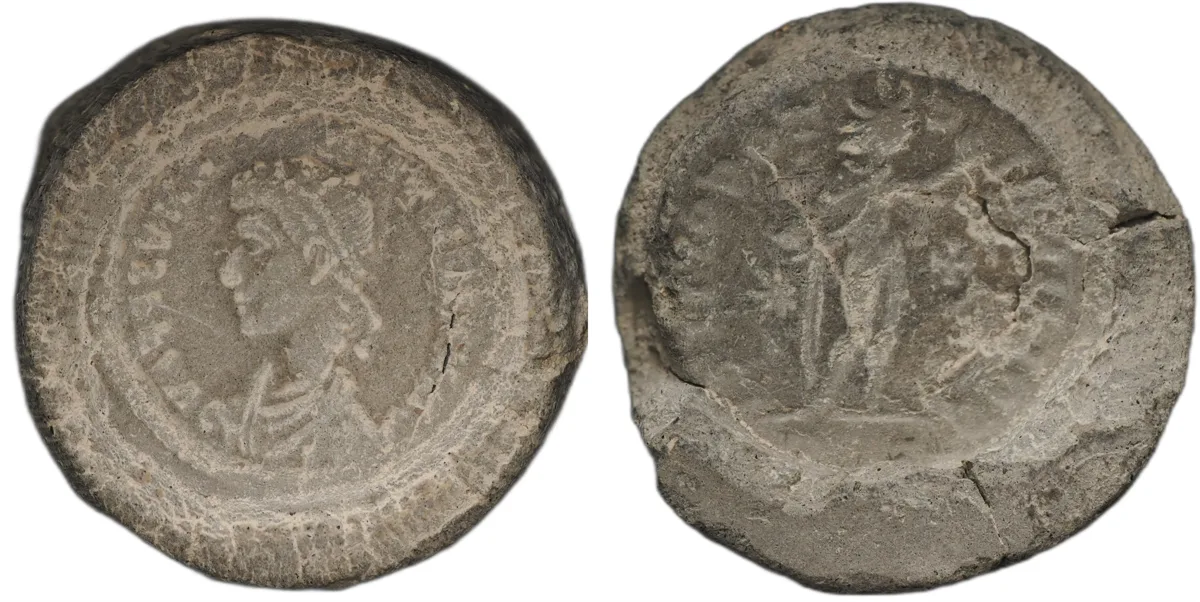
Roman bifacial terracotta forger's coin mould
Lot 615 · Consigned by hhf
Closed
Description
Constantine I (AD 306–337), bifacial forger’s mould for AE follis (nummus), terracotta, prototype c. AD 310–315, 3.50 g, 26 mm. Obverse: Negative impression with legend IMP CONSTANTINVS P F AVG; laureate, cuirassed bust right. Reverse: Negative impression with legend SOLI INVICTO COMITI; Sol standing left, raising right hand and holding globe; exergual area indicated.
Bifacial terracotta casting tool with opposed intaglio impressions for producing counterfeit bronze folles, likely of North African or Egyptian manufacture. The device reproduces a standard early 4th-century Constantine Sol type. Prototype references: cf. RIC VI s.v. Constantine I, SOLI INVICTO COMITI (multiple mints, c. AD 310–315). This mould represents illicit bronze-coin production during the early Constantinian period, when the widely circulating SOLI INVICTO COMITI type associated the emperor with the sun god Sol. Terracotta moulds of this form are well documented from late Roman North Africa and Egypt, where forgers pressed official coins into wet clay to create negative impressions, fired the clay, and cast imitative pieces. The object illustrates both the reach of Constantine’s early propaganda coinage and the parallel economy of counterfeit production that accompanied mass bronze circulation in the early 4th century.