Kingdom of Macedonia. Antigonos Doson.
Lot 055 · Consigned by GreatCoinsUSA
Closed
Description
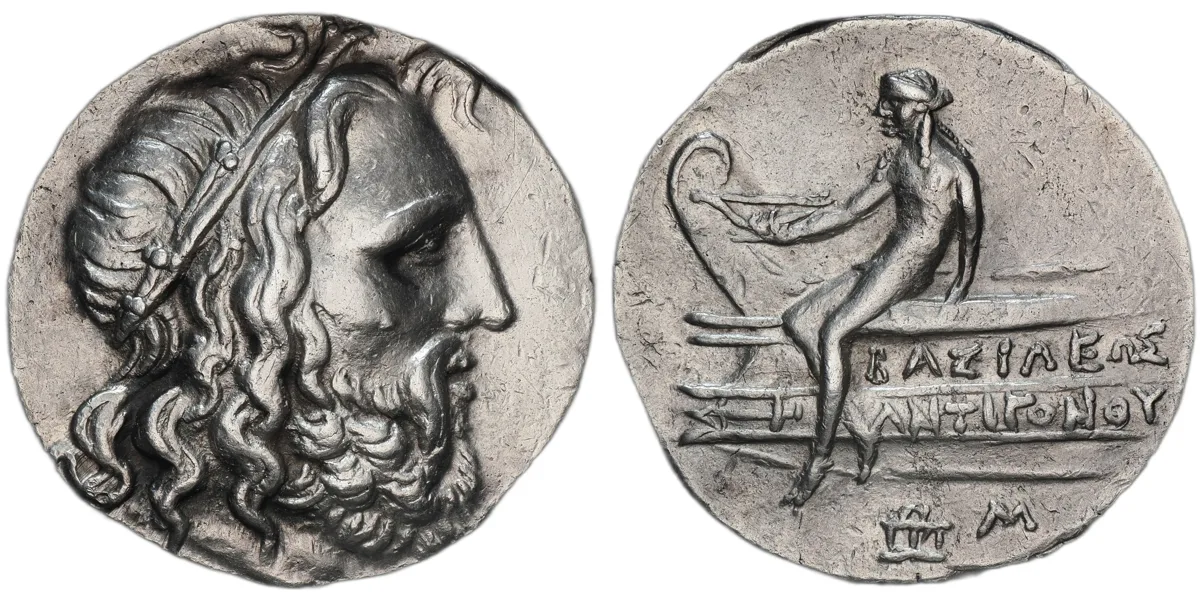
Kingdom of Macedonia. Antigonos Doson. Tetradrachm. Circa 229–221 BC. Obv. Laureate head of Poseidon right, with finely detailed beard and hair bound by a wreath of seaweed. Rev. ΒΑΣΙΛΕΩΣ ΑΝΤΙΓΟΝΟΥ, Apollo seated left on the prow of a galley, examining his bow; monograms in field. 17.08 g. SNG Copenhagen Suppl. 218 var.; Jameson 1008. Ex Gerhard Hirsch Nachf. 298 (2013), lot 2231.
This handsome tetradrachm belongs to the maritime coinage associated with the later Antigonid dynasty, now securely attributed to Antigonos III Doson. Long assigned to his uncle Antigonos Gonatas and traditionally connected to his naval victory at Kos, this issue is now understood to have been struck slightly later, under Doson, whose reign marked the reassertion of Macedonian power in Greece following decades of instability. The obverse portrait of Poseidon, the divine patron of the sea and protector of sailors, is one of the most striking and expressive in Hellenistic art. His wreathed hair, windswept locks, and steady gaze convey both majesty and calm restraint, symbolizing the maritime strength and disciplined order that the Antigonid kings sought to restore. The engraver’s skill is evident in the crisp modeling of the features and the fine detailing of the wreath, which gives the god an almost sculptural presence. On the reverse, Apollo sits gracefully upon the prow of a galley, holding and inspecting his bow. The composition is dynamic yet composed, merging the naval imagery of Poseidon with Apollo’s association with intellect, order, and the arts. The design likely alludes to the renewal of Macedonian naval supremacy under Doson, whose strategic interventions in the Peloponnese and alliance with the Achaean League briefly restored Macedonian influence over much of Greece. Recent scholarship suggests that this coinage may have originated as a continuation of the issues begun by Gonatas following his victory at Andros in 245 BC, with Doson adopting and perpetuating the same iconography to emphasize dynastic continuity. The style of the dies, fabric of the flans, and monogram variations all support a later date within Doson’s reign, around 229–221 BC. A coin of exceptional artistry and political significance, combining refined Hellenistic portraiture with a subtle program of dynastic and naval symbolism. It stands as a testament to the maritime and cultural revival of Macedonia under Antigonos Doson, the last great consolidator of the Antigonid house before the rise of Philip V.