Description
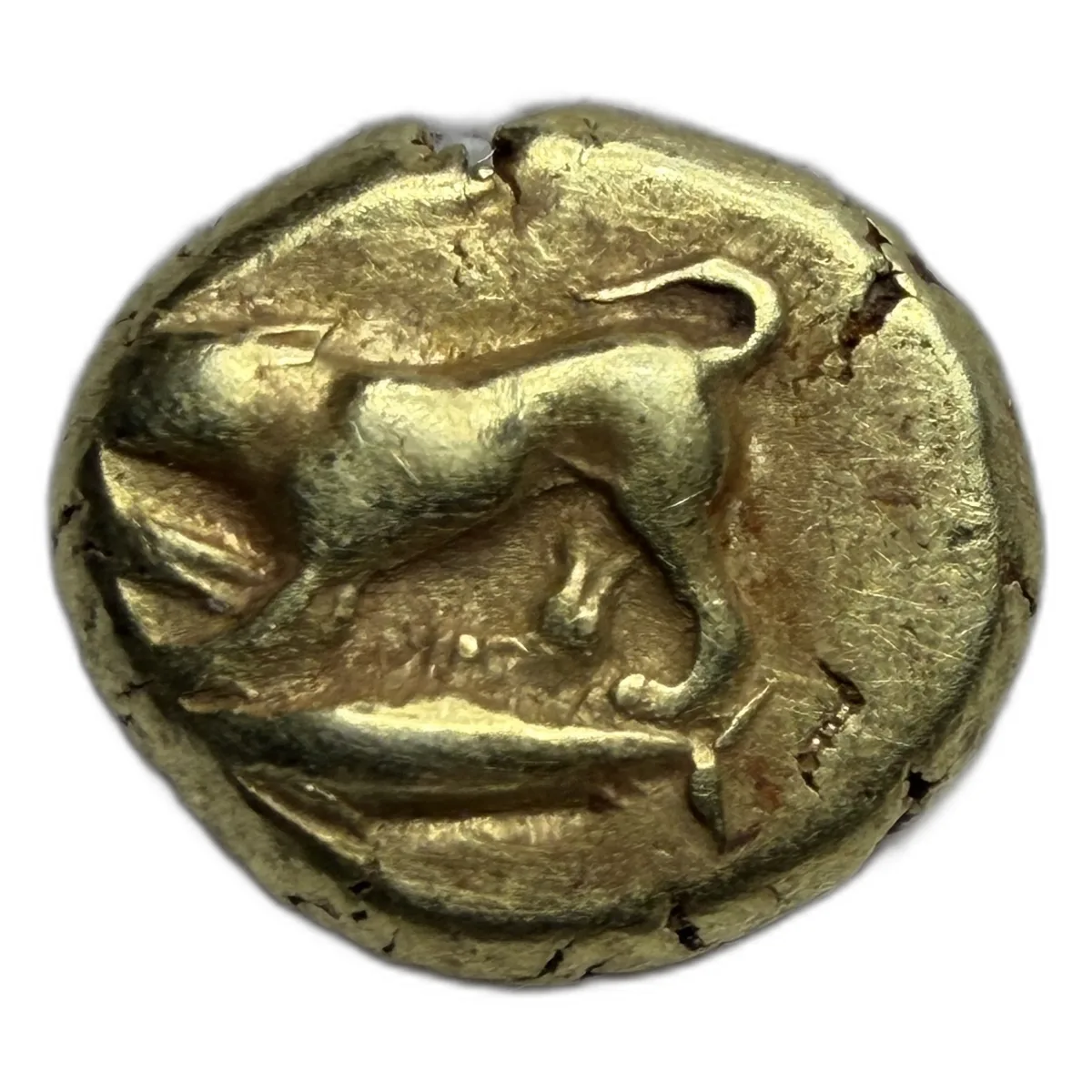
★ Early Electrum Fraction with nearly Complete Tunny ★
Mysia. Kyzikos circa 550-450 BC. Mysia. Kyzikos circa 550-450 BC. Hound (or wolf) at bay left on tunny left / Quadripartite incuse square. Von Fritze I 93; cf. Boston MFA 1470 = Warren 1565 (stater); SNG BN 231. Kyzikos was among the foremost commercial cities of the Archaic Greek world, strategically located on the southern coast of the Propontis (Sea of Marmara). Its electrum coinage became one of antiquity's most trusted international currencies, circulating widely from the Aegean to the Black Sea. While the staters of Kyzikos are renowned for their remarkable variety of types, the fractional denominations are considerably scarcer and likely served local and regional commerce. The hound, or possibly a wolf, was a potent symbol in the Greek world, embodying vigilance, loyalty, hunting prowess, and martial strength. Its placement above the characteristic tunny fish, the civic badge of Kyzikos reflecting the city's prosperity through the rich tuna fisheries of the Propontis, creates a distinctive design that unites local identity with symbolic imagery. Struck in natural electrum, these early fractions represent some of the earliest sophisticated coinage produced in the Greek world and illustrate the artistic innovation that established Kyzikos as one of antiquity's greatest minting centers. Although the hound's head is struck slightly off the flan, the all-important tunny, Kyzikos' defining civic emblem, is fully visible and complete, preserving the essential iconography of this attractive Archaic issue.
Hekte EL
11 mm, 2,61 g