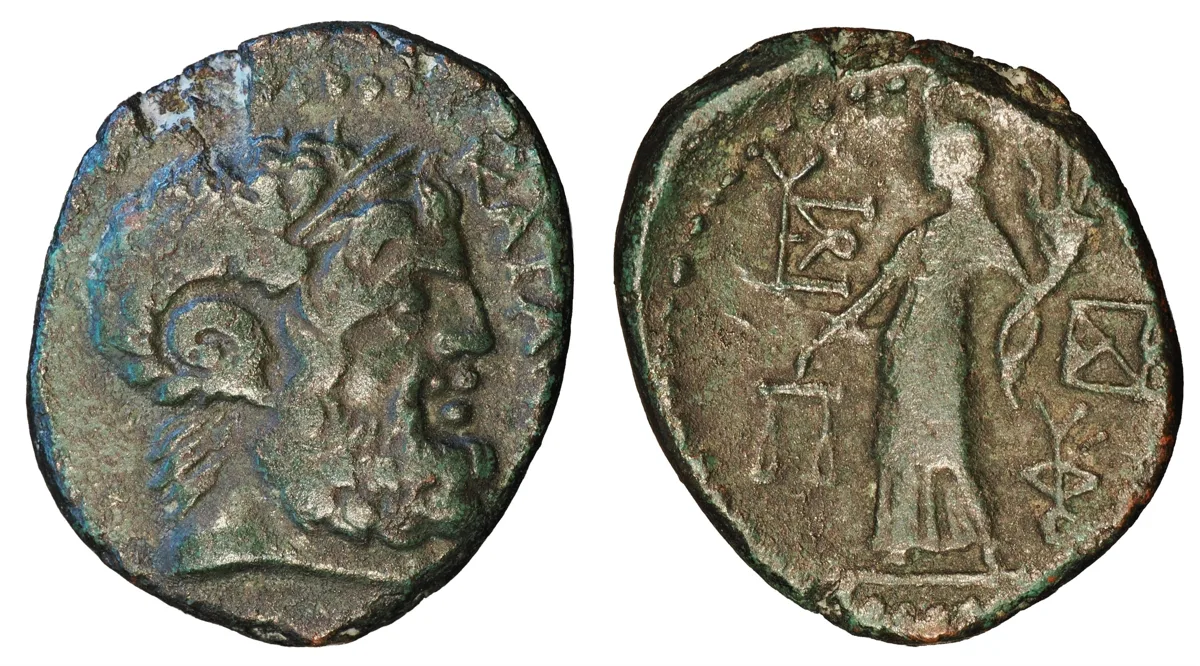
SICILY, Katane (Catana). Bronze AE 22, c. 210 – 150 BC
Lot 034 · Consigned by NumisOne
Closed
Description
SICILY, Katane (Catana). Bronze AE 22, c. 210 – 150 BC. 6.43 g 22 mm 12 h Obv. ΚΑΤΑΝΑΙΩΝ Laureate head of Zeus Ammon r., the ram’s horn curling behind the ear; dotted border. Rev. ΔΙΚΑΙΟΣΥΝΗ (Dikaiosynē / Aequitas) standing l., holding a balance (ζυγός) in her out-stretched right hand and a cornucopia cradled on her left arm; large monogram ΚΡ in upper l. field. CNS III 17; HGC 2 624; SNG Cop 203 f.; BMC Sicily p. 53, 85. Ashmolean NU 2103 (AE22)
Struck soon after Katane’s capture by Rome in 212 BC, this civic bronze couples a finely modelled, North-African-inspired head of Zeus Ammon with Dikaiosynē, personification of Justice and fair dealing. The choice of the god—identified by his curling ram’s horn—advertised Katane’s long-range mercantile ties with the eastern Mediterranean while paying visual homage to Rome’s powerful ally Egypt. The monogram ΚΡ and the boxed “X” control are signature devices of the magistrates who supervised a short, late-Hellenistic bronze series aimed at replacing worn Syracusan and Punic small change.
Beyond its elegant style, the type captures Katane’s civic messaging under nascent Roman rule. The balance and cornucopia proclaim equity and prosperity—virtues Rome expected of a civitas foederata enjoying privileged tax status—while the Ammon portrait signalled that the old Greek polis remained culturally cosmopolitan despite new political masters. As low-denomination currency, these coins circulated widely among soldiers, traders, and farmers on the slopes of Mount Etna, becoming a tangible emblem of the island’s economic rebound and the blending of Greek, Punic, and Roman influences that would define Sicilian life for the next two centuries.