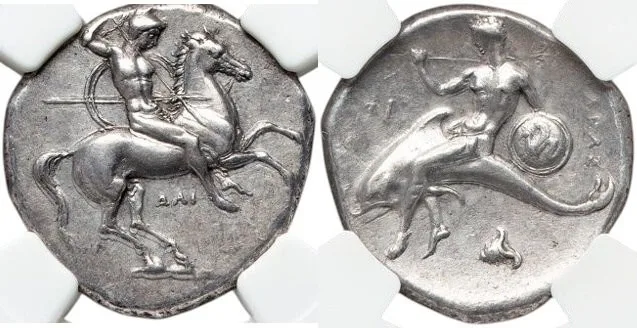
CALABRIA, Tarentum. Ca. 302-280 BC. Silver Didrachm (Nomos)
Lot 037 · Consigned by NumisOne
Closed
Description
CALABRIA, Tarentum. Ca. 302-280 BC. Silver Didrachm (Nomos), 21 mm, 7.83 g, die axis 12 h.
Obv. Helmeted nude cavalryman riding right on a rearing horse; he thrusts his spear downward with his right hand while holding a round shield and two additional spears in his left; below, magistrate’s ethnic ΔAI.
Rev. TAPAΣ – The hero Taras, nude and laureate, astride a dolphin left; he balances a trident over his right shoulder and carries a round shield emblazoned with a hippocamp in his left; in left field ΦI, below dolphin a murex shell. Ref. HN Italy 935; Vlasto 594. NGC AU (Strike: 5/5, Surface: 3/5) 6625608-023– lustrous silver with light cabinet tone, sharp centring on both sides; the detail of the dolphin-skin saddle and horse’s musculature is exceptional.
By the early fourth century BC Tarentum had become the wealthiest and most powerful Greek city in Magna Graecia. Its prosperity rested on maritime trade, purple-dye production (symbolised by the little murex shell on this coin), and a formidable citizen cavalry that could be hired out as mercenaries across the Greek world. Both obverse and reverse celebrate those twin pillars of civic identity:
The mounted spearman embodies Tarentine hippeis, famous for their shock tactics and lavish equipment; their renown was such that Pyrrhus of Epirus later made them the core of his Italian expeditionary force.
Taras on his dolphin recalls the city’s mythical founder, son of Poseidon, miraculously borne to shore after a shipwreck. The image proclaimed divine favour and the city’s mastery of the sea at a time when control of Adriatic trade lanes was fiercely contested.
Struck during the decades bracketing the wars with Rome and local Italic tribes, this didrachm is not merely elegant; it is propaganda in high relief, declaring that Tarentum’s cavalry and seafaring heritage would secure its place—perhaps eternally—between Hellenic culture and the rising power of Rome.