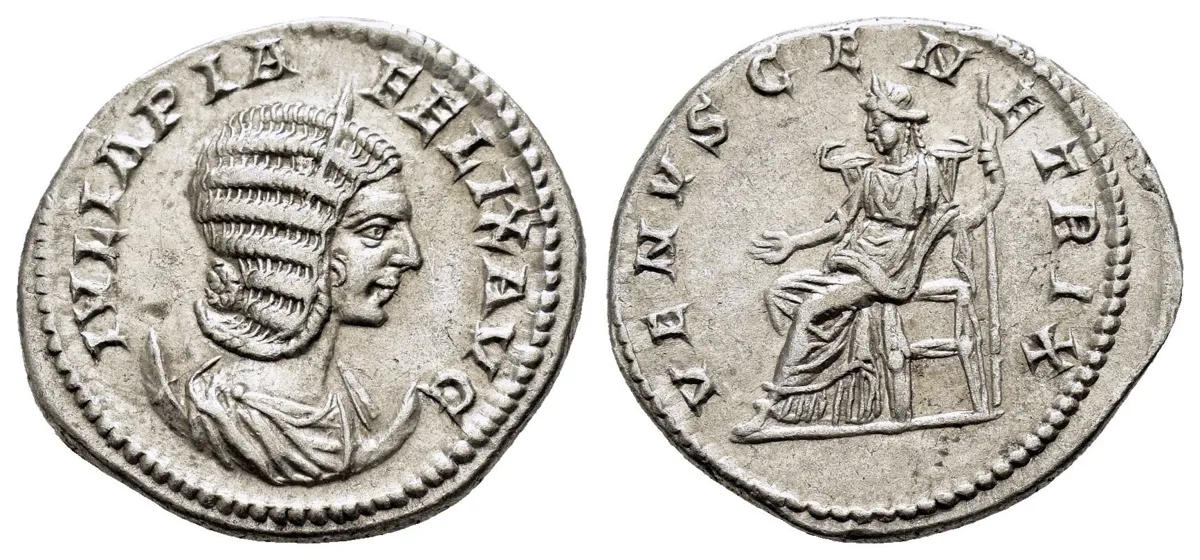
Julia Domna, Augusta A.D. 193-217. Antoninian, Rome, late A.D. 211-217
Lot 257 · Consigned by NumisOne
Closed
Description
Julia Domna, Augusta A.D. 193-217. Antoninian, Rome, late A.D. 211-217. Silver 23 mm, 5.13 g, die axis 6 h. Obv. IVLIA PIA FELIX AVG – Draped and diademed bust of Julia Domna on crescent, right; elaborate “tower” coiffure in seven horizontal waves. Rev. VENVS GENETRIX – Venus Genetrix enthroned left, holding long sceptre and extending right hand. Ref. RIC IV 388a (Caracalla); RSC 211; BMCRE Severan p. 193 no. 43. Light silver-grey surfaces with scattered porosity and minor flan imperfections.
In the turbulent decade after Septimius Severus’ death (A.D. 211) Julia Domna occupied a unique position: official “mother of the camps” (mater castrorum), de facto chief of staff to Caracalla, and patroness of a brilliant court circle in Antioch and Alexandria. Her late coinage adopts the elevated legend PIA FELIX (“pious and fortunate”), underscoring the moral authority she claimed while her son pursued increasingly erratic military ventures.
The reverse type, Venus Genetrix, reaches back to Julius Caesar, who had installed a cult of Venus as the ancestral mother of Rome. By appropriating that imagery Julia linked the upstart Severan house to the deepest roots of Roman myth and—more pointedly—to a goddess embodying fecundity, dynastic continuity, and marital concord. The seated pose, sceptre, and outstretched hand echo Antonine prototypes yet place Venus in a regal, almost imperial rôle, mirroring Julia’s own transformation from consort to political linchpin.
Antoniniani of this “PIA FELIX / VENVS GENETRIX” series mark the last silver issues of Julia Domna before her suicide in 217, and they provide a final glimpse of Severan court ideology on the eve of the empire’s third-century crises.