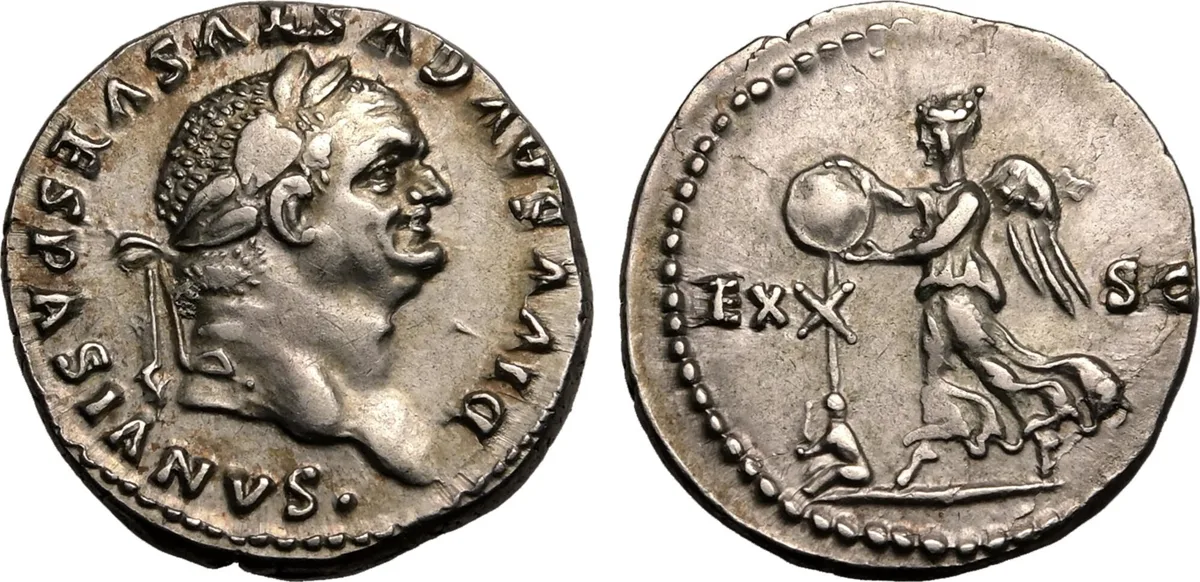
Divus Vespasian, commemorative under Titus, A.D. 80-81. Denarius, Rome mint
Lot 165 · Consigned by NumisOne
Closed
Description
Divus Vespasian, commemorative under Titus, A.D. 80-81. Denarius, Rome mint. Silver 19 mm, 3.51 g, die axis 6 h. Obv. DIVVS AVGVSTVS VESPASIANVS – Laureate head of the deified Vespasian right. Rev. EX – SC in fields – Victory advancing left, setting shield on trophy; below, mourning Judaea seated left in attitude of despair. Ref. RIC II.1 364 (Titus); RSC 144. The Coin Cabinet Ancients Auction 11, Lot 123.
Soft pearl-grey toning with flashes of gold and lilac around the high points; crisply struck on a broad flan that preserves the full dotted border. A handsome “Judaea Capta” commemorative, about extremely fine / extremely fine. From the Euclidean Collection.
When Vespasian died in June A.D. 79, his elder son Titus not only inherited the purple but also undertook to enshrine his father’s memory in the state cult. One of the most resonant ways to do so was by reviving the hugely popular “Judaea Capta” motif, first launched by Vespasian himself after the fall of Jerusalem in A.D. 70. Re-issued here with the legend DIVVS AVGVSTVS VESPASIANVS, the type served a double purpose: it reminded Romans of the Flavian dynasty’s greatest military triumph while elevating its architect to divine status.
The reverse tableau is rich in symbolism. Victory affixes a shield—emblazoned with the achievements of the Senate and People—to a captured trophy, while the personification of Judaea, bound and bereft, sits at the base. The tiny letters EX SC (“by decree of the Senate”) underscore that even Vespasian’s deification, like his victory, enjoyed formal civic sanction.
Because Titus’ own reign lasted little more than two years, his posthumous coinage for Vespasian is relatively limited in volume and noticeably finer in style than the later commemoratives of Domitian. Well-preserved examples such as the present piece therefore stand at the nexus of Flavian family politics, imperial cult, and the lingering propaganda of Rome’s decisive eastern war.