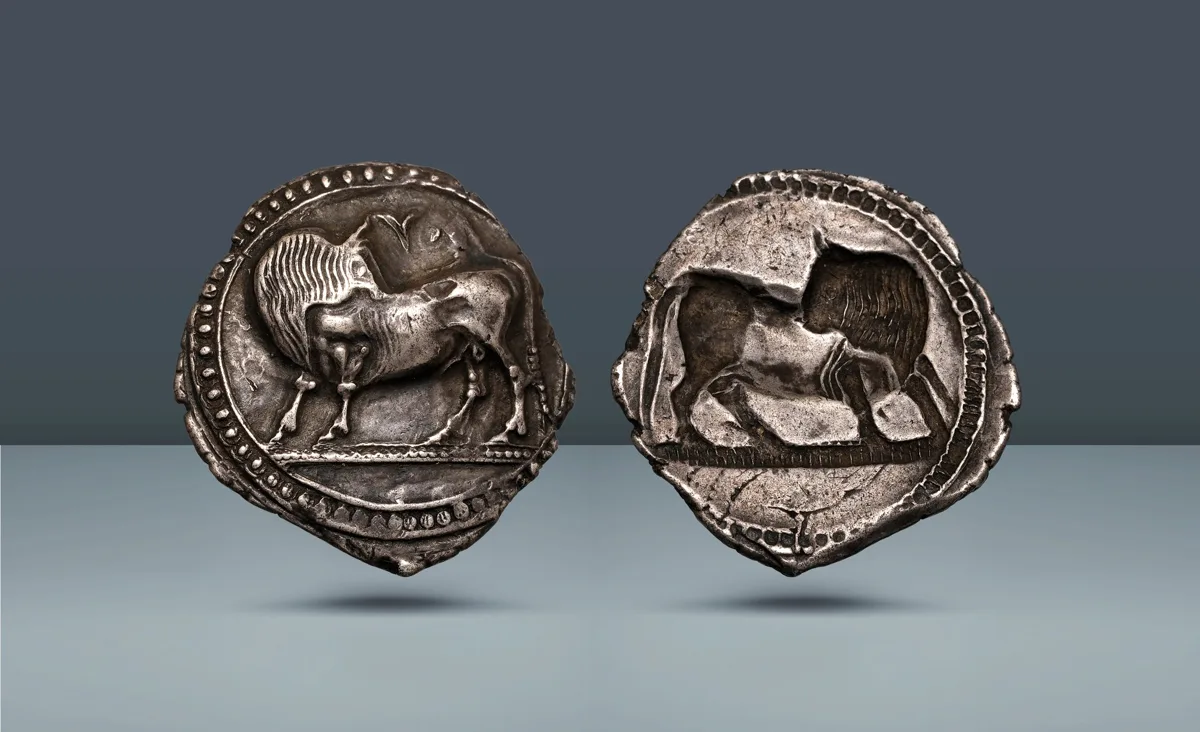
Magna Graecia, Lucania. Sybaris, c. 550-510 BC
Sold by ShannaSchmidtNumismaticsInc
$5,750.00
Description
AR Stater, 7.71g (28mm, 12h).Bull standing left, head reverted back / Incuse of bull.Pedigree: Purchased from Tom Cederlind on 10/15/2017References: SNG ANS 817Grade: Lovely toned surfaces. EFgk1903 The incuse coinage of southern Italy is among the most distinctive series in ancient numismatics. On a normal ancient coin, obverse and reverse carry two different relief types. The incuse staters of Magna Graecia however show a type in relief on the obverse and the same (or similar) type incuse on the reverse, producing a mirror image pressed through the flan. They were struck on broad, wafer-thin discs that display the technique to full effect.The real puzzle is how they were struck, and the honest answer is that we still don't fully know. There are no surviving ancient accounts of coin manufacture and no illustrations, so everything we say about the process is based on conjecture. A normal coin uses two intaglio dies, each hollowed so the metal squeezes up into relief. Incuse coin dies operate in the reverse. The obverse die was hollowed out as usual, but the reverse die was carved in relief with the same image, so it pressed the design down into the flan rather than raising it. Two dies, the same type, one cut as a negative and one as a positive, and they had to register almost perfectly back-to-back. That alignment is the hard part. We do not have any real evidence on how the dies were properly aligned.
Provenance: Purchased from Tom Cederlind on 10/15/2017