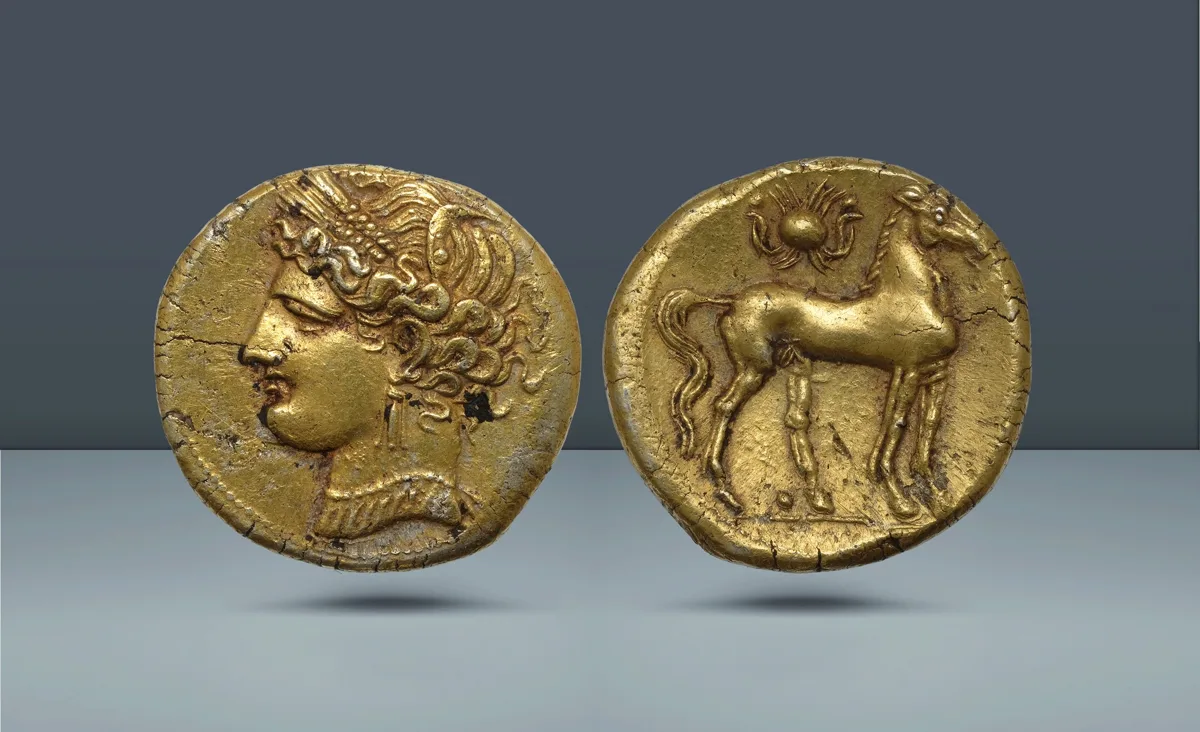
Carthage, Zeugitana. c. 264-241 BC
Sold by ShannaSchmidtNumismaticsInc
$19,500.00
Description
EL Trihemistater (Tridrachm), 10.69g (22mm, 12h)Head of Tanit left, wearing grain wreath / Horse standing right, head left; ouraios above; pellet behind foot of leading hind legPedigree: Ex M&M List 268, Sept 1966, lot 8; NFA XIV, 29 Nov 1984, lot 72; NFA XVIII, 31 March 1987, lot 78; Peus 334, 4 Nov 1992, lot 715. From the Aspeni Reserve Collection.References: MAA 32; SNG Cop 183Grade: A beautiful example of this heavyweight electrum issue. Forcefully struck from sharp dies, the coin offers a compelling look with underlying luster beneath the tone. Some fissures from the strike, as well as a few earthen encrustations that lend a rustic charm. aEFgk2217 When Rome and Carthage went to war over Sicily in 264 BC, neither could have anticipated that the contest would stretch across twenty-three years and exhaust the treasuries of both powers. Carthage fought largely with hired soldiers, and mercenaries expect to be paid in good metal and on time. This trihemistater is a direct product of that pressure. Struck in electrum, a deliberate alloy of gold and silver, rather than the purer gold of earlier Carthaginian issues, the denomination let the city stretch its reserves of precious metal while still putting a weighty, high-value coin into the hands of its armies. The irony of the series is that it was not enough. After the decisive naval defeat off the Aegates Islands in 241 BC forced Carthage to accept a punishing indemnity, the unpaid mercenaries turned on their employers, sparking the brutal Mercenary War that nearly destroyed the city from within.The imagery is unmistakably Punic, yet shaped by centuries of contact with Greek Sicily. The obverse presents Tanit, the principal goddess of Carthage and consort of Baal Hammon, crowned with a wreath of grain. Her portrait draws on Sicilian Greek depictions of Demeter and Kore, deities of agricultural abundance, and the borrowing suited a city whose North African hinterland was among the most fertile in the Mediterranean. The reverse carries the horse, the emblem most closely tied to Carthaginian identity. Justin and Virgil both preserve the foundation legend in which the first settlers, digging the foundations of their new city, uncovered a horse's head and took it as a sign that their people would be warlike and powerful. Above the horse rears the ouraios, the cobra of Egyptian royal iconography, which Phoenician artists had long adopted as a protective device.A beautiful example of this heavyweight electrum issue. Forcefully struck from sharp dies, the coin offers a compelling look with underlying luster beneath the tone. Some fissures from the strike, as well as a few earthen encrustations that lend a rustic charm. aEF. The coin's distinguished pedigree spans more than half a century, passing through Münzen & Medaillen, two Numismatic Fine Arts sales, and Peus.
Provenance: Ex M&M List 268, Sept 1966, lot 8; NFA XIV, 29 Nov 1984, lot 72; NFA XVIII, 31 March 1987, lot 78; Peus 334, 4 Nov 1992, lot 715. From the Aspeni Reserve Collection