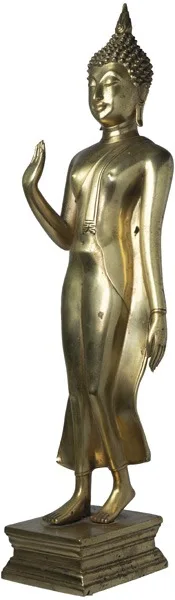
Thai Rare Sukhothai Bronze Walking Buddha
Sold by Harlan J. Berk, Ltd.
$12,500.00
Description
Thai Rare Sukhothai Bronze Walking Buddha, ca. 15th to 16th century, Central Thailand. This is very rare, period example of the iconic Thai Buddha - the Sukhothai Walking Buddha. Most examples presented as Sukhothai are later copies from the 19th and 20th centuries. Prior to the Sukhothai period, Thai are tended to be based on local folk styles or copies of Indian Gupta art in the north and Khmer art in the south (Lopburi). In about the 14th and 15th centuries Thai Buddhist monks, studying Hinayana Sir Lankan texts and art began to adopt their own distinct aesthetic interpretations based on literal descriptions of the historical Buddha. They sought to put together the literal descriptions of the Buddha such as his curved parrot’s beak nose, mango seed chin, the proportions of the arms and legs and his flat feet. This new image sought to unify the partial physical descriptions of the real Buddha in the ancient texts. The unification of these literal descriptions of the historical Buddha paradoxically gave birth to an utterly distinct and surreal form in the sleek and almost aquatic Buddha form of the Sukhothai Buddha, as with this example. The distinct flame finial remained common in the Sri Lankan and Thai Buddha instead of the lotus bud top in Gupta and Khmer types. By the 15th and 16th centuries the new Sukhothai image had won over the Thai eye and influenced all major styles in north and central Thailand. This piece comes from the later Sukhothai period in the 15th and 16th centuries with its typically modest Sukhothai base which later styles would expound. This figure superbly illustrates this new attempt to imagine the unimaginable image of the enlightened one. It walks without weight with one hand lifted in the vitarka mudra - the gesture of the explanation of the doctrine and the other “like an elephant’s trunk” gliding along the contours of his body. The piece was originally heavily lacquered and as with some examples of the period was highly polished over a long period of time in a temple. The metal betrays an overall depletion of the less noble elements, tin and zinc within the original copper alloy and bears the traits of ancient casting techniques. H. 19 3/4" (50 cm)..