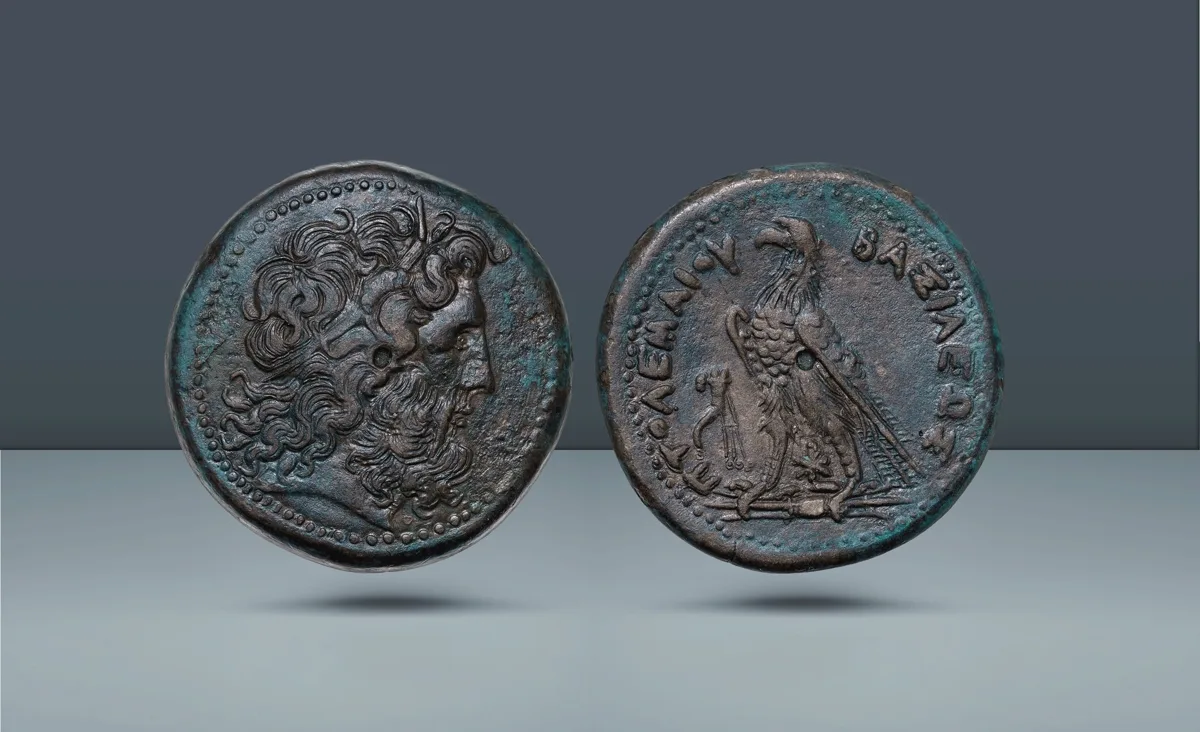
Ptolemaic Empire, Egypt. Ptolemy III Euergetes. c. 246-221 BC. Alexandreia, c. 246-221 BC
Sold by ShannaSchmidtNumismaticsInc
$2,650.00
Description
Ptolemaic Empire, Egypt. Ptolemy III Euergetes. c. 246-221 BC. Alexandreia, c. 246-221 BC, AE 43, 73.51g (43mm, 12h)Diademed head of Zeus-Ammon right; Reverse: Eagle with closed wings standing left on thunderbolt; filleted cornucopia to left, monogram between legs. A lovely large format bronze issue, with sharp details and pleasing green patina. Alluring and fully deserving of a strong bid from any specialist in Ptolemaic bronzes. NGC has issued a Photo Cert for this piece, given the oversized diameter.References: Svor 964; SNG Cop 171-2; CPE B395Grade: Photo certified from NGC Ch EF, Strike: 5/5 Surface: 3/5.gk2215Ptolemy III came to the throne of Egypt in 246 BC and almost immediately went to war. His sister Berenike had been married to the Seleucid king Antiochos II as part of a peace settlement, and when Antiochos died that same year, she and her infant son were murdered in the struggle over the succession. Ptolemy marched into Syria to avenge her, and the campaign that followed, known as the Third Syrian War, carried Ptolemaic arms deep into Seleucid territory. Among the spoils he brought back to Egypt were sacred images that, according to the priests, the Persians had carried off centuries before. In gratitude, the Egyptian priesthood honored him in the Canopus Decree of 238 BC, and the epithet Euergetes, "Benefactor," became his lasting title. His reign marked the high point of Ptolemaic power, with the empire reaching from Cyrenaica to the Aegean and the coasts of Asia Minor.The coinage of Ptolemaic Egypt was unusual in the Hellenistic world. The kingdom operated a closed monetary system in which foreign coins had to be exchanged for royal issues, and bronze carried far more of the economic load than it did elsewhere. The result was a series of remarkably heavy bronze denominations, of which this piece, at over 73 grams and 43 millimeters, is an impressive example. The obverse shows Zeus-Ammon, the syncretic god whose oracle at Siwa had famously greeted Alexander the Great as his son, an association the Ptolemies were eager to inherit. The reverse carries the eagle on a thunderbolt, the dynastic badge that appears across nearly three centuries of Ptolemaic coinage, here joined by a filleted cornucopia, a symbol of abundance closely linked to the royal women of the dynasty.