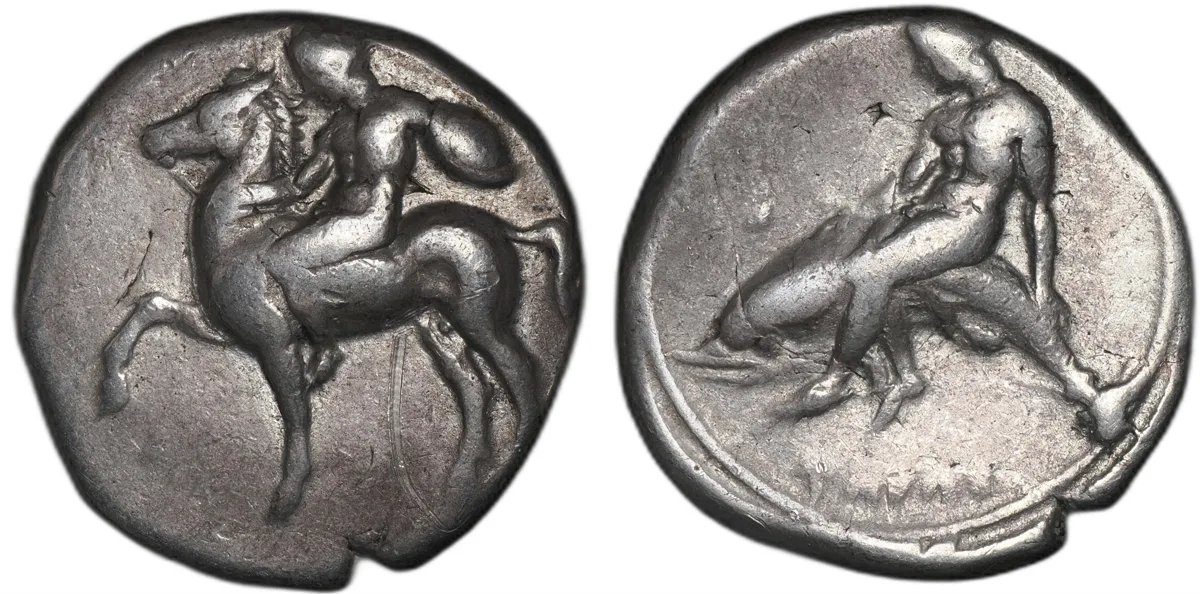
CALABRIA. Tarentum. Circa 390–385 BC. AR Didrachm or Stater
Lot 035 · Consigned by GreatCoinsUSA
Closed
Description
CALABRIA. Tarentum. Circa 390–385 BC. AR Didrachm or Stater (20.5 mm, 7.87 g, 9 h).
Obv. Nude jockey on horse prancing left, holding reins in right hand and round shield in left; in field below, Α.
Rev. ΤΑΡΑΣ. Phalanthos, nude, riding dolphin left, resting both hands on the dolphin’s back.
Refs: Fischer-Bossert 438a (V193/R334, this coin); Jameson 113 (this obv. die); Kraay & Hirmer 306 (this obv. die); Vlasto 379 (this obv. die).
A particularly dynamic early issue of Tarentum, struck not long after the city had reached the height of its power in southern Italy. The obverse horseman is rendered in vigorous motion, reins drawn across the horse’s neck as though preparing to dismount—an innovation in design that imbues the type with immediacy and energy. Such imagery is thought to recall the famed Tarentine cavalry, celebrated throughout Magna Graecia for their skill in mounted warfare, and closely tied to the aristocratic identity of the city’s elite.
The reverse presents the eponymous hero Phalanthos astride his dolphin, an enduring civic emblem of Taras, son of Poseidon, who was believed to have been rescued by a dolphin after a shipwreck. This mythic scene emphasised both divine favour and Tarentum’s maritime identity, uniting heroic foundation lore with the seafaring reality of a city that dominated trade and naval affairs in the Gulf of Taranto.
The dies for this issue are of exceptional style and were widely admired in early collections: the obverse die appears in the Jameson, Kraay & Hirmer, and Vlasto corpora, marking it out as one of the finest engraved of its series. The subtle shift of the rider’s arm across the horse’s neck, suggesting imminent movement, is a particularly refined detail, rare in the coinage of the late 5th and early 4th centuries BC.