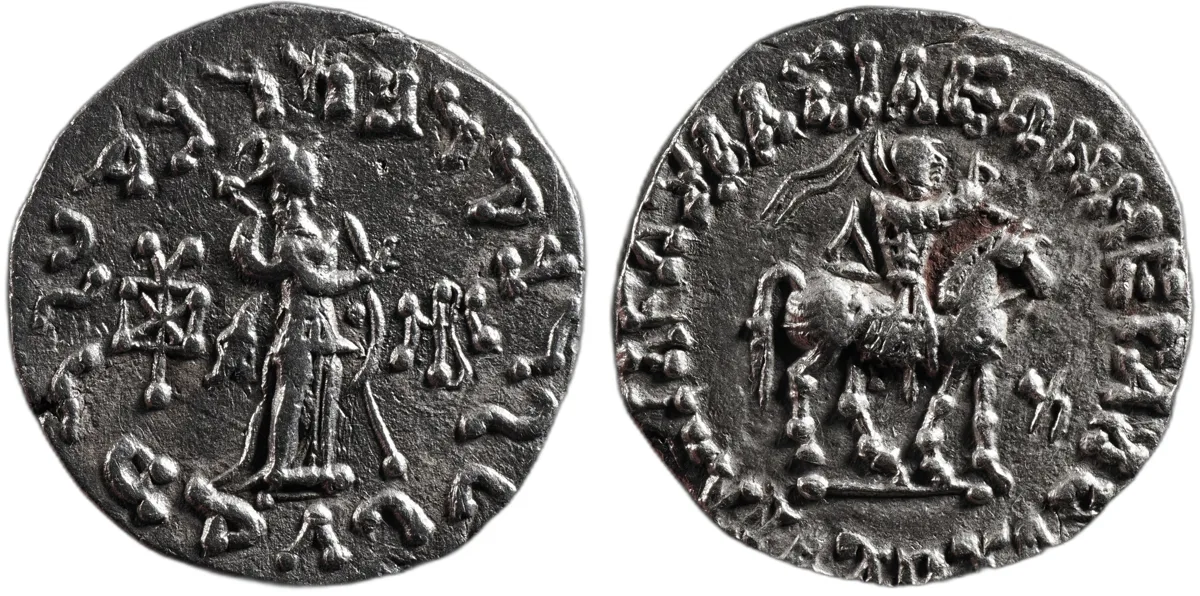
Azes II Indo-Scythian AR Tetradrachm, Horseman/Athena, Bilingual 35–12 BC
Lot 267 · Consigned by hhf
Closed
Description
Azes II, Tetradrachm, silver, reign 35–12 BC, struck 35–12 BC, uncertain mint; 9.45 g; 27 mm. Obverse: BAΣIΛEΩΣ BAΣIΛEΩN MEΓAΛOY AZOY; the king on horseback riding right, in cataphract armor, holding a whip aloft; Kharosthi letter da before the horse. Reverse: Kharosthi legend MAHARAJASA RAJADIRAJASA MAHATASA AYASA; Pallas Athene standing right, holding spear and shield, right arm extended; monogram to left; Kharosthi letter va in right field. Bilingual Indo-Scythian issue, struck on a broad flan with centered strike and clear legends. Reference: Senior 98.354.
This type illustrates the Indo‑Scythian policy of bilingual coinage that bridged Hellenistic and Indian monetary traditions in Gandhara and the northwestern Indian subcontinent after the decline of the Indo‑Greek kingdoms. The horseman advertises Saka cavalry authority, while Athena continues Greek iconography familiar to local and trading communities. Coins in the name of Azes circulated widely along routes linking Bactria, the Indus and the Punjab, shaping later regional standards adopted by subsequent powers such as the Kushans.