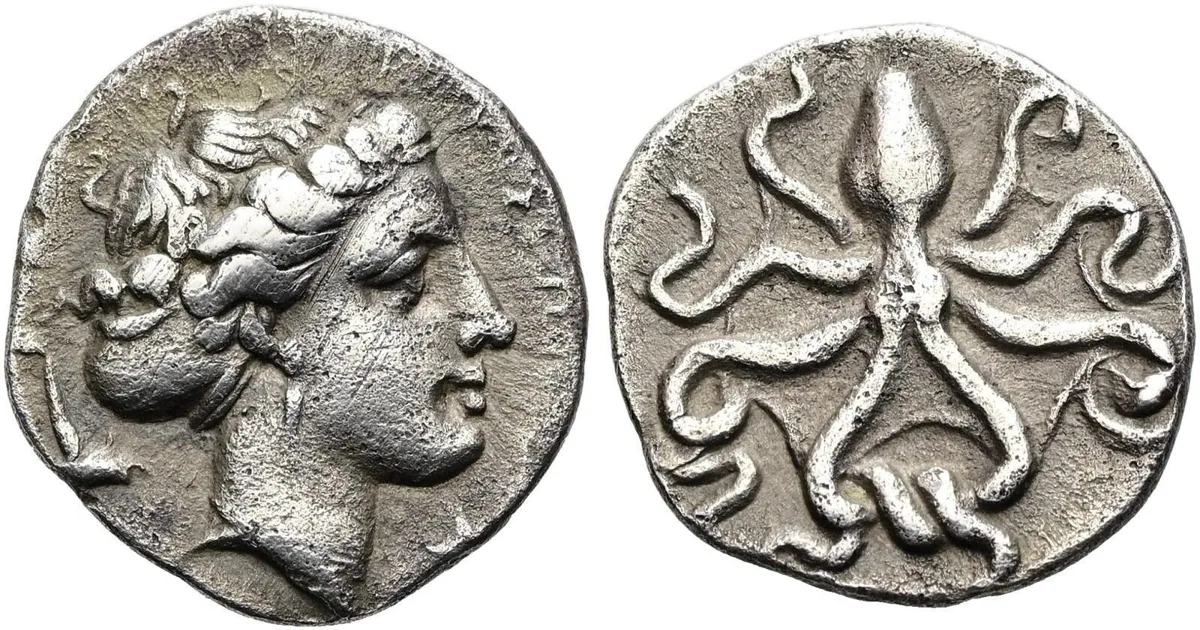
Sicily, Syracuse. Second Democracy, 466-405 BC. Silver litra
Lot 031 · Consigned by NumisOne
Closed
Description
Sicily, Syracuse. Second Democracy, 466-405 BC. Silver litra, c. 415-405 BC; 12 mm, 0.75 g. ΣΥΡΑΚΟΣΙΩΝ · Head of the fountain-nymph Arethusa right, hair bound in a simple ampyx, tiny dolphin behind; dotted border ▸ Rev. Intricately rendered octopus seen from above, two of its tentacles twisted together beneath the body. SNG ANS 283 (same dies); HGC 2, 1379; Kreutzer SDK p. 106, 8.26 (this coin). Attractive light cabinet toning, a few unobtrusive hair-lines on the portrait, reverse crisp and well centred. Provenance: Aes Rude, 10 April 1992, lot 37. Gerhard Hirsch Nachfolger 348 (21 Feb 2019), lot 229; previously Kreutzer collection (published).
SDK is short for Syrakusische Drachmen und Kleinsilbermünzen (“Syracusan drachms and small-silver coins”), the die‐study by Hartmut Kreutzer, published as volume 11 of the scholarly series NOMISMATA. Historisch-numismatische Forschungen (Bonn: R. Habelt, 2022; 152 pp., many plates).
Kreutzer’s book analyses and photographs every known drachm, litra, hemilitra, tetras, etc. of Syracuse struck in the late-Classical “period of the signing artists” (roughly 415-405 BC) and arranges them into numbered die-links.
Struck at the height of the Peloponnesian War, when Syracuse repelled the massive Athenian invasion of 415-413 BC, this petite litra served as small change alongside the city’s abundant bronze and its famous “Demareteion” tetradrachms. Whereas the larger silver proclaimed martial triumph with quadrigae and helmeted deities, the fractions celebrated the maritime bounty of Ortygia: the graceful dolphin escorting Arethusa, and on the reverse the octopus—both a staple of the Syracusan diet and a metaphor for the harbour defenses that ensnared enemy triremes.
Technically, the coin illustrates the transition from heavy archaic fractions to the fiduciary bronze that would dominate Sicilian commerce after 405 BC. Its precise weight standard (one-fifth of a drachm) reveals a sophisticated monetary system that allowed sailors, merchants, and soldiers to transact across the western Greek world. Surviving in far smaller numbers than the ubiquitous owls of Athens, Syracusan litrae like this one provide an intimate, sea-scented glimpse of everyday life in the most powerful polis of the central Mediterranean.