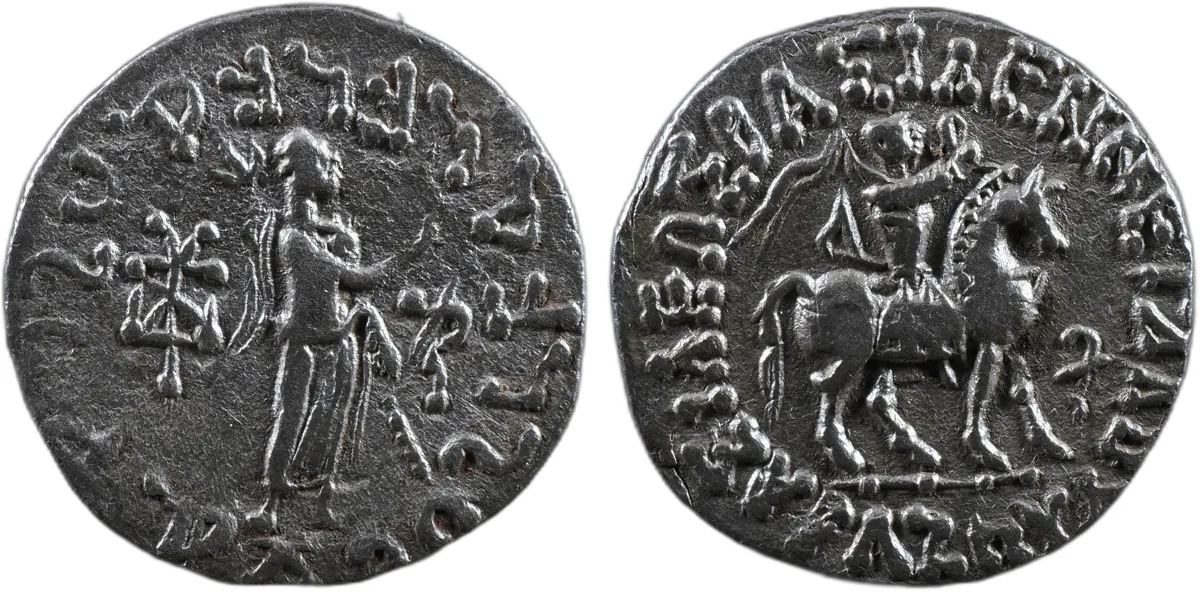
Indo-Scythian Azes II AR Tetradrachm Horseman/Athena 35–12 BC Bilingual
Lot 268 · Consigned by hhf
Closed
Description
Azes II, tetradrachm, silver, reign 35–12 BC, struck 35–12 BC at an uncertain mint, 9.60 g, 27 mm. Obverse: BAΣIΛEΩΣ BAΣIΛEΩN MEΓAΛOY AZOY; the king on horseback right, raising his right hand and holding a whip in his left; Kharosthi letter in right field. Reverse: MAHARAJASA RAJADIRAJASA MAHATASA AYASA in Kharosthi; Pallas Athene standing right, extending right arm and holding spear and shield; monogram to left; Kharosthi letter in right field. Struck on a broad flan with complete bilingual legends, typical fabric of the Indo-Scythian series; type as Mitchiner 828a.
This bilingual tetradrachm reflects the cultural interface of the Indo-Scythian kingdom under Azes II in Gandhara and northwestern India during the late 1st century BC. The Greek legend and depiction of Athena continue Hellenistic monetary conventions inherited from the Indo-Greeks, while the Kharosthi legend and horseman type express Saka royal identity and local communication. The coinage of Azes II is a key chronological marker for the transition from Indo-Greek to early Kushan rule and for the spread of bilingual monetary standards across the region.