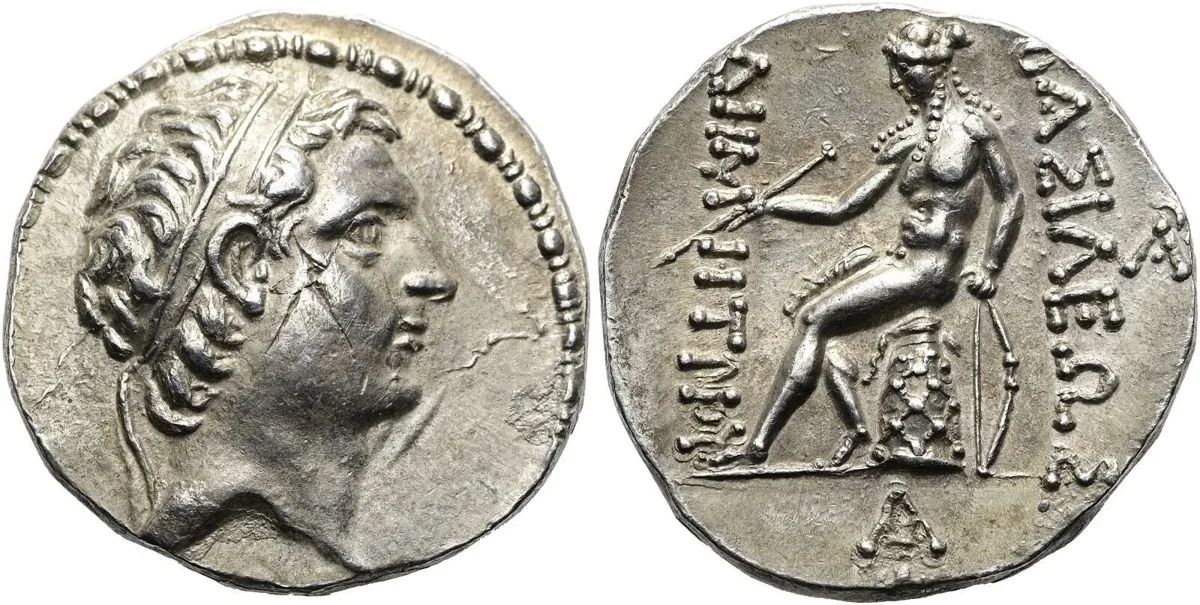
Seleucid Kingdom, Demetrios I Soter (162-150 BC). Silver tetradrachm
Lot 100 · Consigned by NumisOne
Closed
Description
Seleucid Kingdom, Demetrios I Soter (162-150 BC). Silver tetradrachm, Susa mint, c. 160-155 BC. 26 mm, 16.97 g. Diademed head of the king right in bold Hellenistic style, hair swept into three upward locks; dotted border / ΒΑΣΙΛΕΩΣ ΔΗΜΗΤΡΙΟΥ, Apollo seated left on the omphalos, testing arrow with right hand and resting left on bow; monogram in right field and another in exergue. SC 2 1711.1; CSE 1067; Le Rider, Suse 67; HGC 9, 790c. Extremely rare issue of Susa (only two others traced in CoinArchives); beautifully toned, portrait in high relief, reverse perfectly centred, x-shaped flan flaw on obverse.
Demetrios I returned from Roman hostage-exile to seize the Seleucid throne in 162 BC, styling himself Soter (“Saviour”) for having overthrown the despised regent Lysias. The present tetradrachm belongs to his eastern recoinage, struck at distant Susa to finance campaigns against the rebellious satrap Timarchos of Media. By using the traditional seated Apollo type—long associated with Seleucid legitimacy—Demetrios asserted continuity with his ancestor Seleukos I even as he fought to restore imperial unity.
The coin also illustrates the growing autonomy of regional mints as the Seleucid realm fragmented: Susa’s distinct monogram beneath Apollo discreetly proclaims local control over silver resources from the Elamite mines. Within a generation the mint would pass to the rising Parthian power, making issues of Demetrios from Susa a fleeting witness to the last phase of Seleucid authority in Iran.