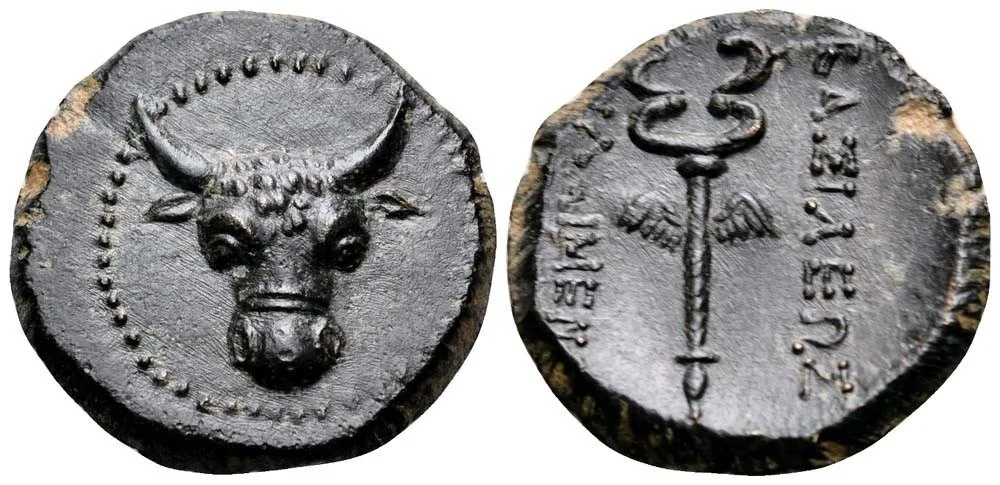
Paphlagonia. Pylaimenes II or III, c. 133 – 103 BC. Bronze unit, 18 mm, 2.98 g.
Lot 052 · Consigned by NumisOne
Closed
Description
Paphlagonia. Pylaimenes II or III, c. 133 – 103 BC. Bronze unit, 18 mm, 2.98 g. Obv. Frontal bull’s head within dotted border, the animal’s gaze confronting the viewer. Rev. ΒΑΣΙΛΕΩΣ [Π]ΥΛΑΙΜΕΝΟΥ ΕΥΕΡΓΕΤΟΥ, winged kerykeion (caduceus) upright. SNG BM Black Sea 1555; SNG von Aulock 150; Waddington RG 3; HGC 7, 441. Attractive dark brown patina, sharply struck and well centred; an unusually crisp example of this scarce civic bronze. Provenance: The Italo Vecchi Collection; Roma Numismatics e-Sale 23 (17 March 2016), lot 229.
The small kingdom of Paphlagonia, wedged between Bithynia and Pontos on the Black Sea coast of Anatolia, emerged as a pawn in the power politics of the late Hellenistic age. After Attalos III bequeathed Pergamon to Rome in 133 BC, the last native dynasts—styled Pylaimenes after the Homeric ally of Troy—seized the moment to assert their independence. Their bronze coinage is concise but distinctive: the confronting bull’s head evokes the rich cattle-grazing uplands of the Halys basin, while the kerykeion on the reverse underscores royal claims to legitimate diplomacy with the surrounding great powers. The epithet ΕΥΕΡΓΕΤΟΥ (“Benefactor”) advertises the king’s largesse toward his subjects at a time when Paphlagonia navigated between Mithridates of Pontos to the east and Nicomedes of Bithynia to the west. Struck shortly before the region’s final absorption into Pontic, then Roman, control, these bronzes are valuable witnesses to one of the last independent Anatolian dynasties.