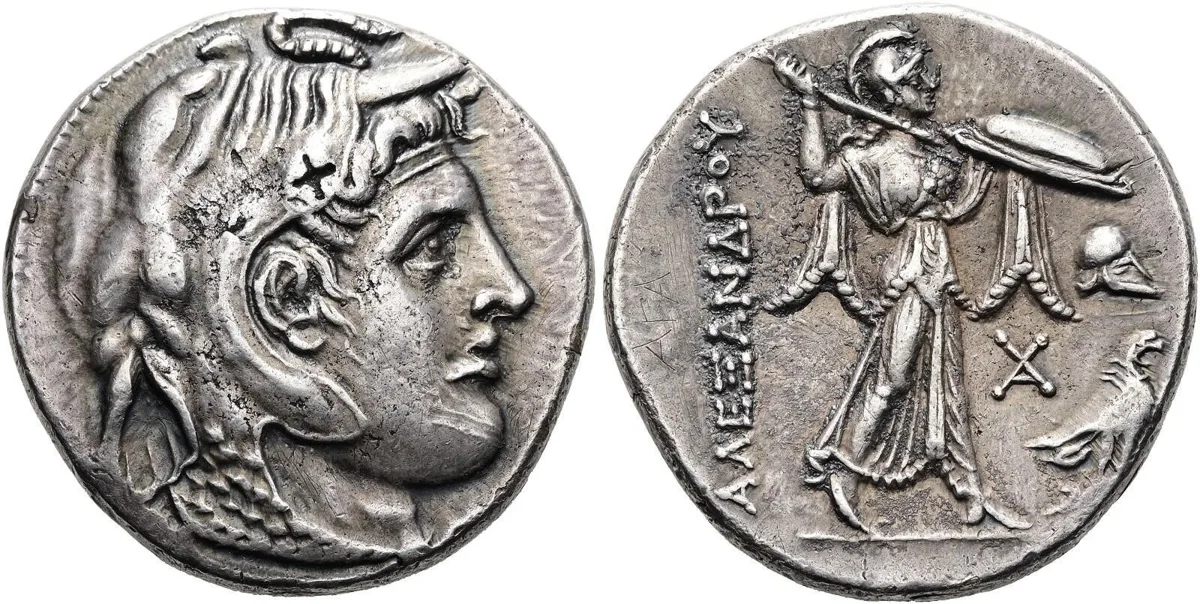
PTOLEMAIC KINGDOM, Egypt – Ptolemy I as satrap (323-305 BC). Silver tetradrachm
Lot 123 · Consigned by NumisOne
Closed
Description
PTOLEMAIC KINGDOM, Egypt – Ptolemy I as satrap (323-305 BC). Silver tetradrachm, struck at Alexandria, c. 310-305 BC. 27 mm · 15.61 g · die-axis 12 h. Obverse: Heroic head of Alexander the Great wearing an elephant-scalp – a visual boast of the Indian conquest – tied with the diadem-mitra and framed by the aegis of Zeus. Reverse: ΑΛΕΞΑΝΔΡΟΥ. Martial Athena Alkidemos (“Protectress of the People”) strides right, shield aloft and spear poised to strike. Field-symbols: Corinthian helmet over a magistrate’s monogram; in exergue an eagle standing on a thunderbolt – the first appearance of Ptolemy’s personal badge. Linear ground-line. CPE 69; Svoronos 162; SNG Copenhagen 21.Soft steel-grey surfaces with iridescent highlights. A small test-punch in the hair behind the ear.
This handsome piece belongs to the first truly Ptolemaic silver: coins struck in Alexandria that still carry Alexander’s name yet already proclaim Ptolemy’s separate destiny.
Elephant scalp – appropriated from Alexander’s commemorative gold, it advertised Egypt’s control of the lucrative Red-Sea trade in ivory and aromatics while hinting at future eastern ambitions.
Athena Alkidemos – lifted from the coinage of Antigonos Monophthalmos at Pella, the type allowed Ptolemy to cloak himself in the wider Macedonian heritage while subtly replacing Zeus (the usual Alexander reverse) with a goddess of civic defence – a pointed message as the Diadochi drifted toward open war.
Eagle on thunderbolt – destined to become the enduring emblem of the Ptolemaic house, here it makes its debut only in miniature beneath Athena’s feet.
Struck in the tense years just before Ptolemy assumed the royal title (305/4 BC), the issue financed both the fortification of Alexandria and the naval expeditions that would win Cyprus and the Aegean islands. Hoards from the Nile Delta and Cyrenaica show these tetradrachms quickly replaced imported Alexander coinage, anchoring a monetary system that Egypt would maintain, almost unchanged in module, for three centuries.
An evocative, transitional coin that captures the moment a Macedonian marshal began forging the longest-lived of all the Successor kingdoms.