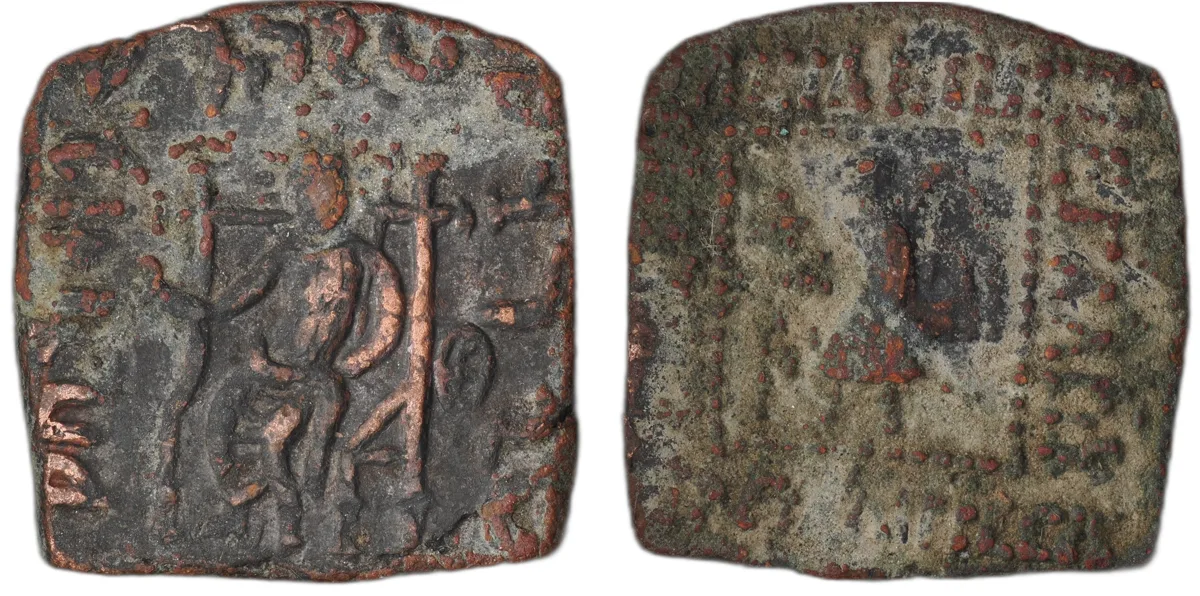
Indo-Scythian Spalirisos AE Square, 70–58 BC, Zeus seated, Greek-Kharosthi
Lot 274 · Consigned by hhf
Closed
Description
Spalirisos, Square Unit, bronze, 70–58 BC, 10.51 g, 25 mm.
Indo-Scythian issue from an uncertain mint. Obverse: Greek legend ΒΑΣΙΛΕΩΝ ΒΑΣΙΛΕΩΣ ΜΕΓΑΛΟΥ ΣΠΑΛΙΡΙΣΟΥ; the king advancing left, holding goad, whip, and bow; all within a dotted square border. Reverse: Kharosthi legend MAHARAJASA MAHATAKASA SPALIRISHASA; radiate Zeus seated facing on a throne, monogram in right field, within dotted border. Struck on a square flan with bilingual legends and Hellenistic iconography carried over from earlier Indo-Greek issues. HGC 12, 62; Senior 73.1. Historical significance: The bilingual formula on this bronze unit demonstrates the administrative and cultural synthesis of the mid–1st century BC Indo-Scythian polity, using Greek for regional prestige and Kharosthi for local readability. The titles “Basileōn Basileōs Megalou” and its Kharosthi equivalent “Maharajasa Mahatakasa” declare “Great King of Kings,” while the enthroned Zeus reflects continued Hellenistic imagery under Saka rule in the northwestern Indian subcontinent. Square copper units such as this followed Indian monetary shapes and weights, illustrating the adaptation of nomadic rulers to established urban economies in Gandhara–Punjab on the eve of the Azes era.