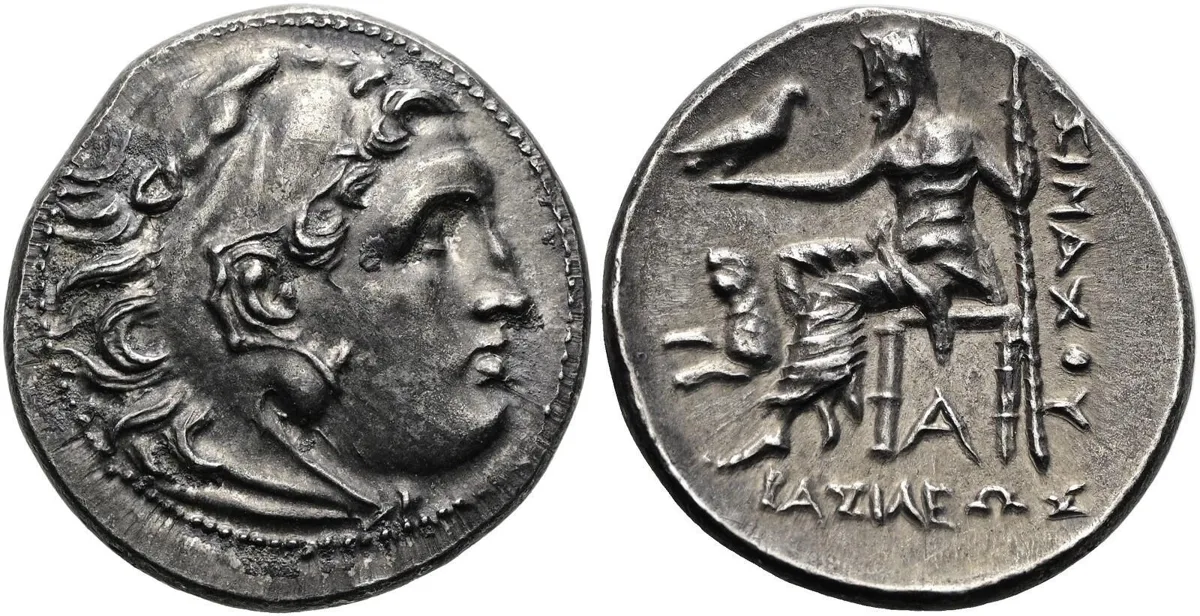
THRACIAN KINGDOM – Lysimachos, 305-281 BC. Silver drachm
Lot 086 · Consigned by NumisOne
Closed
Description
THRACIAN KINGDOM – Lysimachos, 305-281 BC. Silver drachm, struck at Magnesia-on-the-Maeander, c. 305-297 BC. 18 mm · 4.09 g · die-axis 12h. Obverse: Head of Herakles right, wearing the skin of the Nemean lion; dotted border. Reverse: ΒΑΣΙΛΕΩΣ ΛΥΣΙΜΑΧΟΥ – “of King Lysimachos.” Zeus Aëtophoros enthroned left, holding eagle and long sceptre; in the left field, forepart of a recumbent lion; monogram Α beneath the throne. Price Lysimachus L 29; Müller L 7; HGC 3.1, 1752 ff. Light silver-grey toning with touches of dark patina; crisp in detail and attractively centred.
When Alexander’s former bodyguard Lysimachos proclaimed himself basileus in 305 BC, he ruled a patchwork of Thracian tribes and Hellenic coastal cities—far from the minting hubs of Macedon or Asia. To finance his campaigns against Antigonos and Demetrios, he retained the immensely popular Alexander type coinage, adding only subtle personal badges.
On this drachm the otherwise canonical design is interrupted by a tiny but telling symbol: the lion’s forepart in the left field of the reverse. Unlike the Macedonian trident or the Ptolemaic eagle, the lion was Lysimachos’ personal emblem, a punning allusion to his name (λύσι-μάχη, “loosen battle”) and a nod to the beast whose skin Herakles wears on the obverse. By striking these drachms at Magnesia-on-the-Maeander, recently garrisoned after the battle of Ipsos (301 BC), the king tapped the rich silver resources of Lydia and ensured that his brand of Alexander money penetrated the Aegean trading circuits.
Scarce in high grade, this piece combines sharp artistry with a clear set of control-marks that securely tie it to the opening years of the king’s western Anatolian coinage.