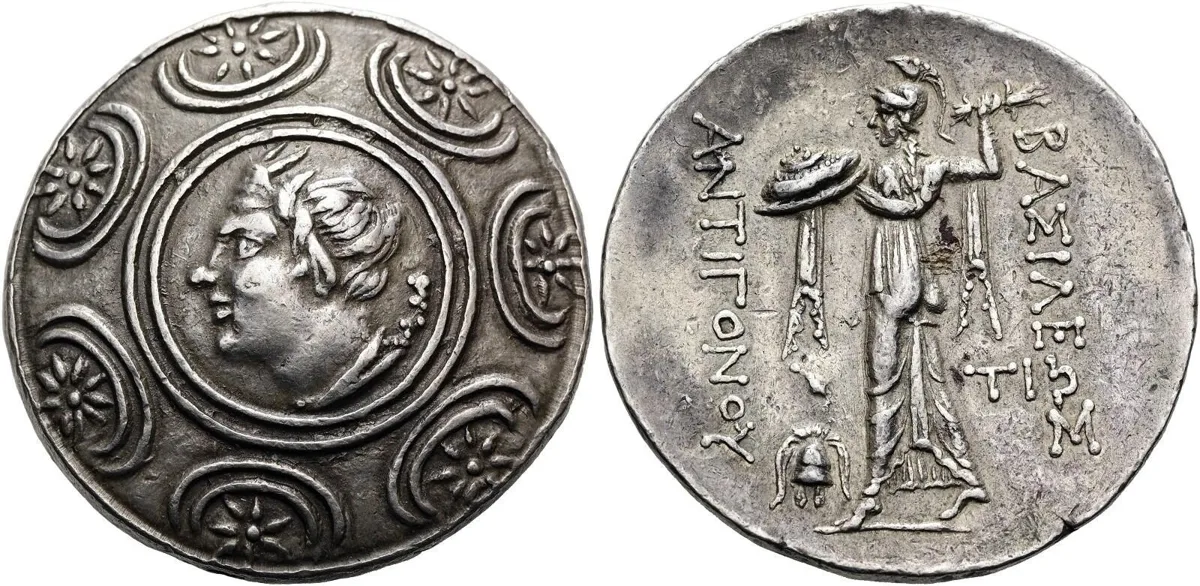
MACEDONIAN KINGDOM. Antigonos II Gonatas, 283 – 239 BC. Silver tetradrachm
Lot 091 · Consigned by NumisOne
Closed
Description
MACEDONIAN KINGDOM — Antigonos II Gonatas, 283 – 239 BC. Silver tetradrachm, struck at Amphipolis, c. 277 – 239 BC. 31 mm • 17.07 g • die-axis 12h. Obverse: Head of Pan left, wearing a goat-skin cap and holding a pastoral pedum over his shoulder; the whole set within the deeply dished bowl of a Macedonian shield decorated with eight crescent-and-rosette devices in relief. Reverse: ΒΑΣΙΛΕΩΣ ΑΝΤΙΓΟΝΟΥ — Athena Alkidemos (the “Defender of the People”) standing left, brandishing a thunderbolt and resting her shield on her out-turned right arm; in the left field, Macedonian helmet; in the exergue, monogram ΤΙ. AMNG III/2 p. 186, 3 var. (monogram); SNG Copenhagen 1202; SNG Oxford 3260. Soft grey-gold cabinet tone, light high-point wear, choice metal and well-centred strike
Ex Numismatik Lanz Auction 158 (Munich, 25 November 2014), lot 105.
The Pan-shield tetradrachms form the signature coinage of Antigonos II Gonatas, whose forty-four-year reign restored Macedonian power after the chaos that followed Alexander’s death. According to ancient writers, Antigonos routed the Celtic invaders at Lysimacheia in 277 BC after invoking Pan, whose sudden apparition panicked the Gauls. Whether or not the story is literal, the king seized on it to brand his new silver series: Pan’s grinning visage fills a Macedonian hoplite shield, proclaiming both divine favour and military resurgence.
The reverse type adopts Athena Alkidemos, long the tutelary goddess of Pella, but here shown with thunderbolt aloft like Zeus — a subtle boast that Antigonos now wielded the full might of Macedon. The small helmet emblem below may allude to garrison forces stationed at Amphipolis, while the neat monogram ΤΙ is that of the local mint-official.
Hoard evidence (notably the Demanhour and Thessaloniki finds) demonstrates that these tetradrachms became the principal trade currency of northern Greece and the Aegean throughout the third century BC, circulating beside the contemporary Alexanders of Thrace and the Athenian “new style” issues. Their broad flans and high-relief dies made them favourites with later collectors; well-preserved pieces from Amphipolis, such as the present coin, convey the bold artistry and political messaging of Antigonos’s hard-won monarchy.