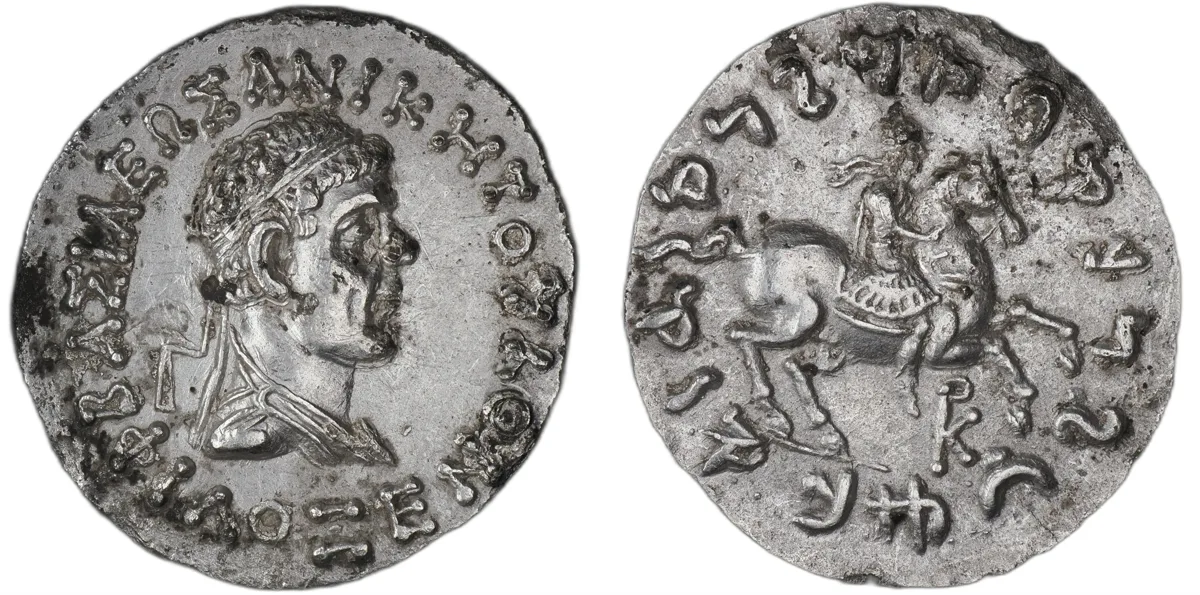
Azes I AR tetradrachm, Hermaios portrait, Gandhara/Taxila, c.58–20 BC
Lot 265 · Consigned by NumisOne
Closed
Description
Azes I (Indo-Scythian Kingdom), tetradrachm, silver, c. 58–20 BC, Gandhara/Taxila region; 9.33 g; 27 mm. Obv: Greek legend BASILEOS SOTEROS HERMAIOU; diademed and draped bust of the Indo-Greek king Hermaios right. Rev: King Azes on horseback right, holding spear; Kharosthi legend Maharajasa rajarajasa mahatasa Ayasa around; monogram in field. Struck on a typically irregular bilingual flan; die axis 12h. References: Senior, Indo-Scythian Coins and History, Hermaios-portrait series; Mitchiner, Ancient and Classical World, Indo-Scythian issues; Bopearachchi & Rahman, Pre-Kushana Coinage, Azes series. This posthumous “Hermaios portrait” issue marks the Indo-Scythian takeover of former Indo-Greek territories in Afghanistan and northwestern India. Retaining the Greek name and portrait of Hermaios while adding the mounted Saka king with Kharosthi legend linked Azes’ rule to earlier Hellenistic authority and to Saka nomadic identity. The series exemplifies the bilingual monetary system that facilitated trade across the Hindu Kush and is associated with the start of the Azes Era (58/57 BC), a dating system later used in Indian inscriptions.