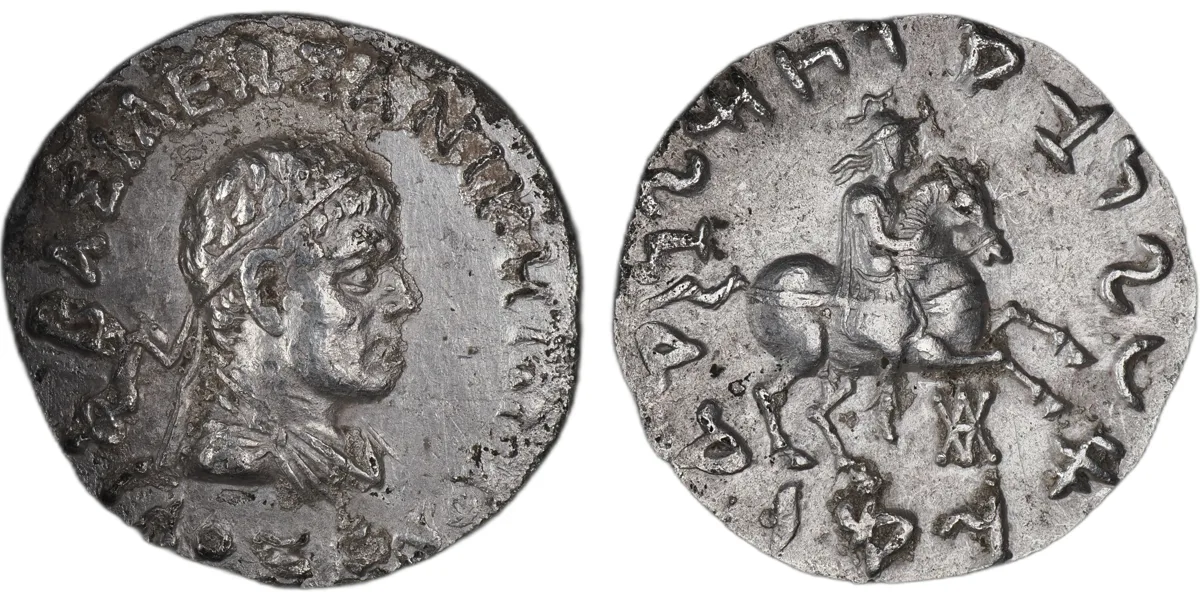
Philoxenos Aniketos AR Tetradrachm, Indo-Greek, 125–110 BC Horseman
Lot 212 · Consigned by NumisOne
Closed
Description
Philoxenos Aniketos, Tetradrachm, Silver, 125–110 BC, 9.62 g, 26 mm. Uncertain mint in Paropamisadai or Gandhara, struck 125–110 BC. Obverse: BAΣIΛEΩΣ ANIKHTOY ΦIΛOΞENOY; diademed, draped, and cuirassed bust of Philoxenos right. Reverse: MAHARAJASA APADIHATASA PHILASINASA in Kharosthi; king on horse prancing right; monogram in lower right field. Broad flan; obverse centered with nearly complete Greek legend; reverse slightly off-center with minor flatness at periphery; typical late Indo-Greek fabric. References: Bopearachchi 3E; SNG ANS 1183–6.
Philoxenos ruled parts of the Indo-Greek kingdom during the mid-2nd century BC, and his bilingual coinage reflects administration over Greek and Indian-speaking populations in the Paropamisadai–Gandhara region. The epithet Aniketos (“Invincible”) and the horseman reverse advertise military authority in a period of regional fragmentation after Eucratides. His silver issues are key evidence for Indo-Greek control east of the Hindu Kush and influenced subsequent horseman types used by Indo-Scythian and Indo-Parthian rulers.