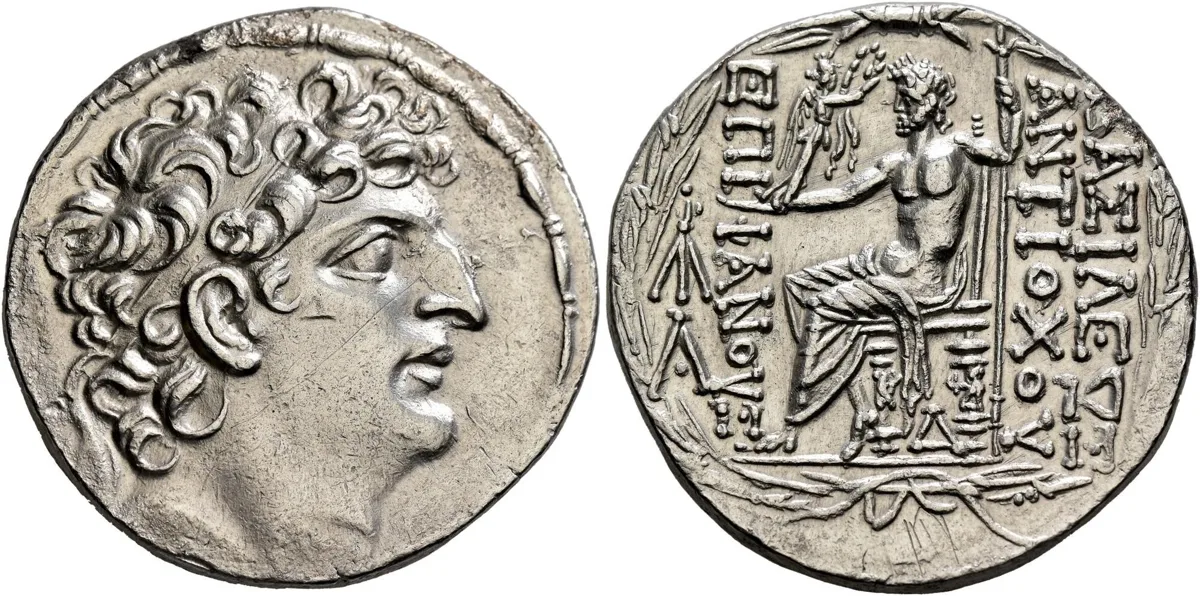
SELEUCID KINGDOM – Antiochos VIII Epiphanes “Grypos”, Silver tetradrachm
Lot 117 · Consigned by NumisOne
Closed
Description
SELEUCID KINGDOM – Antiochos VIII Epiphanes (nicknamed “Grypos”), 121/0 – 97/6 BC. Silver tetradrachm, struck at Antioch-on-the-Orontes in regnal year 175 = 112/111 BC (the dating letter Δ beneath the throne). 29 mm • 16.13 g • die-axis 12 h. Obverse: Diademed head of King Antiochos VIII right, his luxuriant, curling hair arranged in the fashionable “gryp-style” locks that earned him the sobriquet Γρύπος (“hook-nose” or “vulture”). Border of adjoining beads and lanceolate segments. Reverse: ΒΑΣΙΛΕΩΣ / ΑΝΤΙΟΧΟΥ – ΕΠΙΦΑΝΟΥΣ “of King Antiochos the Illustrious.” Zeus Nikephoros enthroned left, holding winged Nike in his extended right hand and a long vertical sceptre in his left; monogram ΦΙΛ above Α in the left field, date-letter Δ beneath the throne; all within a laurel wreath. Houghton–Lorber / SC 2303 c; HGC 9, 1200. Lightly silver-grey with satiny highlights; obverse field shows a few cleaning traces and fine hairlines, otherwise well-centred and sharply struck.
The long reign of Antiochos VIII (121-97 BC) was a drama of palace intrigue and civil war that epitomised the crumbling fortunes of the Seleucid house. Groomed by his redoubtable mother Cleopatra Thea, Antiochos first ruled as her junior partner until she attempted to poison him in 121 BC. The young king famously forced her to drink her own cup, but the dynasty never recovered its equilibrium: within a decade Syria was riven between Antiochos in Antioch and his half-brother Antiochos IX Kyzikenos in Coele-Syria.
This handsome tetradrachm belongs to Antiochos VIII’s last period of uncontested control over Antioch (113-112 BC), before Kyzikenos seized the capital. The obverse portrait – lively, almost Hellenistic-baroque – shows the king in early middle age, still vigorous despite the turmoil. On the reverse, Zeus Nikephoros (“Bringer of Victory”) echoes Alexander’s famous gold staters and advertises the royal claim to divine support at a moment when that support seemed increasingly doubtful.
The left-field monogram ΦΙΛ-Α is thought to record the chief engraver or mint official, while the date-letter Δ marks Seleucid Era 200 + Δ = 312 + 175 = 112/111 BC. Hoards such as the Maarrat an-Numan (1962) deposit show these late Antiochene tetradrachms circulating side-by-side with Ptolemaic and civic issues, a testament to the fragmenting political landscape of the eastern Mediterranean on the eve of Pompey’s intervention.
A well-preserved example from one of the final silver series of a once-great empire, combining an expressive royal portrait with the full titulature and iconography of Seleucid kingship.