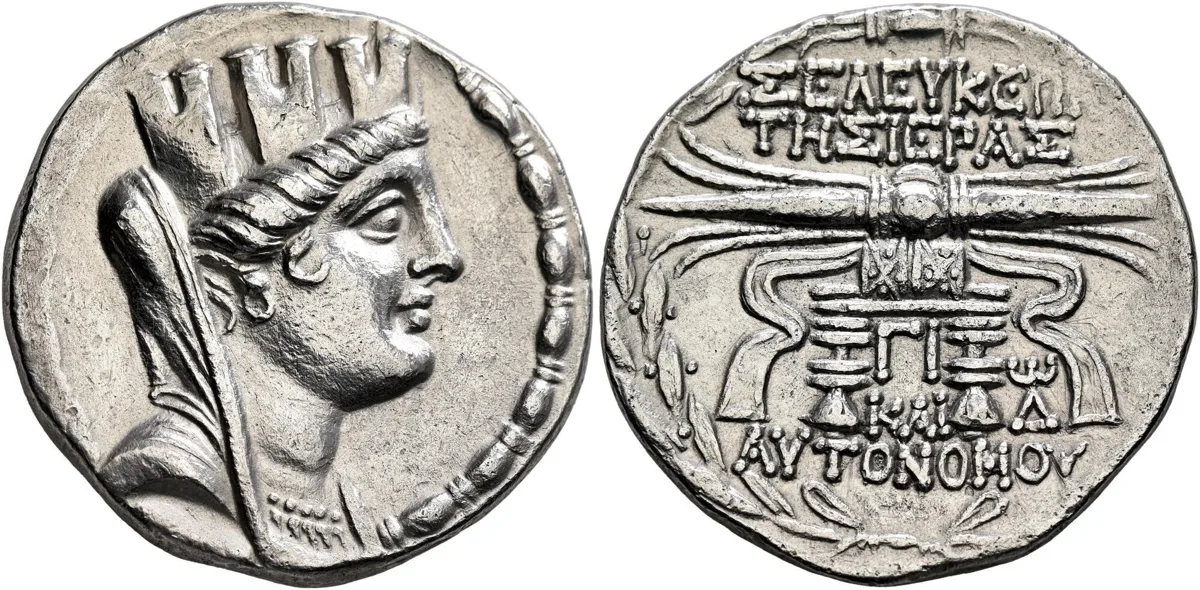
SYRIA, Seleukis & Pieria – Civic silver tetradrachm of Seleukeia Pieria
Lot 098 · Consigned by NumisOne
Closed
Description
SYRIA, Seleukis & Pieria – Civic silver tetradrachm of Seleukeia Pieria, Civic Year 13 (97/6 BC) 29 mm · 13.87 g · die axis 12 h. Obverse: Turreted, veiled and draped bust of Tyche right, hair bound in a taenia; dotted border. Reverse: ΣΕΛΕΥΚΕΩΝ ΤΗΣ ΙΕΡΑΣ ΚΑΙ ΑΥΤΟΝΟΜΟΥ – “of the sacred and autonomous Seleukeians.” Filleted thunderbolt set horizontally on a throne; civic era date ΓΙ (13) below, monogram ΔⲰ in the right field; all within a laurel wreath. BMC 22; Callataÿ, Production p. 75; DCA 697; HGC 9, 1382. Surfaces lightly over-cleaned and with trivial marks, yet sharply struck from fresh dies and retaining bright silver lustre.
Founded by Seleukos I as the deep-water harbour for Antioch, Seleukeia-in-Pieria guarded the mouth of the Orontes and the vital grain route from Egypt to northern Syria. By the late second century BC the once-mighty Seleukid monarchy was collapsing into civil war; powerful port cities took the opportunity to strike their own coinage, styling themselves “sacred and autonomous.”
The civic era adopted at Seleukeia began in 110 BC, probably commemorating a local victory over pirates or a grant of special privileges from the weakening royal court. Year 13 of that era (97/6 BC) fell in the uneasy pause between the struggle of Antiochos VIII and Antiochos IX and the final Roman intervention that would transform the region into a Pompeian province only three decades later.
Tyche’s mural crown proclaims the city’s fortified status, while the thunderbolt on a throne alludes to Zeus Kasios, whose sanctuary crowned the nearby Jebel Aqra; Seleukos I had credited the god with guiding his fleet to shore. The laurel wreath—a symbol of civic games and treaty obligations—subtly echoes the daphnéphoria celebrated in neighbouring Antioch.
Struck in bright Attic-weight silver, these late civic tetradrachms financed local defence and maritime trade at a moment when Seleukeia’s autonomy depended less on the fading Seleukid kings than on its own walls and warships. High-grade pieces such as this, with the date and monograms crisp, are scarce survivors of the brief experiment in independent urban coinage that flourished on the eve of Rome’s eastern empire.