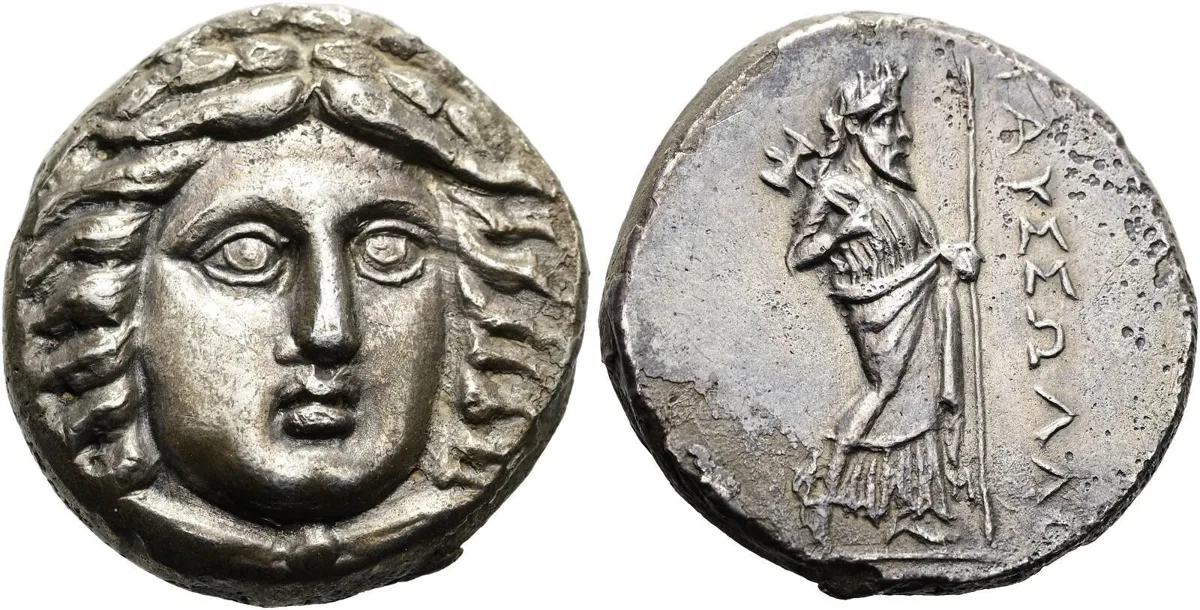
CARIA, Halikarnassos. Mausolos, dynast and satrap, 377-353 BC. Silver tetradracm
Lot 054 · Consigned by NumisOne
Closed
Description
CARIA, Halikarnassos — Mausolos, dynast and satrap, 377-353 BC. Silver tetradrachm, 14.86 g, die axis 1h. Obverse: Laureate head of Apollo facing, his luxuriant hair swept back in spiralling locks, framed by a dotted border. Reverse: ΜΑΥΣΣΩΛΟ (“of Mausolos”) — Zeus Labraundos striding right, clad in chiton and himation, shouldering a long spear and brandishing the double-headed labrys (ceremonial axe) of the Carian shrine at Labraunda; ground line below. cf. BMC Caria pl. XXVIII, 2; cf. SNG von Aulock 2361-2364. Metal lightly porous around the outer edge, otherwise sharply struck with fine detail and attractive cabinet toning.
The Hecatomnid ruler Mausolos governed Caria as a Persian satrap yet projected himself as an independent Hellenistic monarch. His building programme—crowned by the marble Mausoleum at Halikarnassos, one of the Seven Wonders—was financed in part by a bold re-coinage struck on the Athenian weight standard. This tetradrachm belongs to that reform.
Apollo’s facing portrait is among the earliest full-frontal types in Greek numismatics, anticipating the famous heads of Helios on Rhodian tetradrachms and of Alexander on Lysimachos’ gold issues. The confident, almost sculptural style suggests the dies were cut by an engraver imported from mainland Greece, perhaps Ionia.
On the reverse Mausolos honours the ancestral cult of Zeus Labraundos, whose remote mountain sanctuary north-east of Milas housed the province’s most revered oracle. The god’s emblem, the double axe (labrys), had appeared on local coins for two centuries, but Mausolos expands the image into a full, martial figure, subtly aligning himself with Zeus as guarantor of Carian autonomy.
Numismatic evidence and the satrap’s own inscriptions show this issue was struck c. 360 BC, when Mausolos shifted the Carian capital from Mylasa to the new, fortified harbour of Halikarnassos and prepared for the revolts that would shake the western Persian empire. The coins circulated widely: finds at Naukratis and Paphos attest to Carian mercenaries serving from Egypt to Cyprus during this tumultuous decade.
A handsome, historically resonant piece that bridges the Classical and early Hellenistic worlds—struck by the very ruler whose tomb gave us the word “mausoleum.”