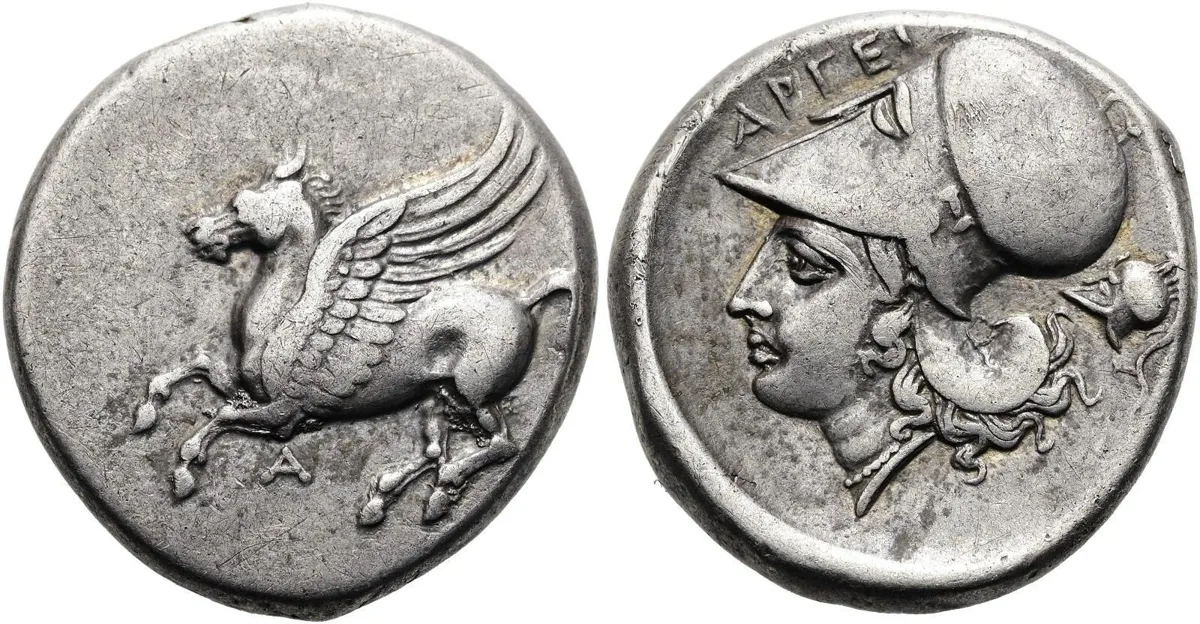
Acarnania, Argos Amphilochikon. Silver stater, c. 350 – 270 BC. 21 mm, 8.42 g.
Lot 026 · Consigned by NumisOne
Closed
Description
Acarnania, Argos Amphilochikon. Silver stater, c. 350 – 270 BC. 21 mm, 8.42 g. Obverse: Pegasos flying left; alpha (Α) beneath. Reverse: ΑΡΓΕΙ («of Argos») – head of Athena left, wearing crested Corinthian helmet; another Corinthian helmet in right field. References: Calciati Pegasi Argos 11; HGC 4, 783; BMC 9. Condition: Attractive light cabinet tone, bold design details.
Founded, according to Thucydides, by exiles from Argos and Ambracia at the head of the Ambracian Gulf, Argos Amphilochikon stood at the crossroads between Epeiros and western Greece. From the later 4th century the city joined the Acarnanian Koinon and struck this distinctive “Pegasos” coinage in the weight standard of Corinth, whose famous winged horse made the silver readily acceptable from Sicily to the Aegean.
On the obverse, Pegasos symbolises both Corinthian economic influence and the heroic pedigree claimed by the settlers; the discreet Α below is the mint-mark of Amphilochian Argos. The reverse adapts Corinth’s own type—Athena in Corinthian helmet—but adds a second helmet behind the goddess, a subtle civic badge found only on Argive issues.
These staters circulated at the height of Epirote power under the Molossian kings and would have financed the koinon’s mercenary forces during the wars with Macedon and Aetolia. Their wide distribution, noted in hoards from Epirus to southern Italy, testifies to Argos’ strategic and commercial reach before the Roman conquest.
An appealing, well-centred specimen that illustrates the diffusion of Corinthian imagery among western Greek poleis while retaining a proud local signature.