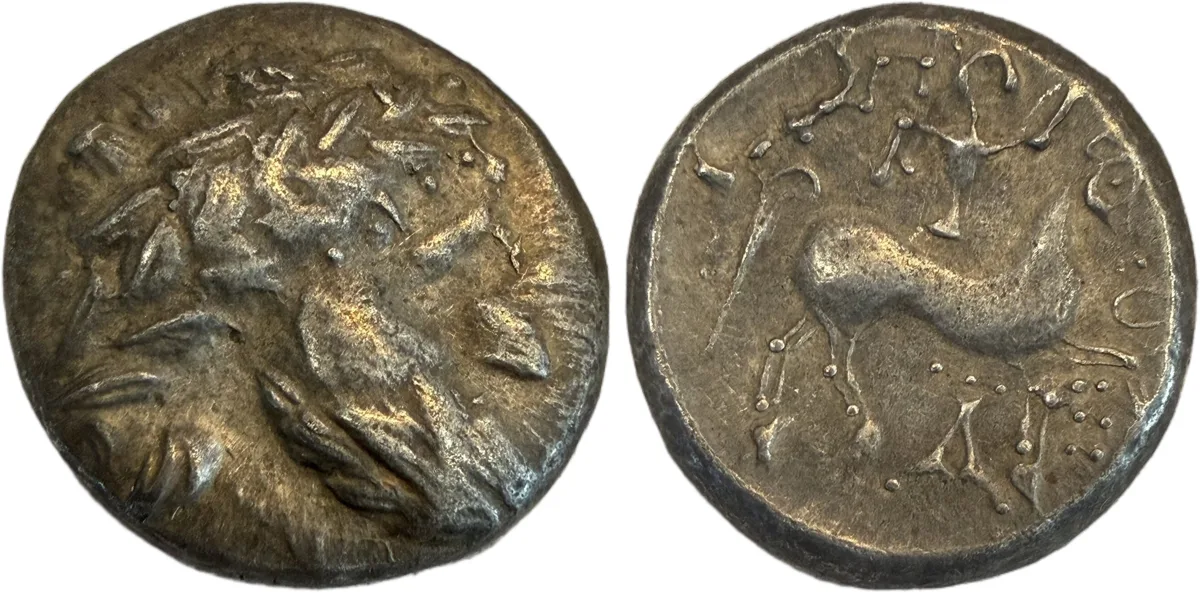
Imitations of Philip II of Macedon Tetradrachm 'Audoleon' type
Lot 182 · Consigned by LBNYNumis
Closed
Description
Eastern Europe – Imitations of Philip II of Macedon Tetradrachms (“Audoleon” Type)
In Eastern Europe, particularly the Carpathian and lower Danube regions, Celtic tribes began producing silver tetradrachm imitations of Philip II of Macedon starting in the 3rd to 2nd centuries BC. These coins were inspired by Macedonian prototypes circulating widely due to trade, mercenary service, and cultural contact with the Greek world.
[sullacoins.com], [cngcoins.com]
Key Characteristics
Origin & Date: Struck by Celtic groups in Central and Eastern Europe, especially the Carpathian region. Most are dated 300–150 BC depending on the subtype.
[sullacoins.com], [cngcoins.com]
Obverse: Usually a stylized laureate head of Zeus, following the Macedonian original but often rendered in abstract or Celtic artistic style.
[cngcoins.com]
Reverse: A horseman (rider)—one of Philip II’s hallmark designs—again adapted into more symbolic, less naturalistic Celtic forms.
[cngcoins.com], [numismeo.com]
Audoleon Type:
The “Audoleon” variety shows:
Laureate, sometimes bearded male head on obverse
Rider on horseback holding a staff surmounted by an eagle, with additional symbols such as a triskeles punch beneath the horse
[biddr.com]
Historical Significance
These Eastern European imitative tetradrachms reflect:
Strong interaction between Greek and Celtic cultures
Adoption and transformation of classical imagery into local Celtic aesthetic traditions
Function both as trade currency and prestige objects for elites