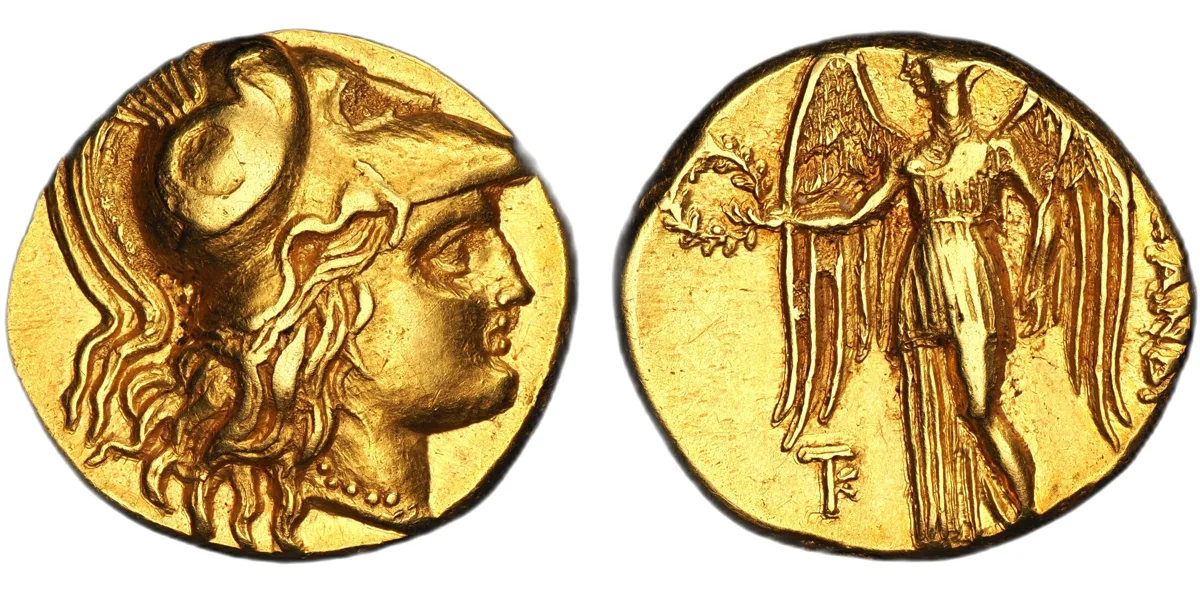
Cyprus, Kition. Pumayyaton, 361-312 BC.
Lot 107 · Consigned by NumisOne
Closed
Description
Cyprus, Kition. Pumayyaton, 361-312 BC. Stater in the name and types of Alexander III (Gold, 17 mm, 8.51 g). Kition, circa 325-320 BC. Head of Athena right, wearing crested Corinthian helmet decorated with a coiled serpent. Rev. AΛEΞANΔΡOY Nike standing left, wings spread, holding wreath in her right hand and stylis in her left; monogram in left field. Newell, “Some Cypriot ‘Alexanders,’” NC 1915; Price 3104. Reverse struck off center, otherwise about extremely fine. A rare Cypriot Alexander stater struck at Kition during the reign of Pumayyaton, the last Phoenician king of the city. The issue belongs to the unsettled years after Alexander’s eastern conquests, when Cypriot dynasts increasingly struck coinage in Alexander’s name and types while retaining local authority over their mints. The use of the Alexandrine Athena and Nike design gave the coinage broad international acceptability, but the mint marks and local circumstances tie the issue firmly to the political world of Cyprus. Kition occupied a particularly important position among the Cypriot kingdoms. It was a Phoenician-ruled city with close ties to the Levant and a long tradition of royal coinage before the arrival of Macedonian power. Under Pumayyaton, the mint adopted Alexander’s gold types, a clear sign of the new political order after the island’s submission to Alexander and the strategic importance of Cyprus for naval operations in the eastern Mediterranean. The helmet ornament is especially useful for attribution. The coiled serpent on Athena’s helmet distinguishes this Cypriot issue from many other Alexander staters, where griffins, sphinxes, or other ornaments appear. Newell’s early study of the Cypriot Alexanders remains important for the organization of these issues, and Price 3104 places the coin within the Kition series. Although the reverse is off center, the coin retains a strong Athena head, full weight, and attractive preservation, making it a desirable example of Alexander-type gold struck under a local Cypriot king.