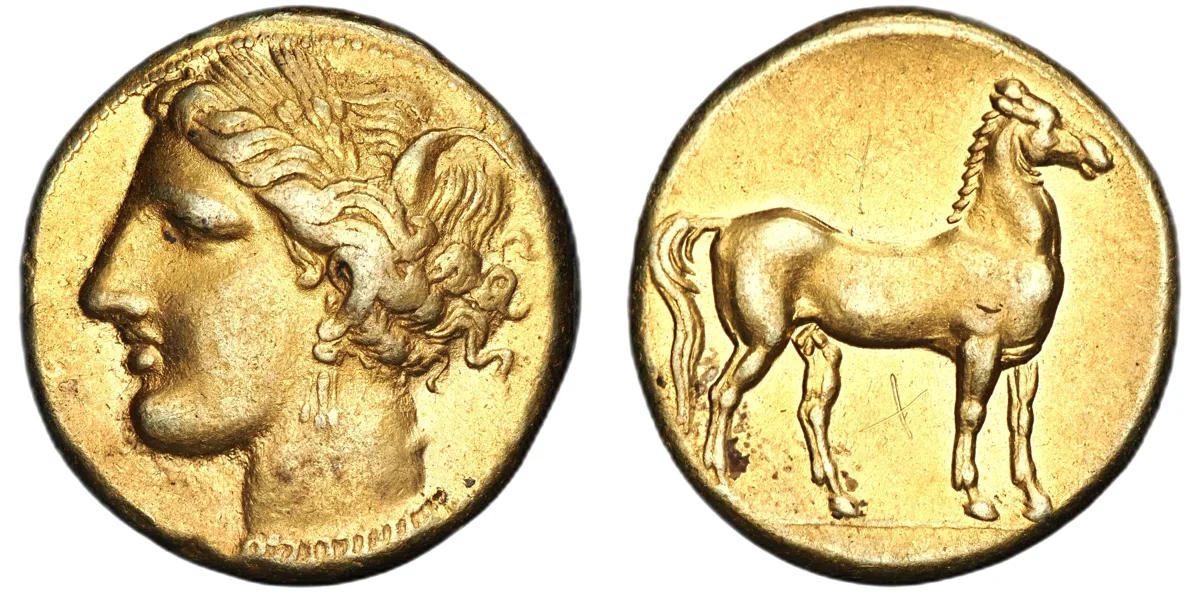
Carthage. Circa 290-270 BC. Stater
Lot 019 · Consigned by NumisOne
Closed
Description
Carthage. Circa 290-270 BC. Stater (Electrum, 19 mm, 7.43 g, 12h). Head of Tanit left, wearing grain wreath, triple-pendant earring, and elaborate necklace. Rev. Horse standing right on ground line. Jenkins & Lewis, Group VII, 365-366; MAA 13. Well centered, with a lovely horse. Tiny marks and light graffiti on the reverse. A pleasing example of the later Carthaginian electrum staters, struck during the period between the great Sicilian wars of the fourth century and the outbreak of the First Punic War in 264 BC. By this date Carthage remained the dominant western Mediterranean power, with its wealth rooted in maritime trade, North African agriculture, and a wide network of dependent territories and military commitments. Electrum coinage served as a high-value medium within this system, particularly suited to state payments and military finance. The obverse image of Tanit reflects one of the central cults of Carthage. Her grain wreath gives the type an agricultural and fertility aspect, while the refined jewelry and formal style place the goddess within the broader Hellenistic visual language used by Carthaginian engravers. The reverse horse is the most persistent emblem of Carthaginian coinage, probably combining civic, aristocratic, and military associations. On this issue the horse is shown simply standing, without palm tree or additional symbols, giving the reverse a clean and balanced appearance. The dating, circa 290-270 BC, places the coin after Agathokles’ failed African campaign and before Carthage’s direct confrontation with Rome. This was a period of recovery and consolidation, when Carthage remained deeply involved in Sicily but had not yet entered the century-long struggle with Rome that would define its later history. The light reverse graffiti is a condition caveat, but the good centering, attractive horse, and clear Tanit portrait make this a strong representative of Jenkins and Lewis Group VII.