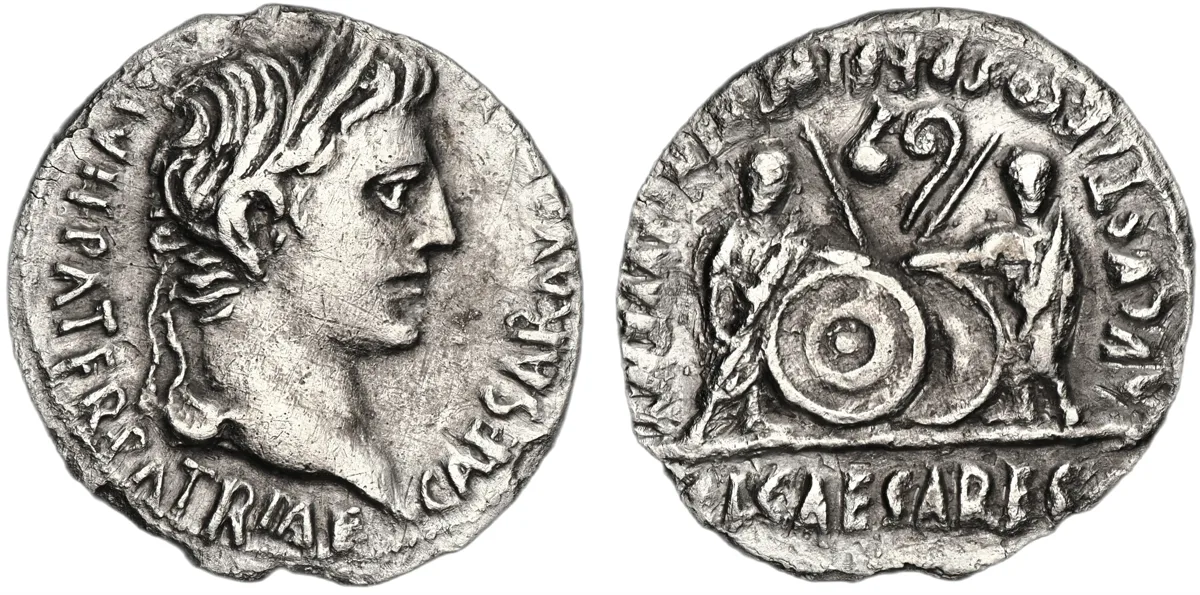
Roman Empire. Augustus, 27 BC-AD 14. Denarius
Lot 285 · Consigned by NumisOne
Closed
Description
Roman Empire. Augustus, 27 BC-AD 14. Denarius (Silver, 18 mm, 2.91 g). Lugdunum, circa 2 BC-AD 4. Laureate head of Augustus right; CAESAR AVGVSTVS DIVI F PATER PATRIAE. Rev. C L CAESARES AVGVSTI F COS DESIG PRINC IVVENT Gaius and Lucius Caesar standing facing, each holding spear and shield; between them, simpulum and lituus. RIC I² 207; RSC 43.
A representative example of one of the most important dynastic coinages of Augustus, issued after the emperor had received the title Pater Patriae, “Father of the Fatherland,” in 2 BC. The reverse presents his adopted sons and intended heirs, Gaius and Lucius Caesar, as the future of the Augustan settlement. Their shields and spears give them a military and public identity, while the priestly implements between them, the simpulum and lituus, refer to religious offices and the sacral legitimacy of the new ruling house.
The legend names them as sons of Augustus, consuls designate, and principes iuventutis, “leaders of the youth,” a title that marked them as the foremost young men of the Roman state. The type is therefore not merely familial, but constitutional and propagandistic: it advertises a planned succession within a system that still avoided the language of kingship.
The issue became one of the most widely circulated silver coins of the early Empire, and examples are found across the Roman world. Its importance was heightened by the failure of Augustus’ dynastic plan: Lucius died in AD 2 and Gaius in AD 4, leaving the succession to pass eventually to Tiberius. Thus, this common but historically significant denarius preserves the image of an intended Julio-Claudian future that never came to pass.