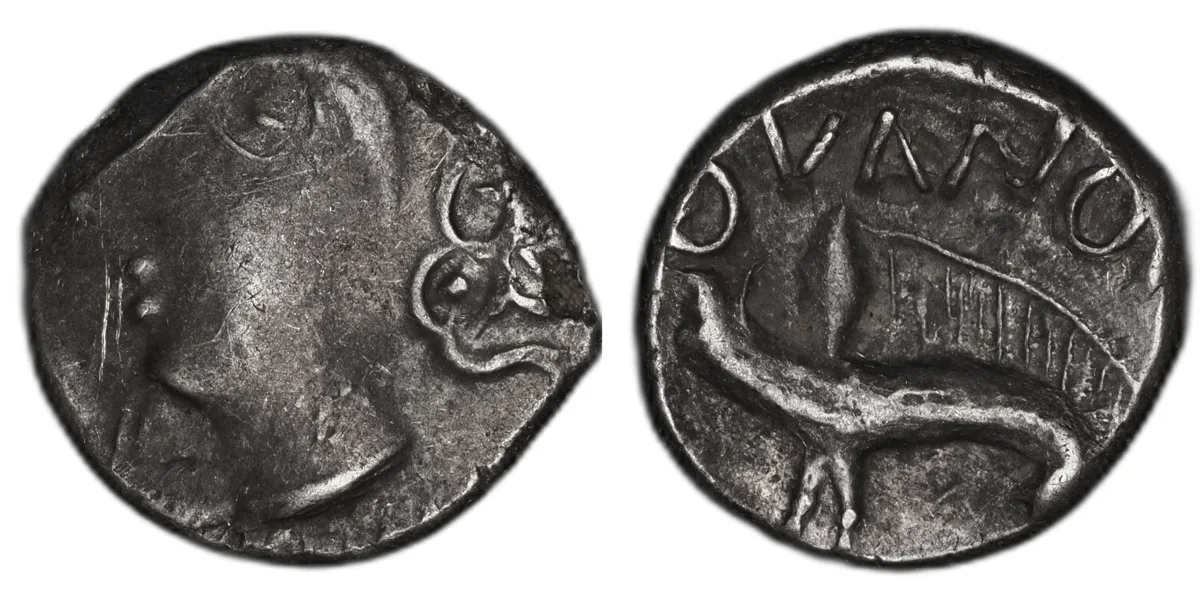
Sequani, denarius, silver, reign 57-50 BC, minted 57-50 BC
Lot 002 · Consigned by hhf
Closed
Description
Sequani, denarius, silver, reign 57-50 BC, minted 57-50 BC, 3.80 g, 18 mm. Obverse: Celticised head of Roma left, stylised helmet with plume; garbled inscription SEQVANOIOTVOS around; dotted border. Reverse: Horse galloping left above linear ground line, pellet above; no exergual legend; dotted border. Strike: hammered, slightly off-centre on some surviving examples. Toning: light grey with scattered darker highlights typical of buried silver. References: LT 5351; DT 3243; ABT 419; RIG 260. The coin belongs to the Sequani, a Celtic tribe inhabiting the upper Saône and Doubs valleys with their centre at Vesontio (modern Besançon). Produced during the period immediately preceding and overlapping Caesar’s Gallic War, the series imitates contemporary Roman denarii while retaining distinct local artistry. The use of the Roma head and a galloping horse reflects familiarity with Roman monetary types and long-standing indigenous equestrian motifs. Silver for these issues was likely obtained by melting imported Roman coins or bullion entering Gaul through trade and military payments. The corrupted inscription attempts to render the tribal name, asserting Sequanian identity within an increasingly Roman economic sphere. Circulation of this denarius facilitated regional commerce, tribute, and the payment of allied or mercenary forces until Roman imperial currency replaced local series after 50 BC.