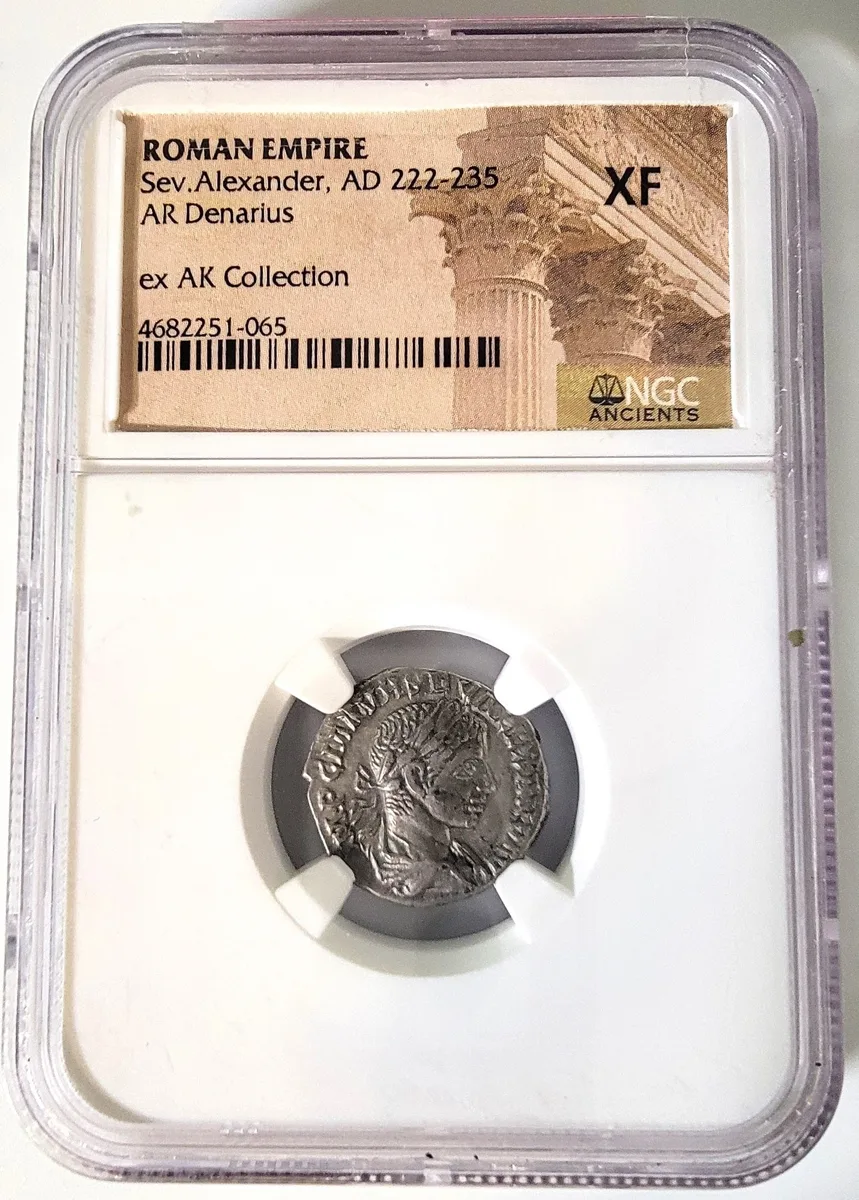
RIC IV Severus Alexander # 274 Denarius
Lot 459 · Consigned by Tacitus
Closed
Description
🏺 Denarius of Severus Alexander – A Study in Imperial Virtue and Eastern Craftsmanship
RIC IV Severus Alexander #274 | Antioch Mint | A.D. 222–235
This auction presents a striking silver denarius from the Eastern mint of Antioch, issued during the principate of Severus Alexander, the last emperor of the Severan dynasty. Dated between A.D. 222–235, the coin is catalogued as RIC IV #274 & showcases a rare blend of imperial symbolism & regional artistry.
🔍 Obverse: Image of Youthful Authority
Legend: IMP C M AVR SEV ALEXAND AVG The obverse features a laureate & draped bust of Severus Alexander facing right. His youthful features, carefully modeled curls, & composed expression speak to the emperor’s cultivated image as a philosopher-king: a persona that gained prominence during his tutored reign under the guidance of his mother, Julia Mamaea.
Eastern mint stylings are evident in the engraving finesse, giving the portrait a softer, more idealized form than his Roman counterparts. The Antioch die engravers favored elegance over rugged realism, reflecting a local preference for Hellenistic aesthetics.
⚖️ Reverse: Aequitas & the Star of Fortune
Legend: AEQVITAS AVG Severus Alexander invoked the goddess Aequitas on this reverse: her presence symbolic of economic justice & moral equilibrium. She stands left, holding scales in her right hand, a timeless emblem of fairness & a cornucopia in her left, heralding abundance & prosperity under the emperor’s rule.
A star in the reverse field adds depth to the imagery. While interpretations vary, it may represent divine sanction, astral symbolism, or even link to the emperor’s destiny. Stars on Roman coinage were often intended to connect earthly rule with celestial order.
📜 Historical Context
The coin hails from a brief window of stability in Roman history: before the pressures of military rebellion & border crises brought down the Severan line. Severus Alexander, though young, emphasized moderation, diplomacy & reform, much of which is reflected in his coinage themes.
Antioch’s mint operated at a crossroads of eastern commerce & Roman administration, producing coins with distinctive style & regional appeal. Its denarii often circulated widely, providing a glimpse into how Roman ideals were adapted across provincial boundaries.
💰 Numismatic Appeal
Condition & Strike Quality: Eastern mints occasionally suffer from soft strikes or off-center flans, but this specimen offers crisp details on both obverse & reverse, with strong relief on the imperial bust & balanced reverse composition.
Symbolic Depth: The pairing of Aequitas with the star adds numismatic intrigue: inviting collectors to consider both civic & mystical interpretations.
Collector Relevance: Coins of Severus Alexander, especially from Antioch, are increasingly sought after for their historical significance & refined artistry. This denarius serves as both a collector’s cornerstone & a scholarly artifact.