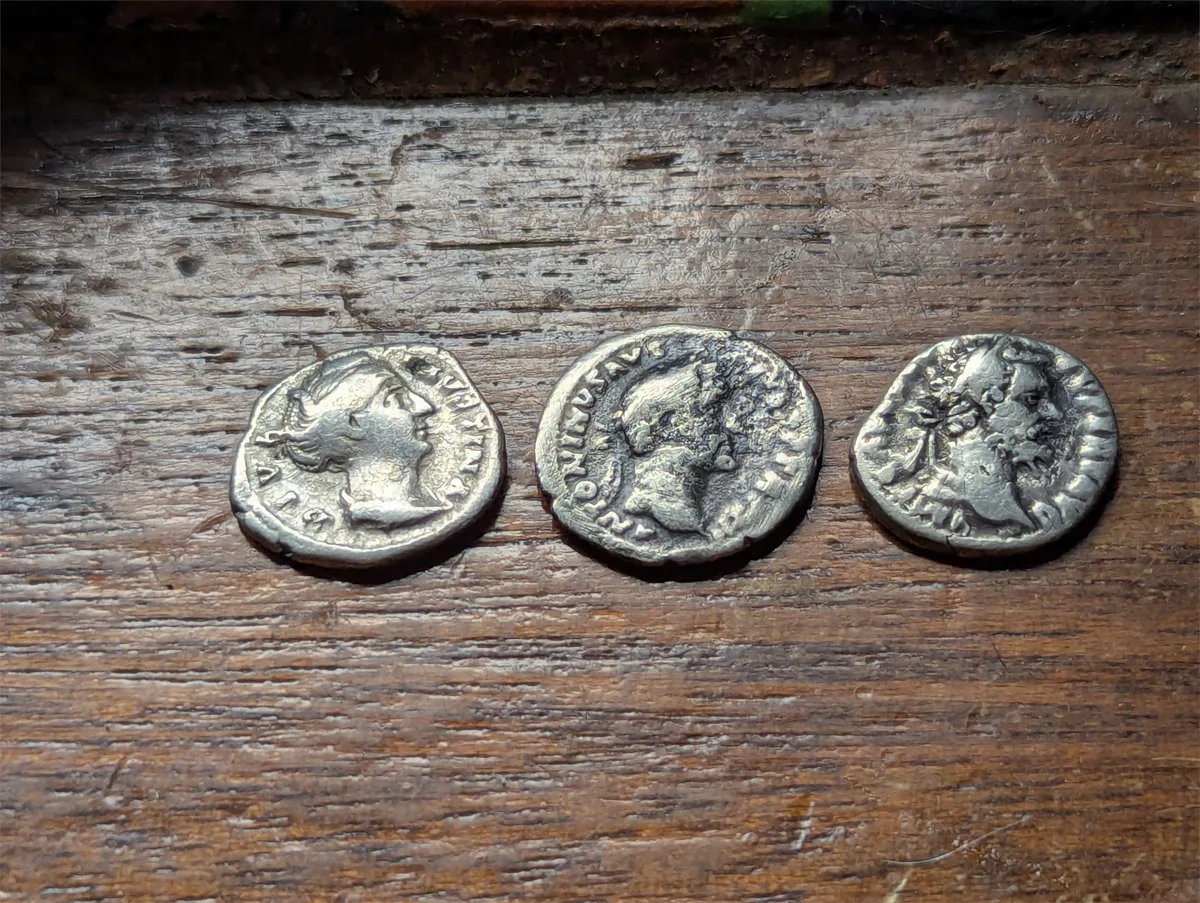
Lot of 3 Roman Imperial Denarii AD 138-340 Antonine and Severan Dynasty
Lot 725 · Consigned by Corona55
Closed
Description
Left coin: Roman silver denarius of Diva Faustina the Elder (Annia Galeria Faustina), wife of Emperor Antoninus Pius, was struck at the Rome mint after her death and deification in AD 141. It belongs to the extensive posthumous series issued under Antoninus Pius to honor the revered empress and reinforce the stability of the Antonine dynasty.
Obverse: Draped bust of Diva Faustina facing right, with her characteristic elaborate hairstyle—waved in several loops and drawn up into a graceful coil at the back of the head. The clear legend DIVA FAVSTINA (with the Roman “V” for “U”) encircles the portrait, proclaiming her divine status. The portrait displays refined detail, soft facial features, and draped drapery, remaining well-centered and identifiable despite light circulation wear.
Reverse: A standing figure (likely Pietas, Concordia, or a related personification such as Ceres or Juno in certain variants) holding a long vertical spear or scepter in one hand, accompanied by field marks or a small base/altar at the feet. This design emphasizes themes of authority, protection, piety, or dynastic continuity—core virtues associated with the deified empress. The spear/scepter attribute adds a striking element of imperial dignity to the composition.
Center coin – Antoninus Pius (AD 138–161):
Obverse: Radiate-crowned bust of the emperor facing right, with titulature including the defining “PIVS” title.
Reverse: A standing figure performing a libation with an outstretched arm over a small altar, symbolizing religious harmony, public welfare, and benevolent rule. The radiate crown indicates a commemorative or restored issue referencing one of Rome’s most respected “Good Emperors,” whose long reign exemplified stability and conscientious governance. The design retains good central detail and pleasing toning.
Right coin – Septimius Severus (AD 193–211):
Obverse: Radiate-crowned, bearded bust of the founder of the Severan dynasty facing right, conveying military authority.
Reverse: A military vexillum (banner or standard) prominently surmounted by an eagle (aquila), often with additional symbolic elements or field marks. This motif celebrates legionary loyalty and the emperor’s command over Rome’s armed forces—a powerful declaration of martial strength and imperial unity during the Severan period. The eagle-topped banner is a classic symbol of Roman military might.
Thanks for looking!