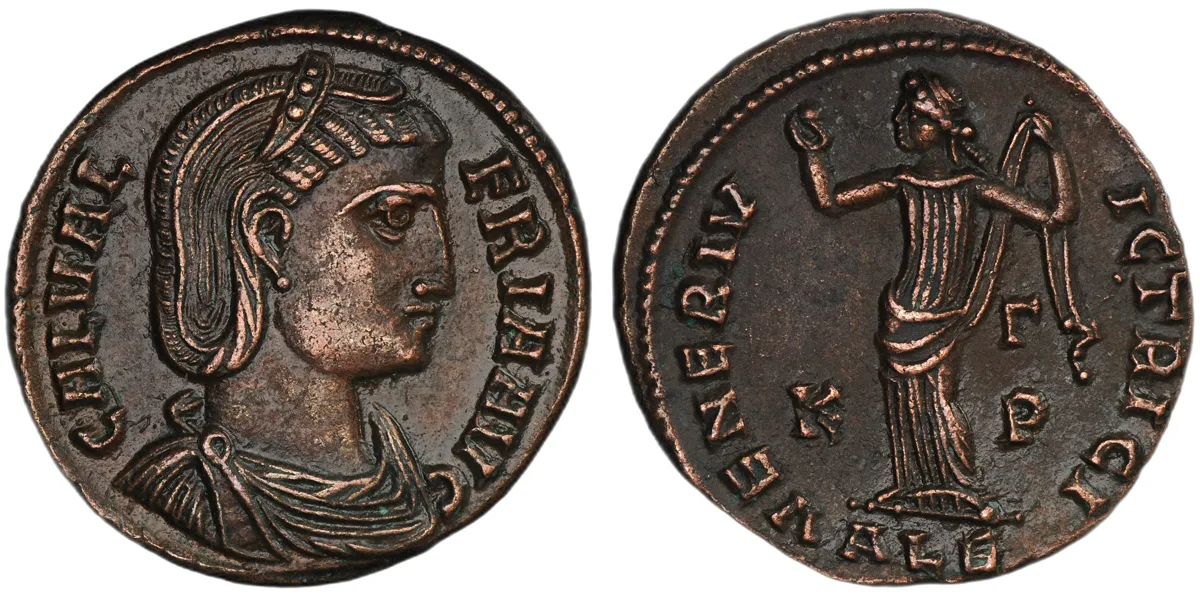
Galeria Valeria. Augusta, AD 293–311. AE Follis
Lot 648 · Consigned by NumisOne
Closed
Description
Galeria Valeria. Augusta, AD 293–311. AE Follis (23 mm, 7.63 g). Alexandria mint.
Obv. GAL VAL-ERIA AVG, diademed and draped bust right.
Rev. VENERI VICTRICI, Venus standing left, holding apple and lifting drapery over left shoulder; in left field, K; in right field, Γ over P; in exergue, ALE.
RIC VI Alexandria 110. Very fine.
Struck at Alexandria during the Tetrarchic period, this follis presents Galeria Valeria, wife of Galerius and daughter of Diocletian, in the formal style appropriate to an Augusta of the imperial college. Her portrait, diademed and draped, conforms to the dignified and hieratic aesthetic of late third and early fourth century coinage, emphasizing dynastic legitimacy and continuity.
The reverse type of Venus Victrix is characteristic of the Alexandrian issues for imperial women under the Tetrarchy. Venus, holding the apple of judgment and raising her drapery, embodies beauty, fertility, and victorious fortune, virtues aligned with the stability and prosperity of the imperial house. The field marks K and Γ over P, together with the mintmark ALE, identify the Alexandrian officina and situate the coin within the structured mint organization of the period.
Bronze folles of this era were struck in substantial quantities as part of Diocletian’s monetary reforms, serving as the principal base metal denomination of the reformed currency system. This example provides a clear and well preserved illustration of Tetrarchic dynastic representation at one of the empire’s most important eastern mints.