L. Hostilius Saserna. AR Denarius. Rome, 48 BC.
Lot 326 · Consigned by NumisOne
Closed
Description
L. Hostilius Saserna. AR Denarius. Rome, 48 BC.
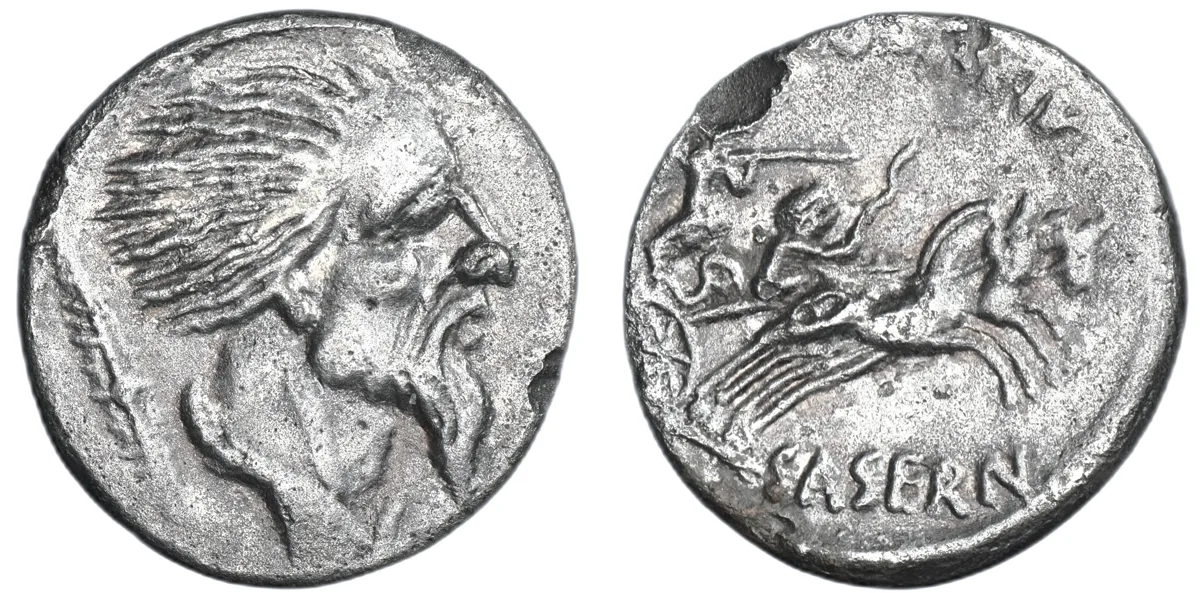
Obv. Head of a Gallic captive right; behind, Gallic shield.
Rev. [L•H]OSTILIVS above, SASERN below. Two warriors in a biga advancing right, the charioteer holding reins and whip, his companion turned back, holding shield and brandishing spear.
4.11 g, 18 mm, 12 h. Crawford 448/2b; CRI 18; BMCRR Rome 3993; RSC Hostilia 2.
Near extremely fine. Small edge chip.
Provenance: From the Vitangelo Collection. Ex-Roma Numismatics E-Sale 98, Lot 1107
Struck during the civil war year of 48 BC, this denarius belongs to the remarkable Gallic series issued by L. Hostilius Saserna, a partisan of Julius Caesar. The obverse presents a realistic and ethnographically distinctive portrait of a Gallic captive, accompanied by a native shield. The individualized features and proud bearing of the head have led many scholars to suggest that the type is intended to represent Vercingetorix, the Arvernian chieftain who led the great Gallic uprising against Rome and was defeated by Caesar at Alesia in 52 BC. While the identification cannot be proven, the portrait is exceptional within Republican coinage for its apparent specificity and sympathetic treatment of a foreign enemy.
The reverse depicts two warriors in a biga, an image rooted in archaic and non Roman martial traditions rather than contemporary Roman warfare. The backward facing warrior, poised with shield and spear, reinforces the non Roman character of the scene and may allude to Gallic heroic combat. Together with the obverse, the type forms a coherent visual program celebrating Caesar’s Gallic victories while simultaneously emphasizing the scale and nobility of the defeated foe.
This issue stands apart from most late Republican denarii in its overt reference to recent historical events and its departure from traditional Roman iconography. It provides valuable evidence for the use of coinage as a medium of contemporary political messaging during the final decades of the Republic, and remains one of the most historically evocative silver issues of the Caesarian period.